Marcel Fiorini
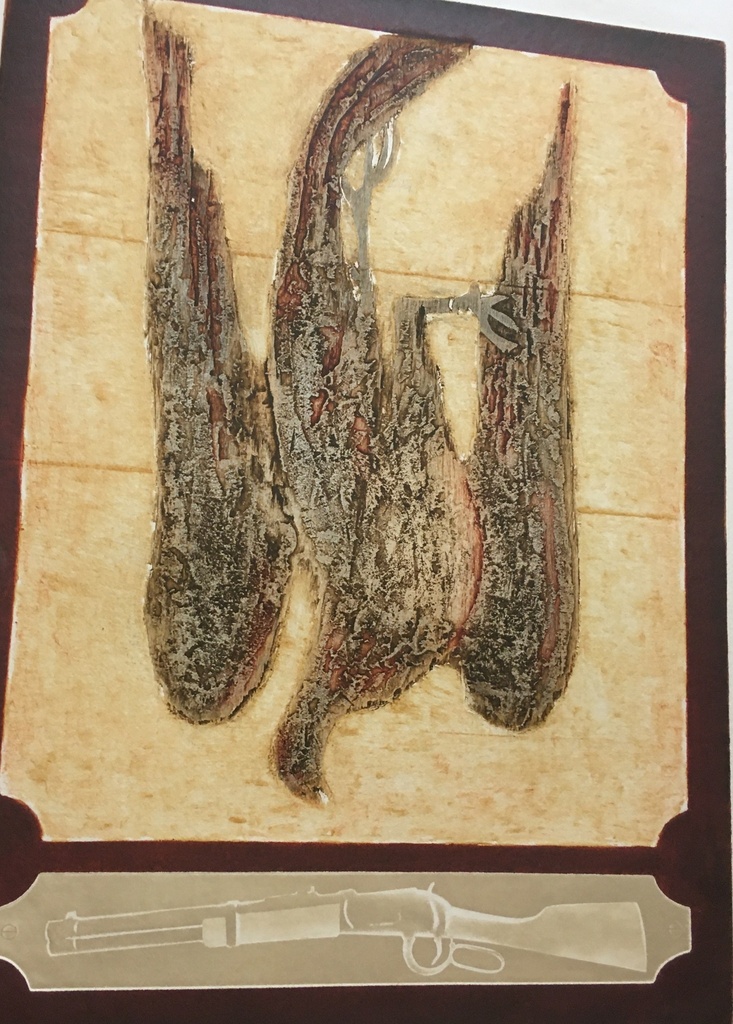
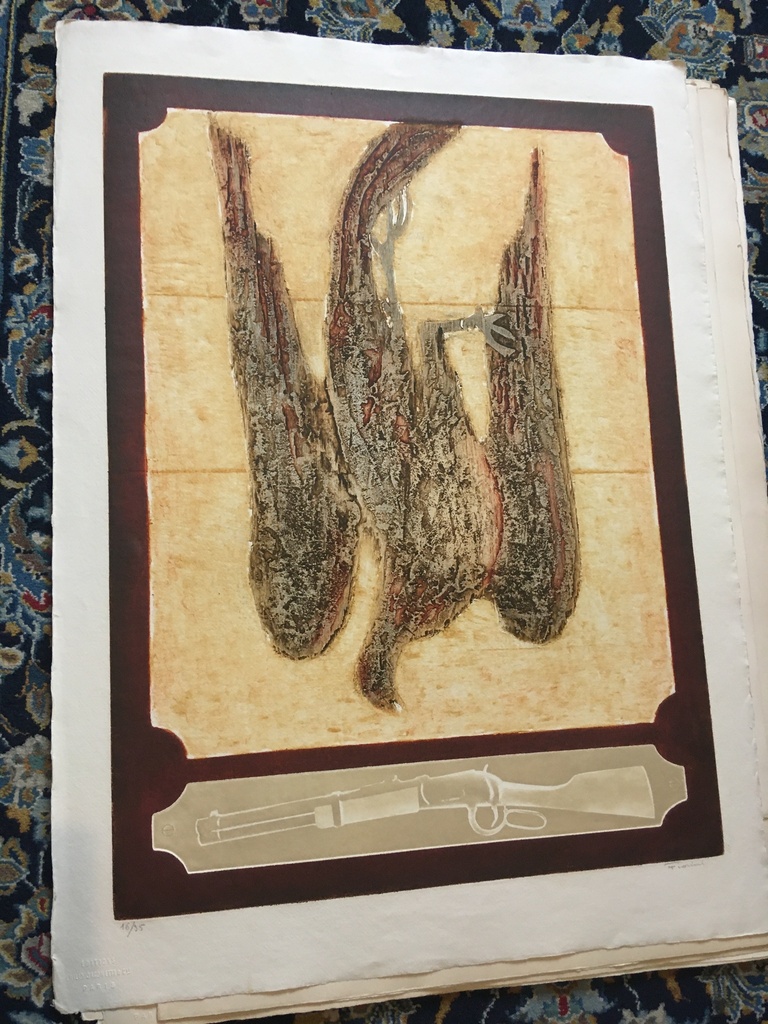
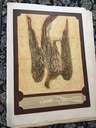
Untitled (game & gun)
1970s
Print, woodcut, aquatint
57 × 77 cm
Ed. 16/35
Location: Switzerland
Documents
-
Invoice or proof of purchase
-
Certificate of authenticity
-
Other documents
About the artwork
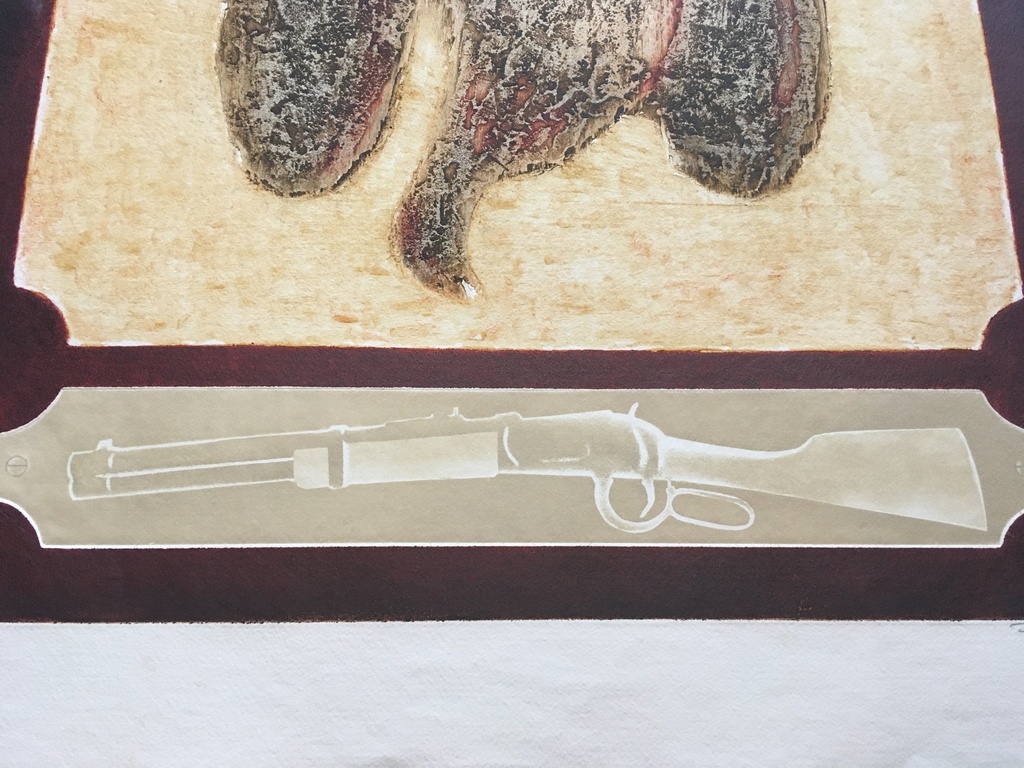
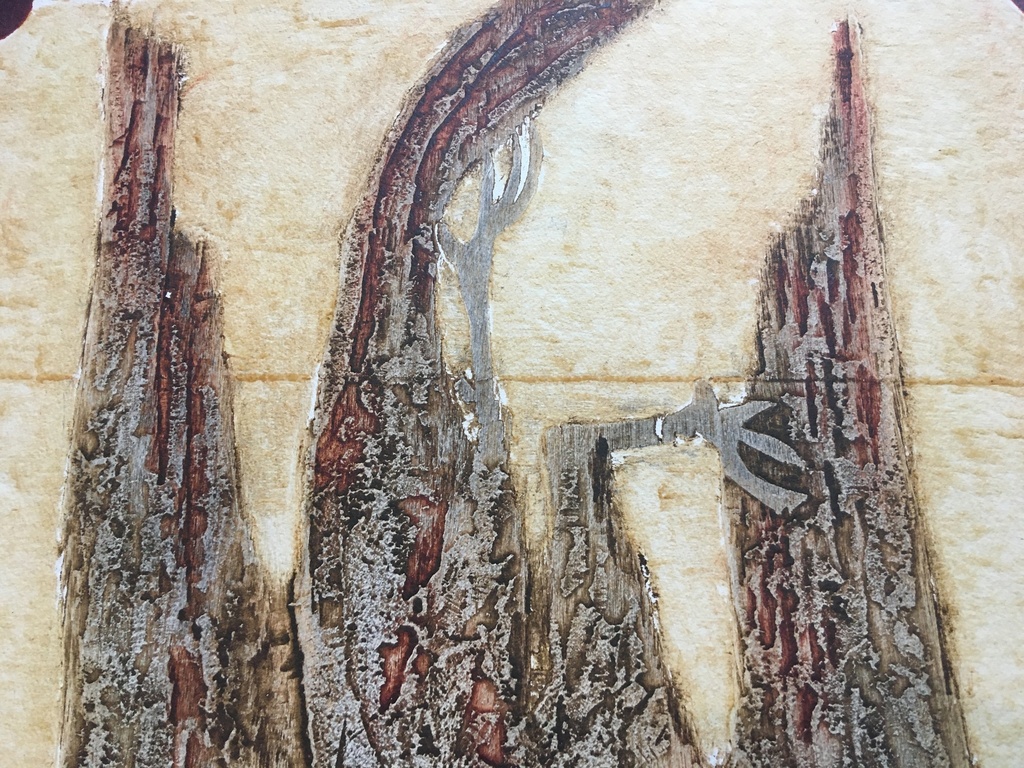
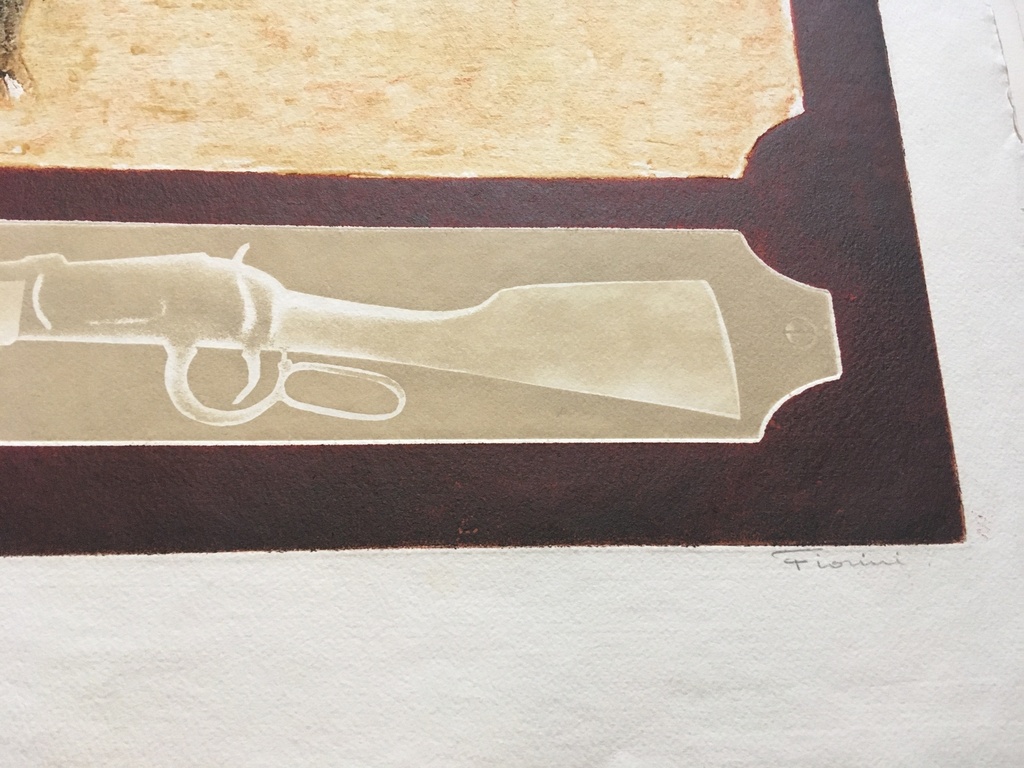
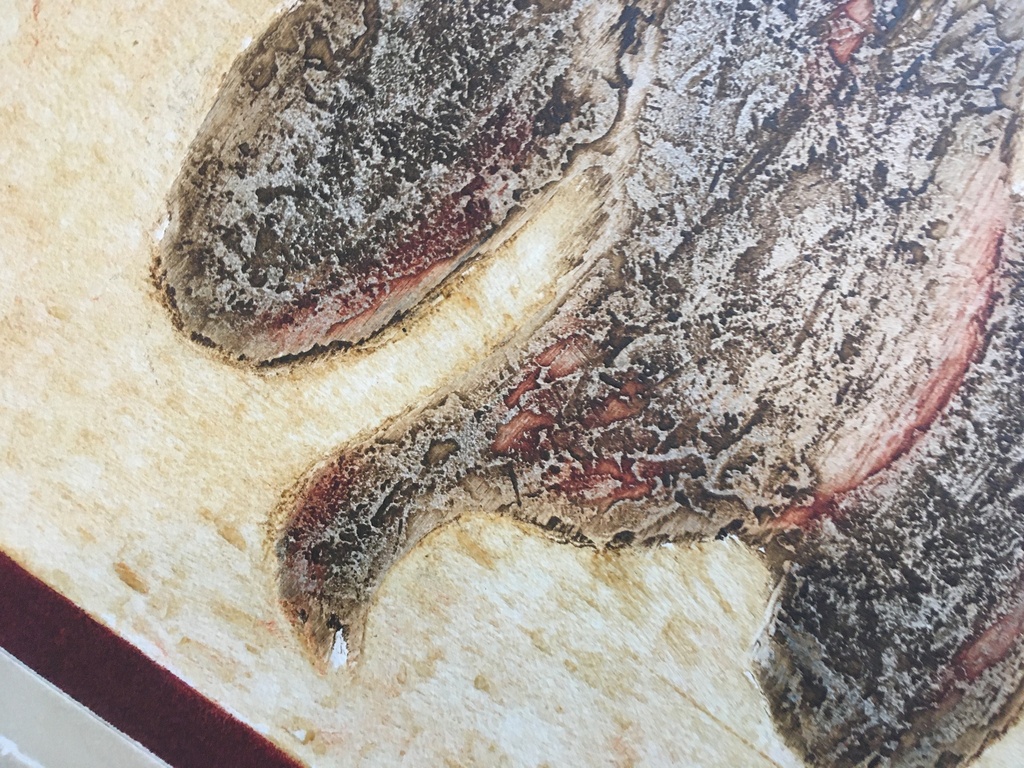
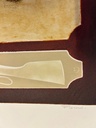
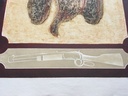
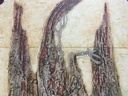
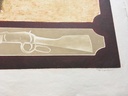
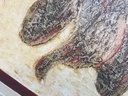
This striking print by Marcel Fiorini forcefully juxtaposes organic and mechanical images. Above, textured, almost tactile impressions evoke the feathers or flesh of game, rendered in earthy browns, ochres and reds, suggesting both vitality and decomposition. Beneath this visceral surface, the ghostly, blurred silhouette of a rifle appears, raised in pale tones against a dark background. The contrast between the two elements - prey and hunting instrument - creates a subtle yet poignant commentary on violence, mortality and the delicate balance between nature and human intervention.
Expert opinion
Produced using Fiorini's innovative technique of intaglio on wood and plaster, this work testifies to the artist's mastery of the combination of texture, relief and color, creating visual depth and conceptual tension. It embodies Fiorini's broader exploration of matter and imprint, where each trace left on the surface becomes a meditation on memory, touch and transformation.
About the artist
"Born in Guelma, Algeria, into an Italian family, Marcel Fiorini began painting at a very early age and tried his hand at engraving using products from his father's pharmacy. He attended the École des Beaux-Arts in Algiers from 1940 to 1942. In 1947, his family moved to France. In 1941, he took a painting course at the École des Beaux-Arts d'Alger, then, after transferring to Paris, founded an "Atelier de peinture" with the famous pieds-noirs Louis Nallard and Maria Manton. A painter of the Nouvelle École de Paris, he was also recognized for his engravings and for the new printmaking processes he perfected, such as etching on wood, linoleum or plaster. Fiorini befriended Roger Chastel and Roger Bissière, for whom he produced engravings from 1952, as well as Bertholle, Tobey, Vieira da Silva and Jacques Villon. From 1948, he was a regular participant in the Salon des Réalités Nouvelles, the Salon de Mai and various exhibitions of young contemporary printmakers. In the early 1950s, Marcel Fiorini devoted himself almost exclusively to intaglio engraving techniques, notably aquatint and etching. He then turned to large linocuts, which he sometimes combined with the previous processes. He also made extensive use of wood and metal engraving. One of his greatest contributions remains the innovative use of linoleum to create graphic compositions integrated with modern painting."
Additional info
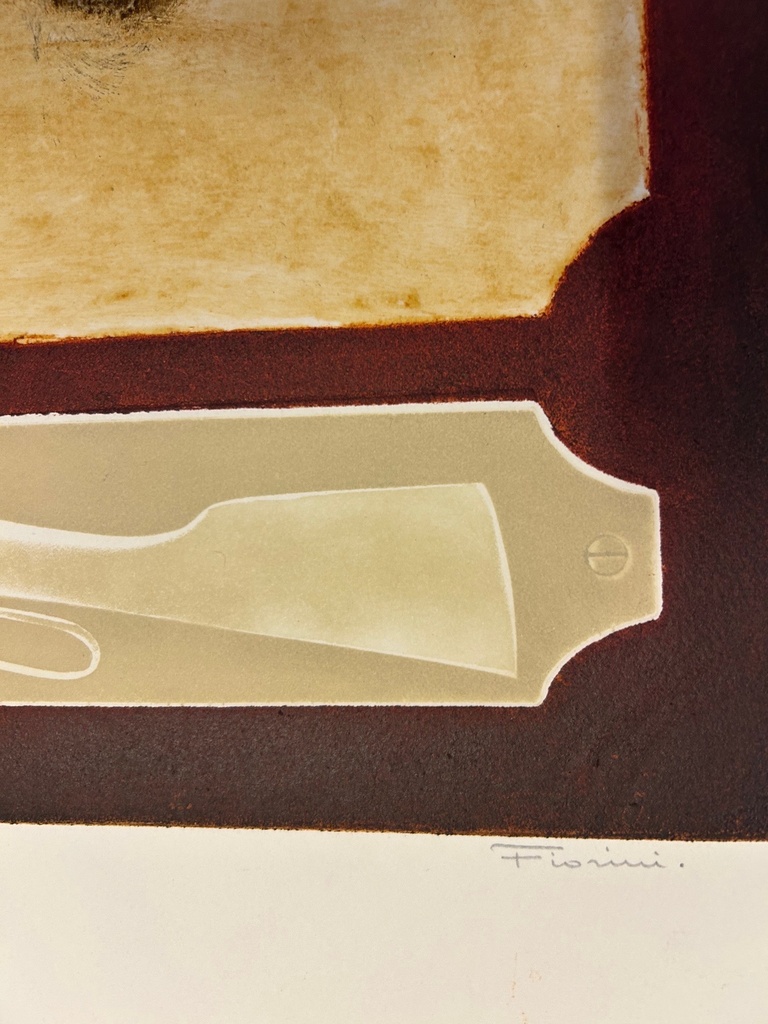
Signed
OTHER ARTWORKS YOU MAY LIKE
Your Dynamic Snippet will be displayed here...
This message is displayed because you did not provide both a filter and a template to use.