Réné Mels
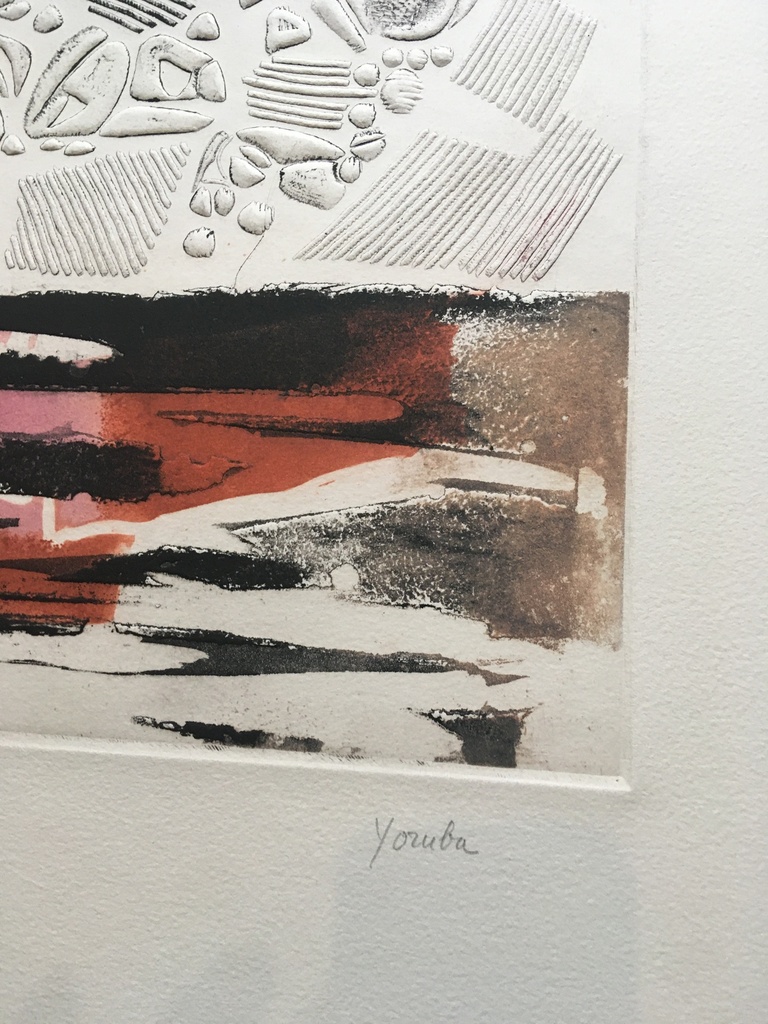
Yoruba
1970s
Litography
24 × 42 cm
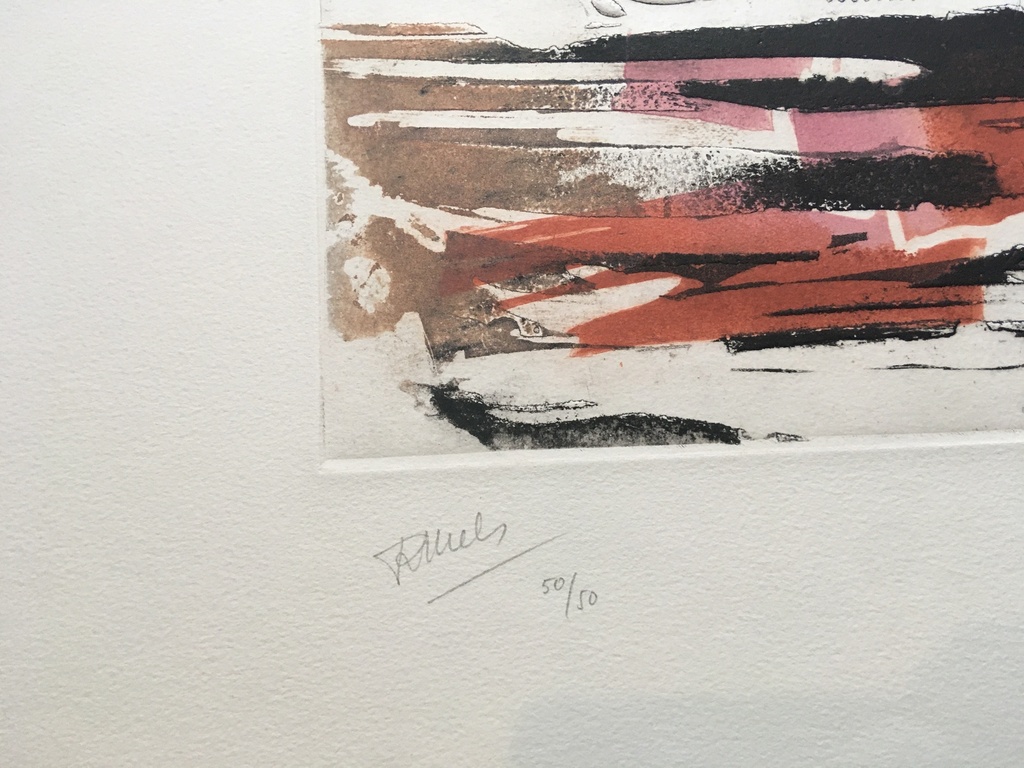
Ed. 50/50
Location: Switzerland
Documents
-
Invoice or proof of purchase
-
Certificate of authenticity
-
Other documents
About the artwork
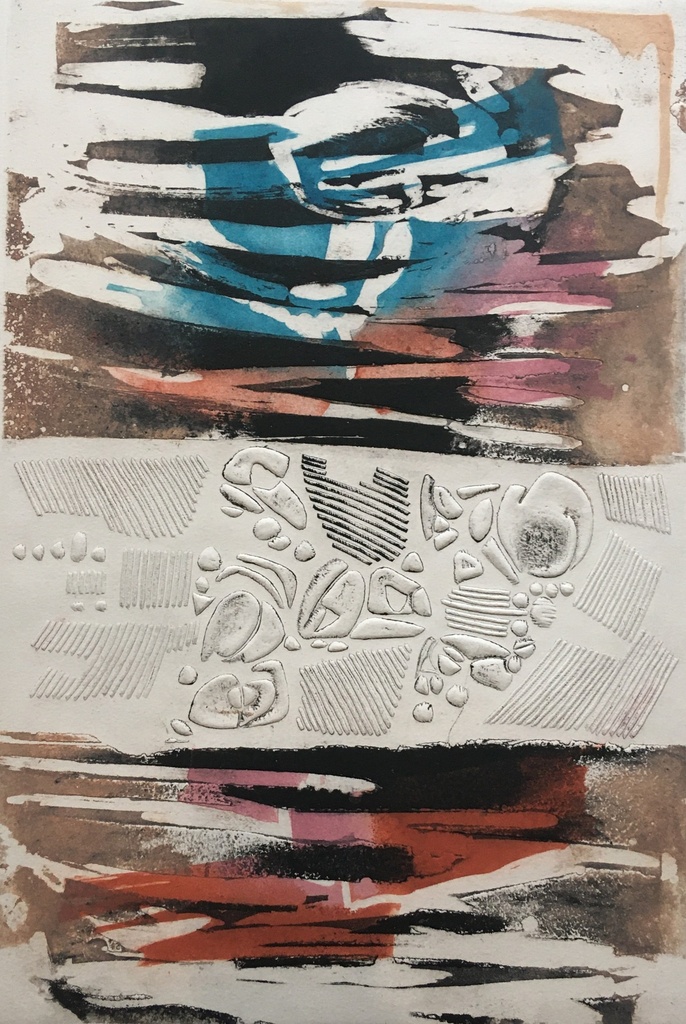
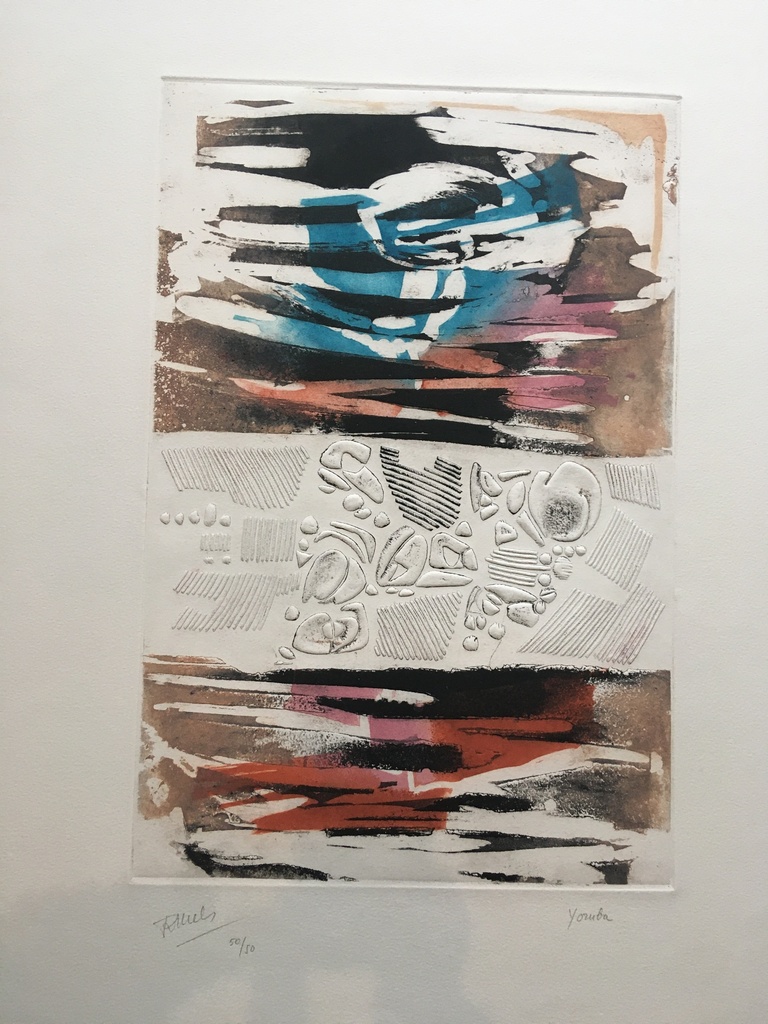
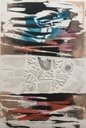
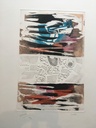
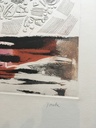
In Yoruba, René Mels combines texture, color and rhythm to create a work that evokes both the materiality of the earth and the vitality of cultural symbolism. The composition juxtaposes raised white reliefs - evoking tribal marks or ancestral imprints - with overlapping gestural color fields of ochre, rust, black and blue. These superimposed elements suggest an interplay between physical surface and spiritual resonance, inviting viewers to reflect on their origins, identity and memory. The dynamic arrangement and tactile contrasts illustrate Mels' singular approach to printmaking, where the medium itself becomes a space for exploration rather than mere reproduction. Abstraction here acquires a ritual dimension, echoing the visual and rhythmic cadences specific to Yoruba culture while transcending literal representation.
Expert opinion
Yoruba is a meditation on the universality of symbolic language. Through nuanced superimpositions of color and relief, Mels links modernist abstraction with ancestral heritage, creating a visual dialogue between the contemporary and the timeless. The work reflects his mastery of material experimentation, combining gesture, form and texture in a composition that is both grounded and spiritual.
About the artist
René Meulemans, known as René Mels (1909-1977), was a Belgian painter, draughtsman, engraver (aquafortist), sculptor, ceramist and glass painter. Born in Herent-lez-Louvain (Leuven) in 1909, he studied at the Academies of Leuven (Prof.: A. Delaunois) and Brussels (1930-1933 - Prof.: H. Van Haelen, A. Bastien, J. Delville), then at the École nationale supérieure d'architecture et des arts visuels de La Cambre (Brussels) (1937-1938). He married the artist Renée Petit. From 1931 onwards, he exhibited at the Cercle Artistique de Louvain, where his expressionist style borrowed heavily from Constant Permeke. He also produced a number of decorative works. In 1938, he took part in the Art Jeune exhibition organized by Charles Pry in the Atrium room of the Brussels Botanical Gardens, along with several other artists: Gaston Bertrand, Anne Bonnet, Louis Van Lint. In 1941, he took part in the Art Jeune exhibitions. After this expressionist period, he turned to abstraction in 1947. He became interested in the golden ratio and oriented his composition in this direction. From 1931 onwards, he exhibited his Expressionist work at the Leuven Art Circle, borrowing heavily from Constant Permeke. He also produced a number of decorative works. In 1938, he took part in the Art Jeune exhibition organized by Charles Pry in the Atrium room of the Brussels Botanical Gardens, along with several other artists: Gaston Bertrand, Anne Bonnet, Louis Van Lint. In 1941, he took part in the Art Jeune exhibitions. After this expressionist period, he turned to abstraction in 1947. He became interested in the golden ratio and oriented his composition in this direction. A member of the Jeune Peinture Belge movement, he took part in its activities in 1947-1948, notably at the Palais des Beaux-Arts exhibition in Brussels in October-November 1947. His major work lies in engraving, which he takes to the highest level of invention and originality, through material, color and relief. In 1950, he received a grant from the Belgian government enabling him to stay in France. He attended S.W. Hayter's Atelier 17. In 1952, he was a member of the Art Abstrait group, founded by Jo Delahaut and Jean Milo; he was also a member of Cap d'encre, a group of engravers which, in 1963, on the initiative of the Belgian Ministry of French Culture, aimed to promote the art of engraving and the distribution of original prints.
Additional info
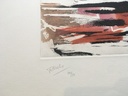
Signed
OTHER ARTWORKS YOU MAY LIKE
Your Dynamic Snippet will be displayed here...
This message is displayed because you did not provide both a filter and a template to use.