Youla Chapoval
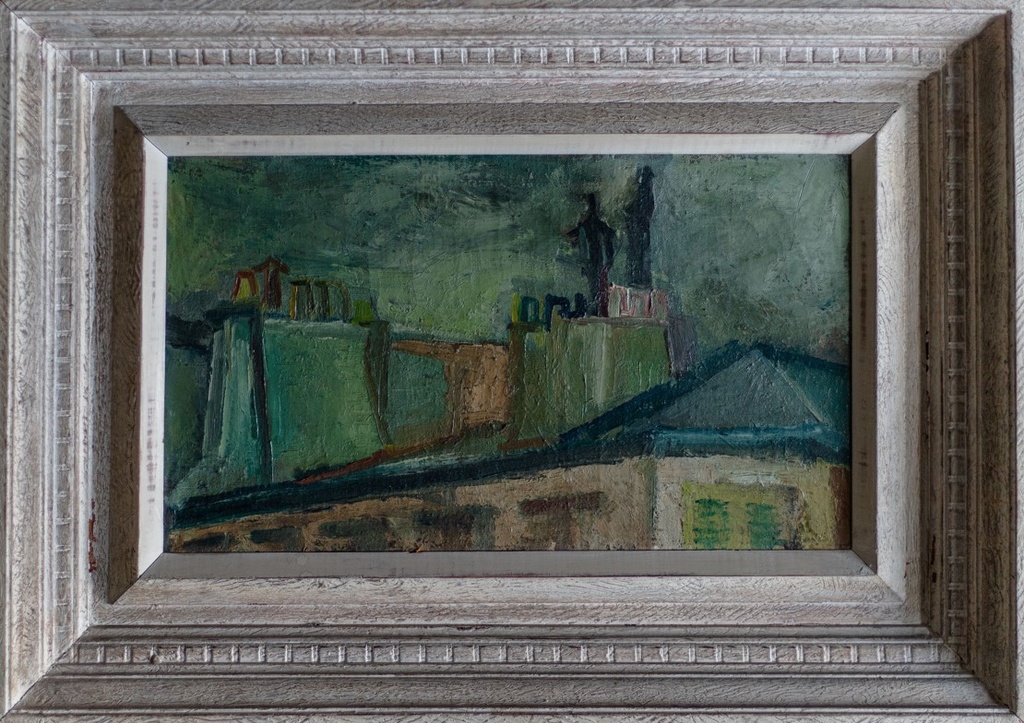
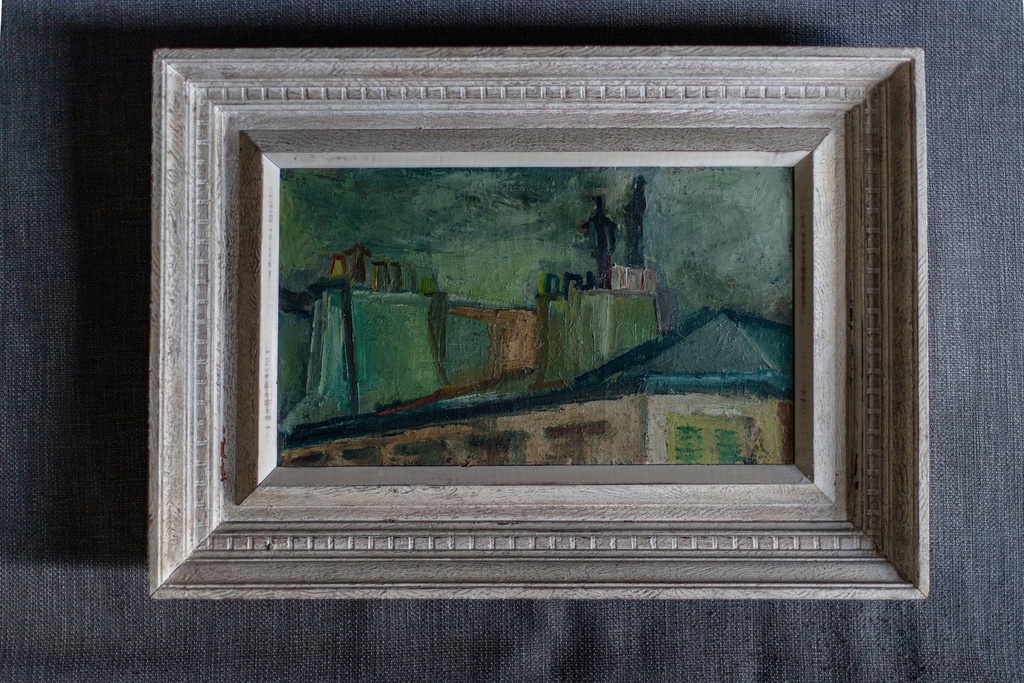
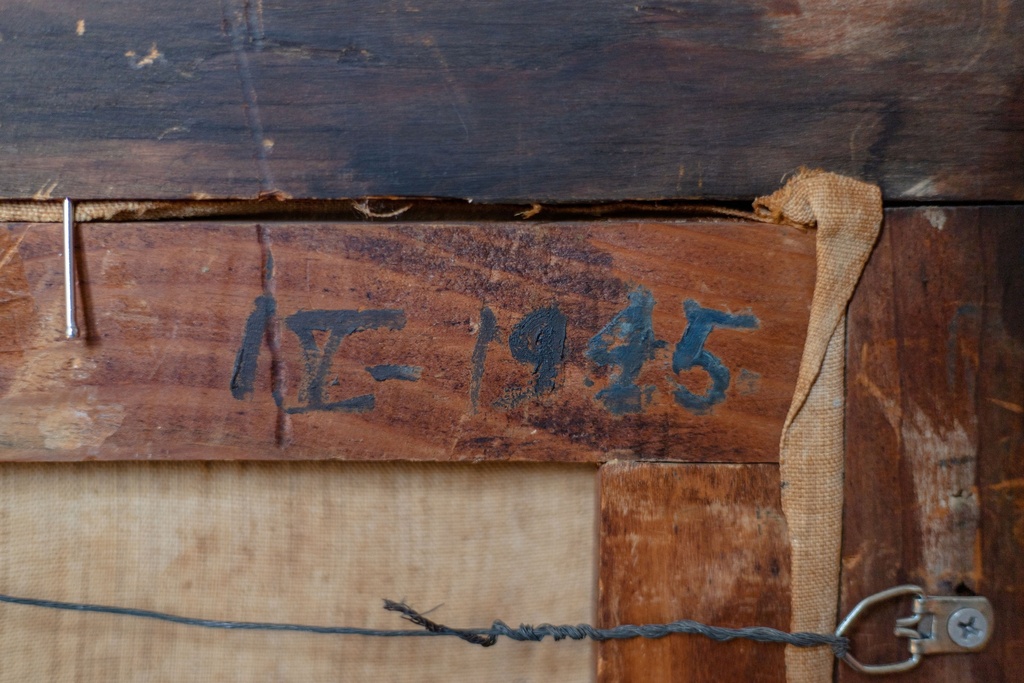
Les toits
1945
Oil on canvas
28 × 46 cm
Unique
Location: Paris, France

Arianee token ID
725658139
Share by
Email
About the artwork
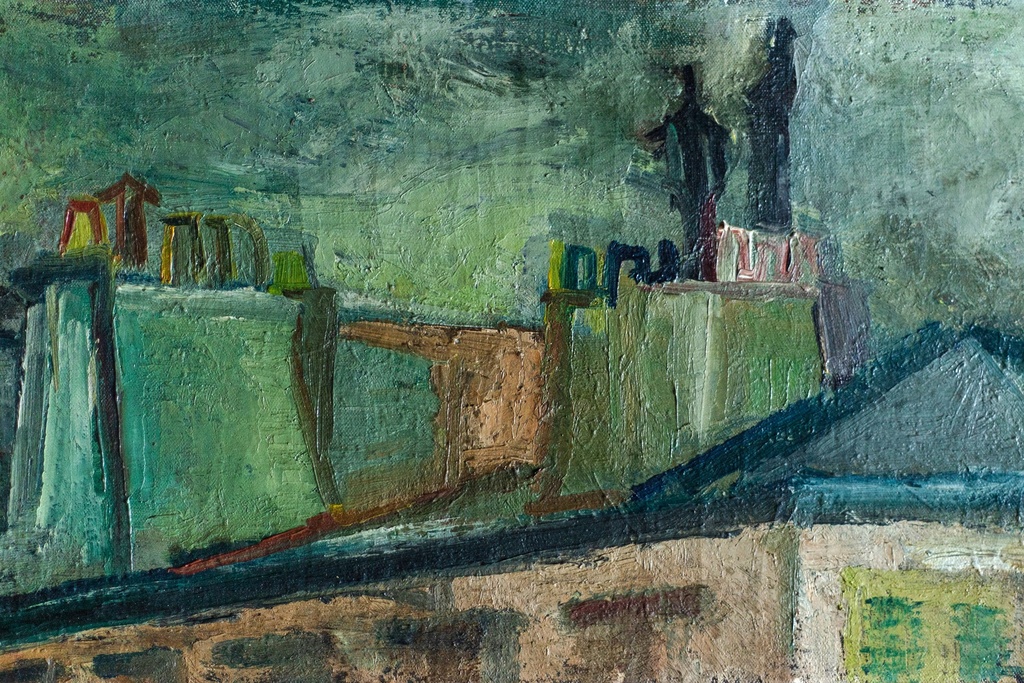
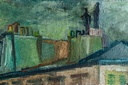
Presenting a bewitching vision of rooftops, this work offers us shades of green and brown, evoking a natural palette in an environment transformed by man - a green hue the artist would return to at the end of his career. Far from urban landscapes invaded by moving people, the choice of showing the upper, uninhabited part of the city reveals a certain tranquility. Two figures, however, sit enthroned on these rooftops, immersed in the contemplative action of scanning the sky and horizon. This serenity, however, is disturbed by a stormy sky. Although the work is fundamentally figurative, we can already see the beginnings of Cubism, an artistic practice that Youla Chapoval explored under the influence of her friend Picasso as early as 1946. The growing influence of this artistic movement can be seen in the geometrization of the landscape, which lends itself particularly well to the depiction of rooftops.
Expert opinion
Before turning to cubism and then abstraction, Youla Chapoval produced figurative works; this work is characteristic of the artist's period. His work is part of the Second Paris School movement, in which he emerged as a leading figure. It is important to note that this work is included in the artist's catalog raisonné (no. 45) by Evelyne and Marie-Laure Moisset.
About the artist
Born in 1919 in Kiev (Ukraine), Youla Chapoval was an artist of the Second School of Paris, who died in 1951. He moved to Paris in 1938, where he met many artists including Picasso, Jean Cocteau and Jean Degottex. He worked at La Grande Chaumière in the Montparnasse district, painting in a figurative style. In 1942, because of his Jewishness, Youla Chapoval fled to Marseille, where he took a few courses at the Ecole des Beaux-Arts. After a brief stay in Toulouse, he returned to Paris in 1944, where his work enjoyed great success. His paintings were purchased by public figures such as Georges Pompidou and Albert Camus, until he met Henri Benezit, a dealer who bought some twenty paintings from him in 1946. The following year, he won the 2nd Carrefour de la Jeune Peinture prize and was honored by the Jeanne Bucher gallery. From then on, his paintings became completely abstract, and in 1949 he was awarded the Prix Kandinsky by the Denise René gallery, which devoted an exhibition to him in 1950.
Additional info
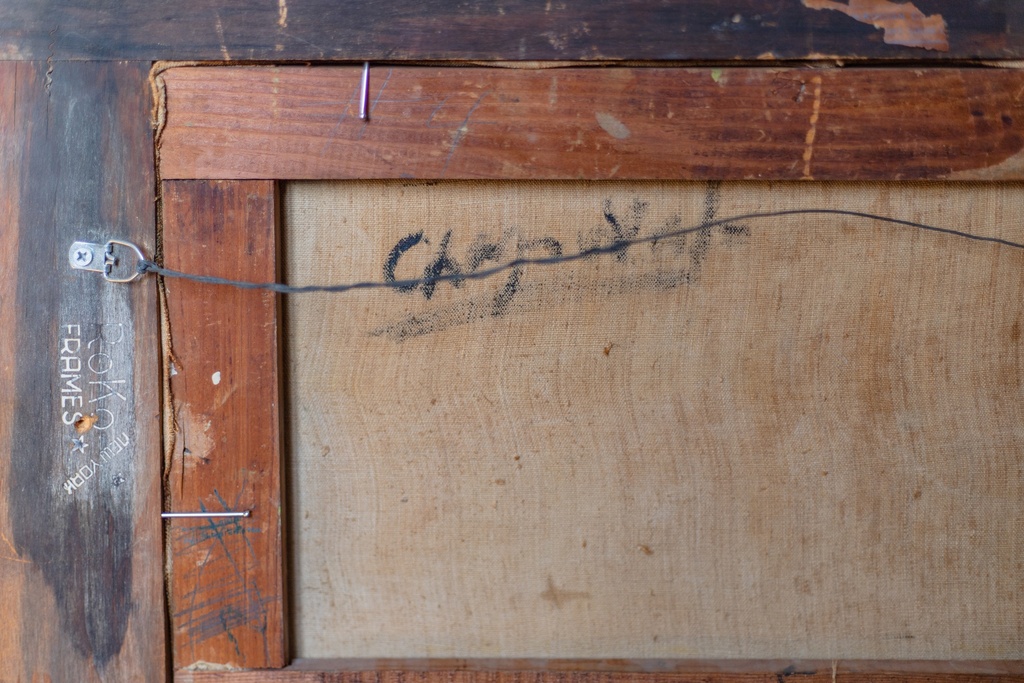
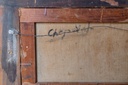
Signed
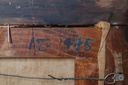
Dated
Framed
Certificate
OTHER ARTWORKS YOU MAY LIKE
Your Dynamic Snippet will be displayed here...
This message is displayed because you did not provide both a filter and a template to use.