Alexander Calder
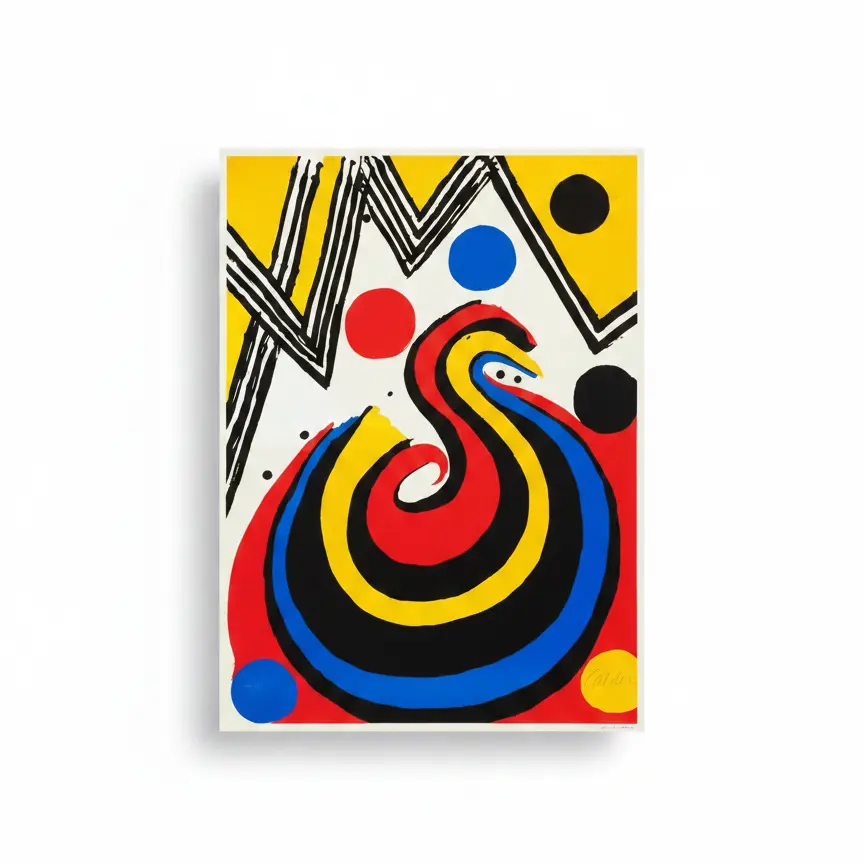
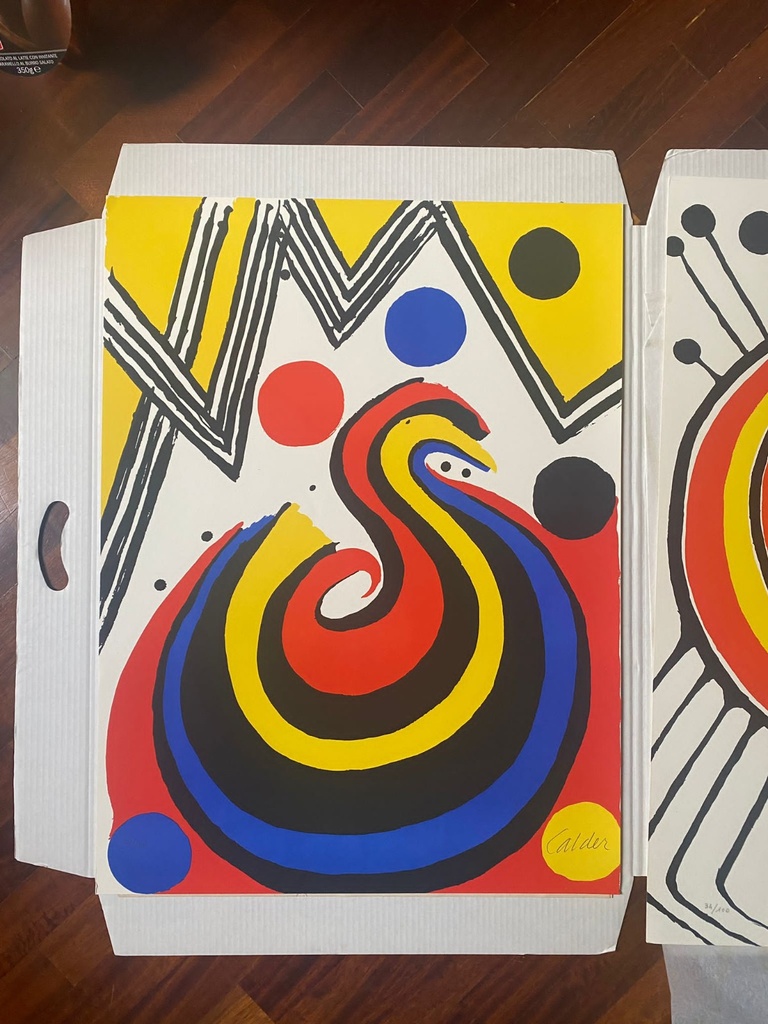
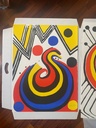
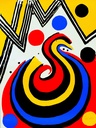
Girandola
1972
Lithography on paper, 4 colors
75.5 × 56 cm
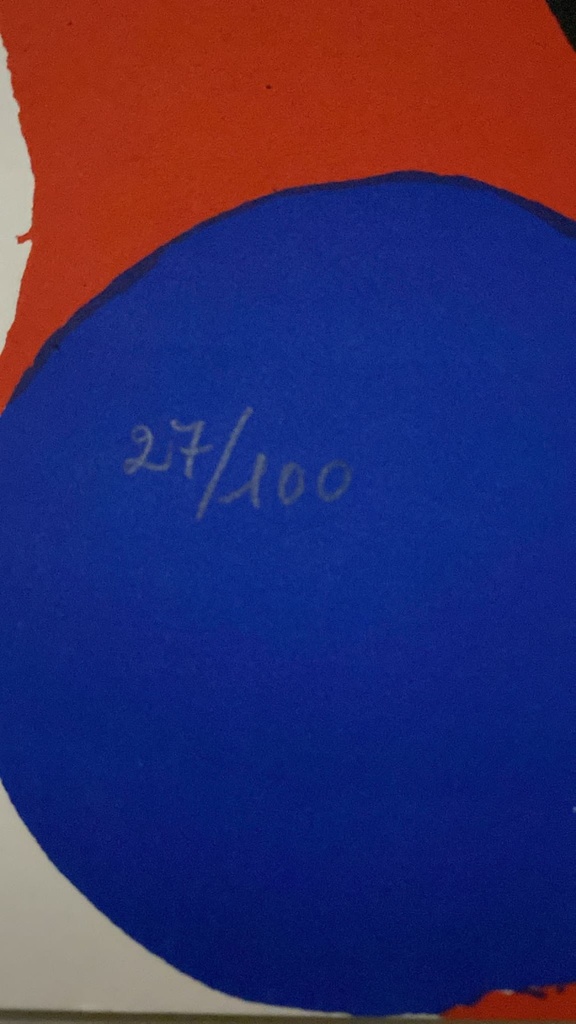
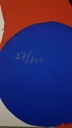
Ed. 27/100
Location: Milan, Italy

Arianee token ID
830996012
Share by
Email
About the artwork
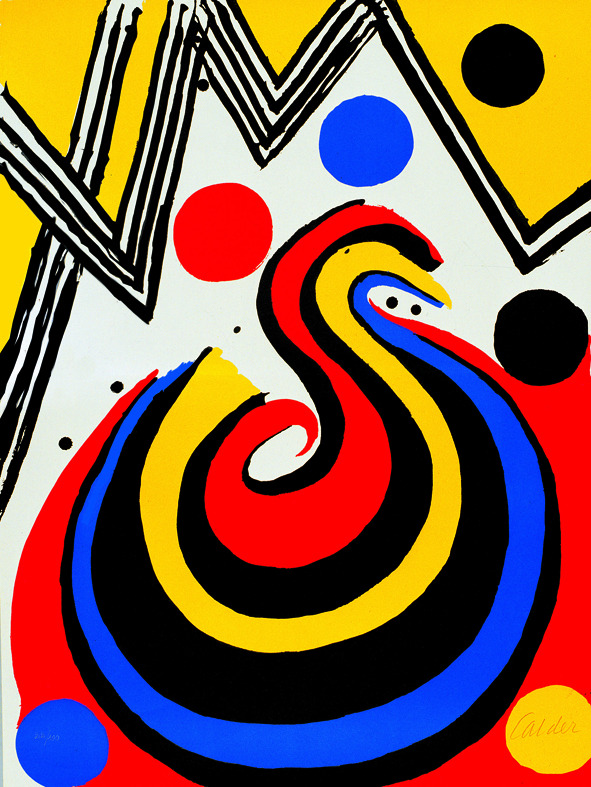
The contrast between the bright curves of color and the black furrowed lines in the white surface of the sheet bears witness to Alexander Calder's almost mathematical creation. Blue, yellow, red and black represent the artist's entire palette. In a synergy of forms, the viewer can see a rotational movement of serpentine lines winding around each other. In contrast to the rigor of the lines zigzagging one above the other, punctuated by perfectly full circles, the artist seems to be researching shapes, like a mechanical schematization. The flying forms echo the artist's famous suspended mobiles, responding to the phenomenon of gravity and the balancing act of spheres in space, which has neither beginning nor end.
Expert opinion
The colors and forms used by Alexander Calder make this work a complete work. The sphere, line and movement are at the heart of his research, offering a global view of his artistic universe.
About the artist
Born in 1898 in Pennsylvania (USA) and died in 1976, Alexander Calder was one of the most important artists and inventors of the 20th century. Before turning his attention to art in 1920, he studied mechanical engineering, an apprenticeship that would form the basis of his artistic creativity. Revolutionizing the art of volume, the inventiveness of his work introduced new shapes and colors. Known for his famous wire circus, in the 1930s, surrounded by his friends Fernand Léger, Piet Mondrian and Joan Miró, he launched into abstract art. With his eyes riveted on nature's dance of the stars, he drew inspiration from it to create his famous suspended sculptures, which Marcel Duchamp named mobiles in 1932, and which made him the acknowledged artist of his time. During his career, Calder exhibited at many prestigious institutions, including the Exposition Universelle in 1937 (Paris), the Museum of Modern Art in 1943 (New York) and the Venice Biennale in 1952. Today, his work can be found in the world's greatest museums (MoMa, Centre Pompidou, Tate Museum, Fondation Cartier, Tehran Museum of Contemporary Art...). He has also created monumental sculptures for JFK airport and UNESCO.
“"My whole theory on art boils down to the disparity that exists between form, masses and movement. Even my triangles are spheres, but they're spheres of a different shape."”
Additional info
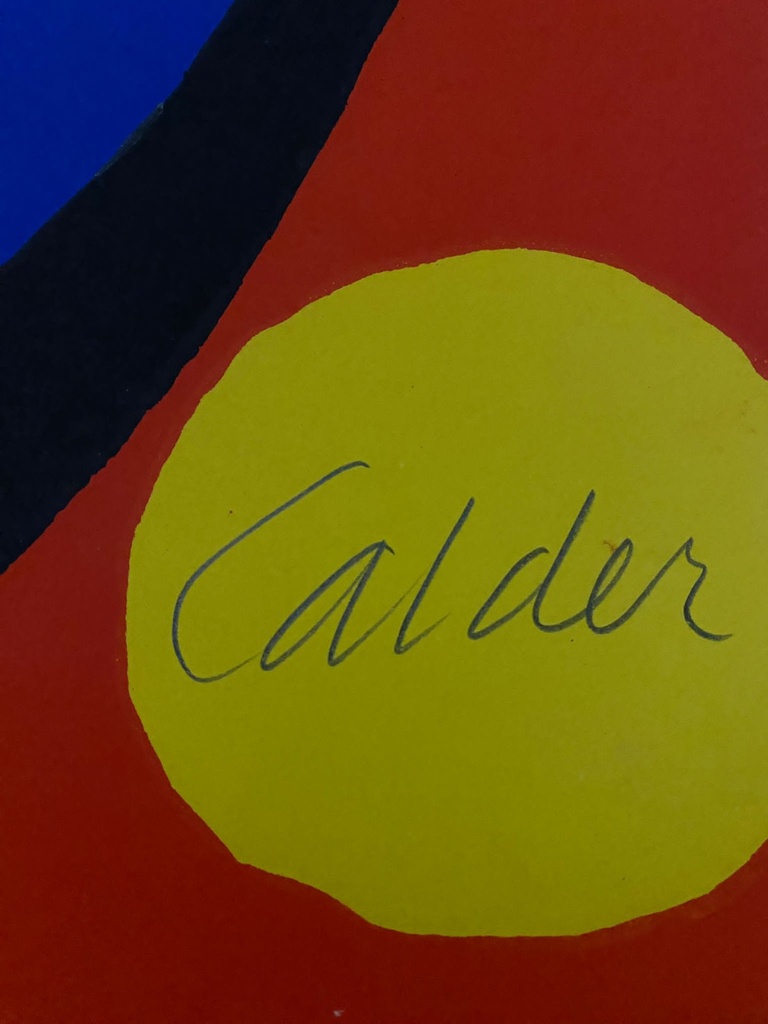
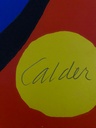
Signed
Certificate
OTHER ARTWORKS YOU MAY LIKE
Your Dynamic Snippet will be displayed here...
This message is displayed because you did not provide both a filter and a template to use.