Alexander Calder
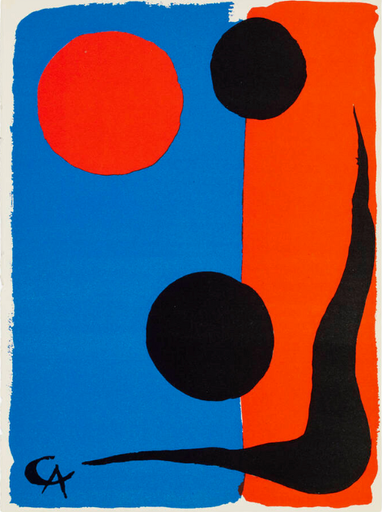
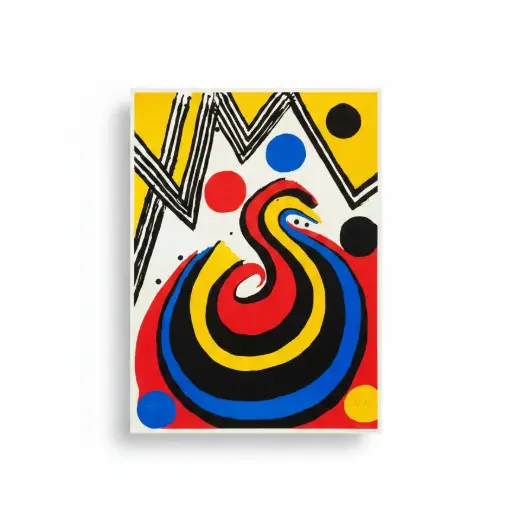
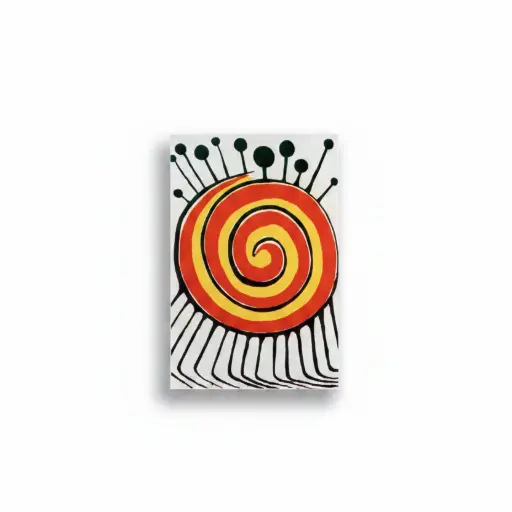
Born in 1898 in Pennsylvania (USA) and died in 1976, Alexander Calder was one of the most important artists and inventors of the 20th century. Before turning his attention to art in 1920, he studied mechanical engineering, an apprenticeship that would form the basis of his artistic creativity. Revolutionizing the art of volume, the inventiveness of his work introduced new shapes and colors. Known for his famous wire circus, in the 1930s, surrounded by his friends Fernand Léger, Piet Mondrian and Joan Miró, he launched into abstract art. With his eyes riveted on nature's dance of the stars, he drew inspiration from it to create his famous suspended sculptures, which Marcel Duchamp named mobiles in 1932, and which made him the acknowledged artist of his time. During his career, Calder exhibited at many prestigious institutions, including the Exposition Universelle in 1937 (Paris), the Museum of Modern Art in 1943 (New York) and the Venice Biennale in 1952. Today, his work can be found in the world's greatest museums (MoMa, Centre Pompidou, Tate Museum, Fondation Cartier, Tehran Museum of Contemporary Art...). He has also created monumental sculptures for JFK airport and UNESCO.