Quik (Lin Fenton)
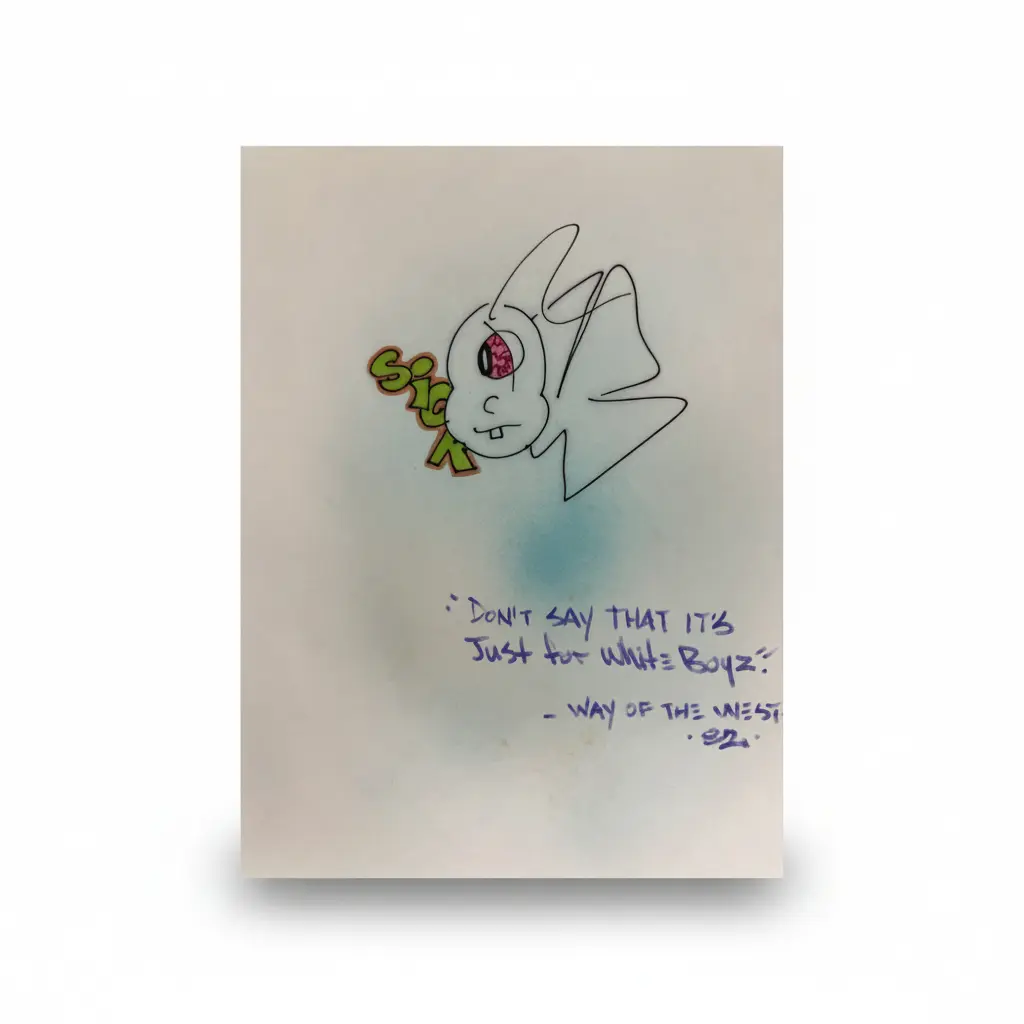
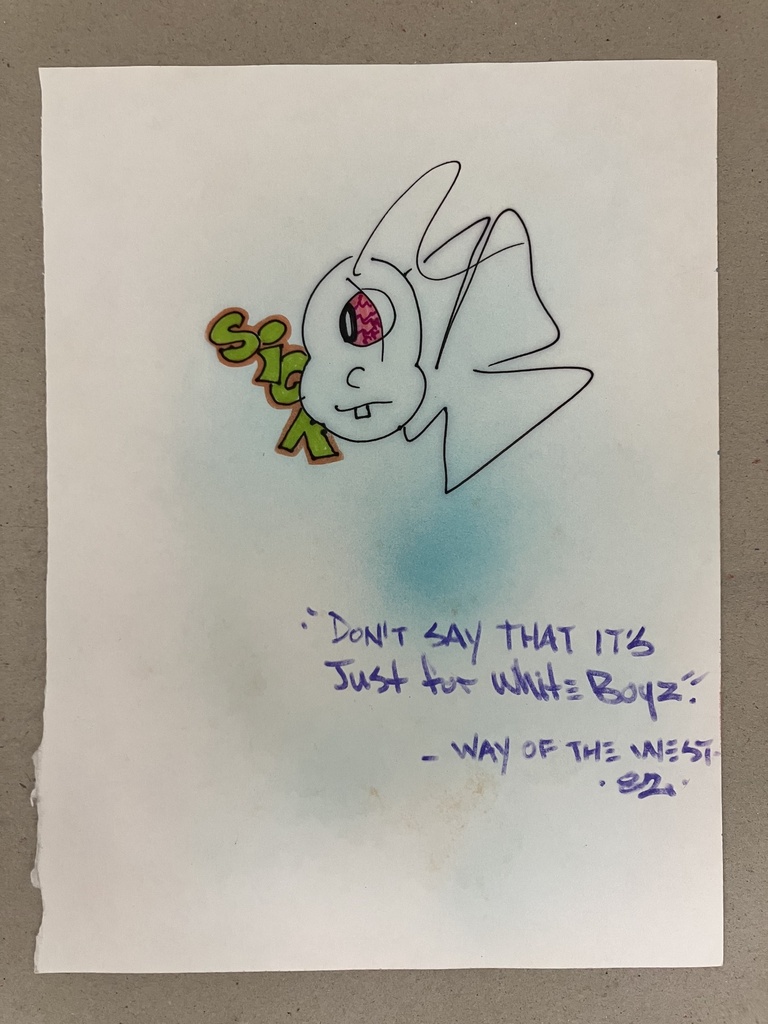
SICK 1982
1982
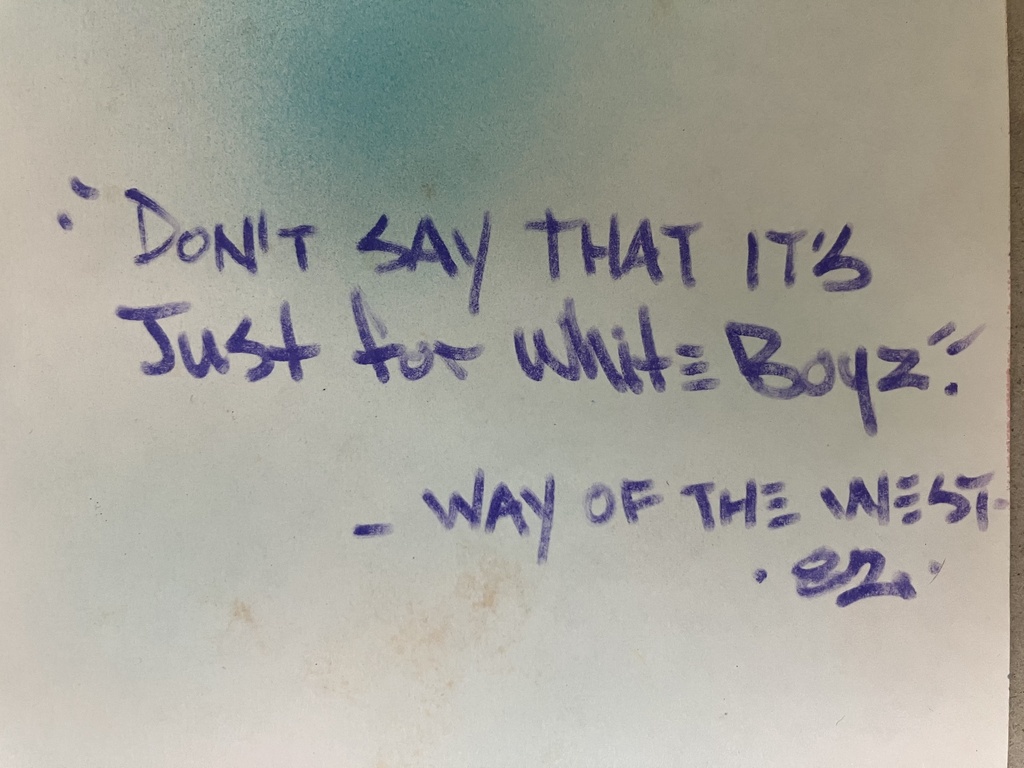
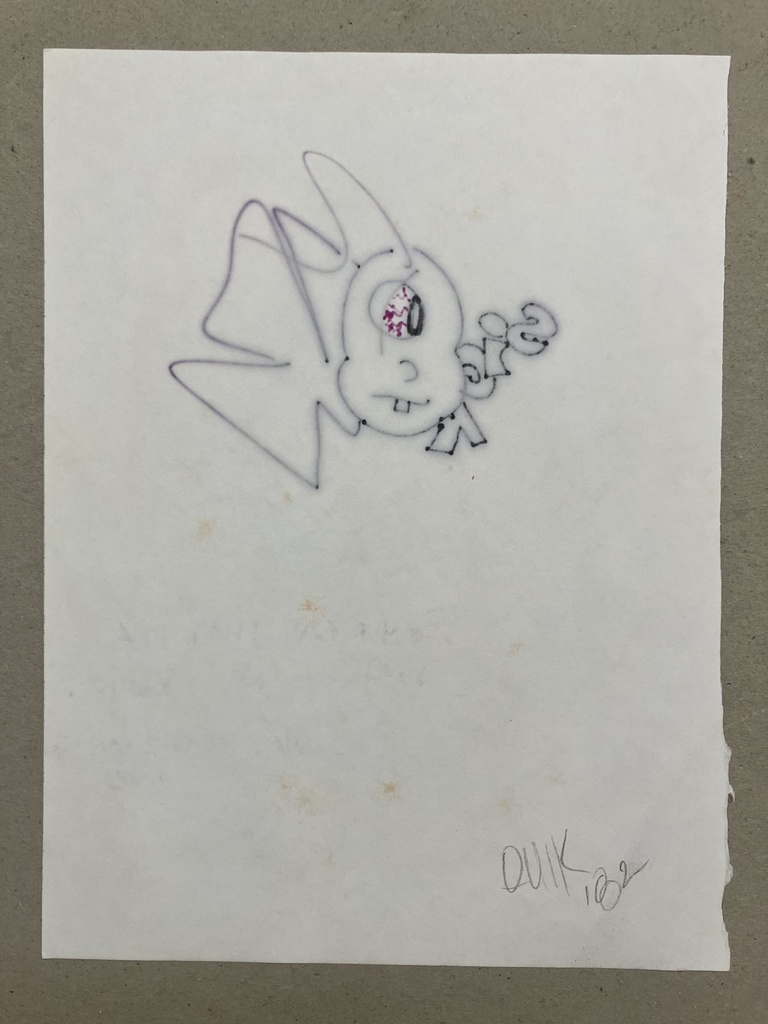
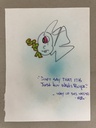
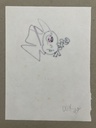
graffiti done with markers, pens, and airbrush inks on a white sketchbook page
28 × 21 cm
Unique
Location: Paris, France

Arianee token ID
808275624
Share by
Email
About the artwork
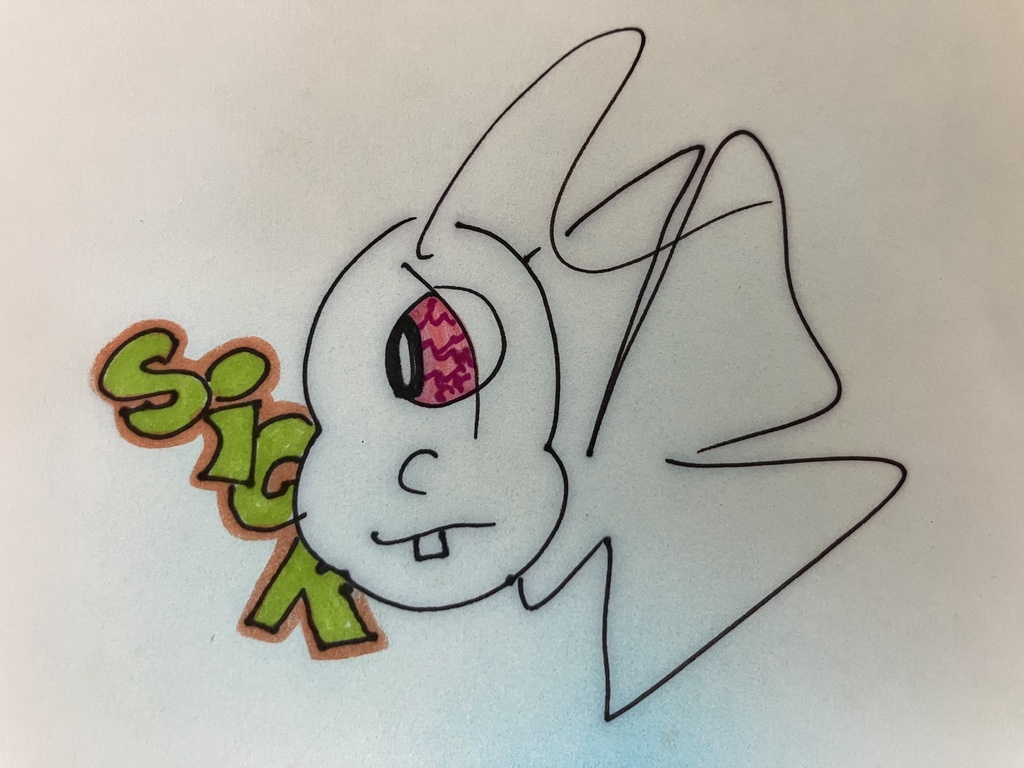
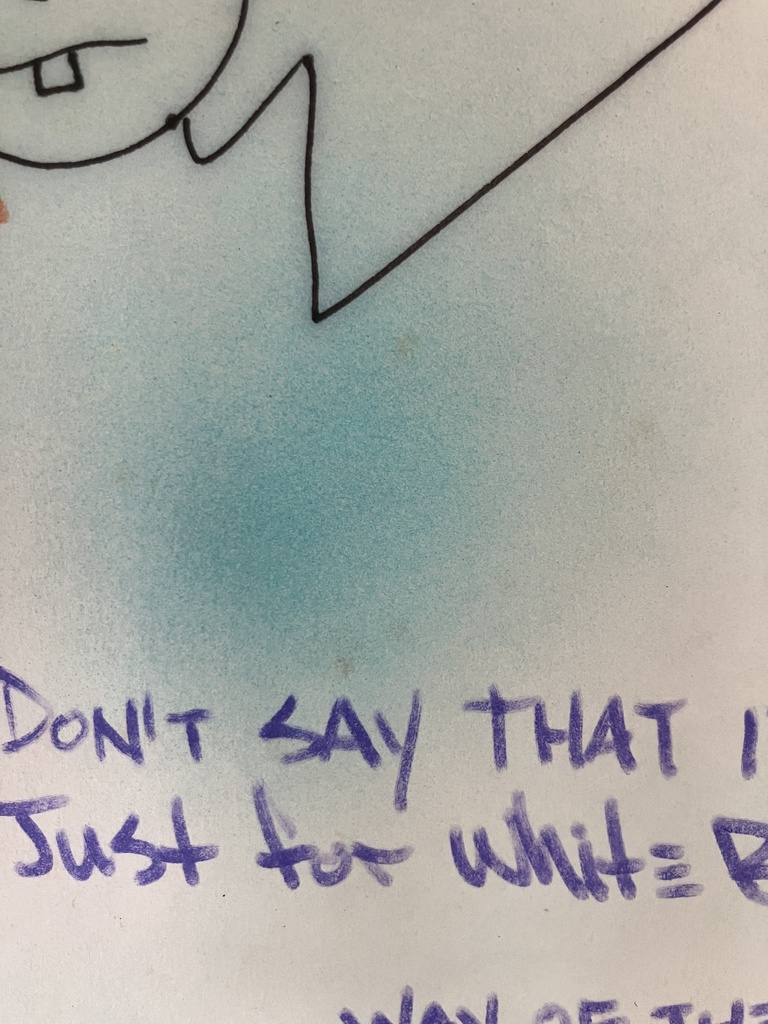
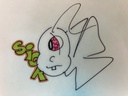
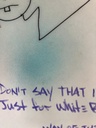
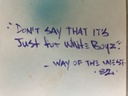
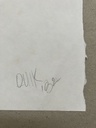
The design features a stylized character’s head, rendered with bold black outlines and minimal shading. The character’s left eye is depicted with a pink and red pattern, suggesting a bloodshot or altered state. To the left of the character, the word “SICK” is presented in a bubble-style lettering, outlined in brown and filled in green, reminiscent of early graffiti tags. Below the central imagery, handwritten text in purple ink reads: “'DON’T SAY THAT IT’S Just for whit= Boyz?' - WAY OF THE WEST .82.” A light blue airbrushed spray is visible beneath the figure, providing a subtle background element. The overall aesthetic combines a comic-book-style illustration with elements characteristic of early graffiti art. The handwritten inscription offers a social commentary, potentially addressing perceptions of the graffiti movement in its early days. This work on paper reflects the informal and experimental nature of the art created in sketchbooks during graffiti’s formative period. The combination of drawing, lettering, and airbrush techniques illustrates the diverse methods employed by artists working outside traditional art institutions. The date “82” in the inscription explicitly places the piece’s creation in a pivotal year for the emergence of graffiti in the art world.
Expert opinion
This work belongs to the early transitional period of graffiti art, as it shifted from public spaces to private art objects. In the early 1980s, a few pioneering artists, including Seen, began to translate their street aesthetic onto canvas and paper, leading to the initial entry of this art form into galleries and the commercial art market. The medium and informal style of the piece are consistent with works produced by graffiti artists experimenting with studio practices while retaining their original visual language. In the art market, works from this specific period by founding graffiti artists such as Seen are considered historically significant. They represent a direct link to the origins of a global artistic movement. Pieces that include handwritten social commentary or direct references to the culture of the time may be of particular interest to collectors seeking works with historical narrative depth.
About the artist
Lin Felton aka Quik was born in 1958 in Queens, New York. He began tagging on Queens walls at the age of 10. It wasn't long before he was covering the grayness of the city's trains with his name and recognizable graffiti. An active member of the RTW Crew, he has worked alongside the likes of Jean-Michel Basquiat, Keith Haring and Futura. After graduating from Parsons School of Design, Quik was spotted by Dutch art dealer Yaki Kornblit, who encouraged him to move to Europe, where he would become a recognized artist. His work has become a fixture on the international scene, and has been incorporated into prestigious collections. His work can be found in the collections of the Museum of the City of New York, the Studio Museum of Harlem in New York, the Becht Collection, the Martin Visser Collection and the Groninger Museum in the Netherlands.
Additional info
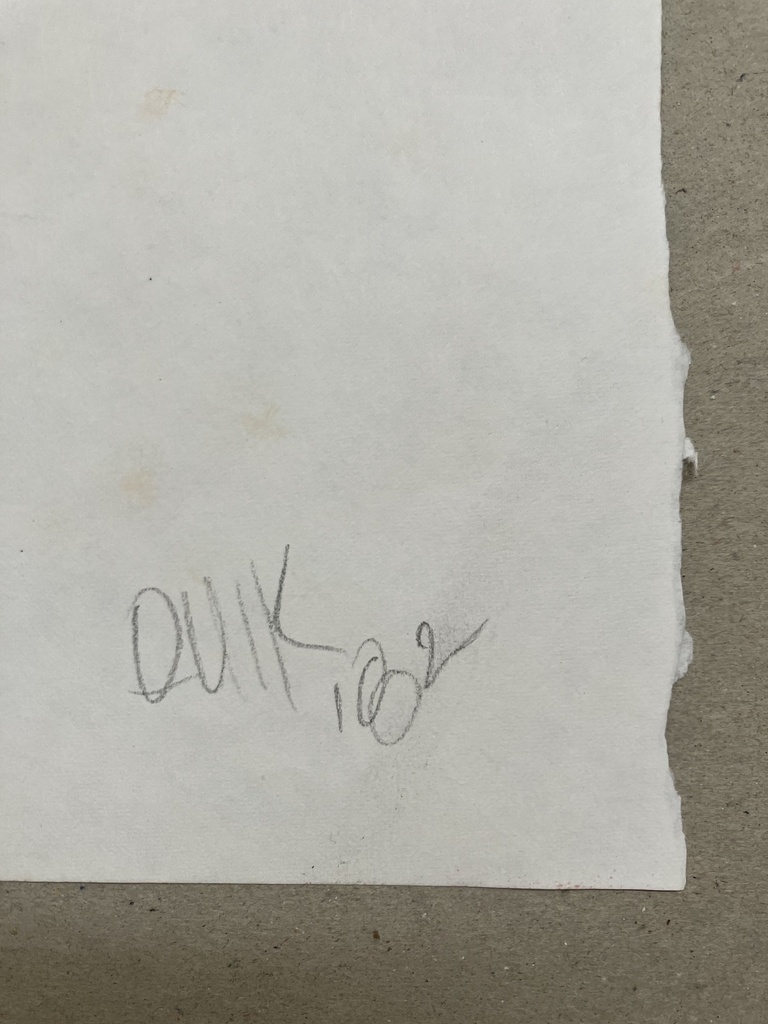
Signed
Dated
OTHER ARTWORKS YOU MAY LIKE
Your Dynamic Snippet will be displayed here...
This message is displayed because you did not provide both a filter and a template to use.