Claudio Casanovas
Untitled
2010
Ceramic
20 × 40 × 40 cm
Unique
Location: LA HULPE, Belgium

Arianee token ID
292917626
Share by
Email
About the artwork
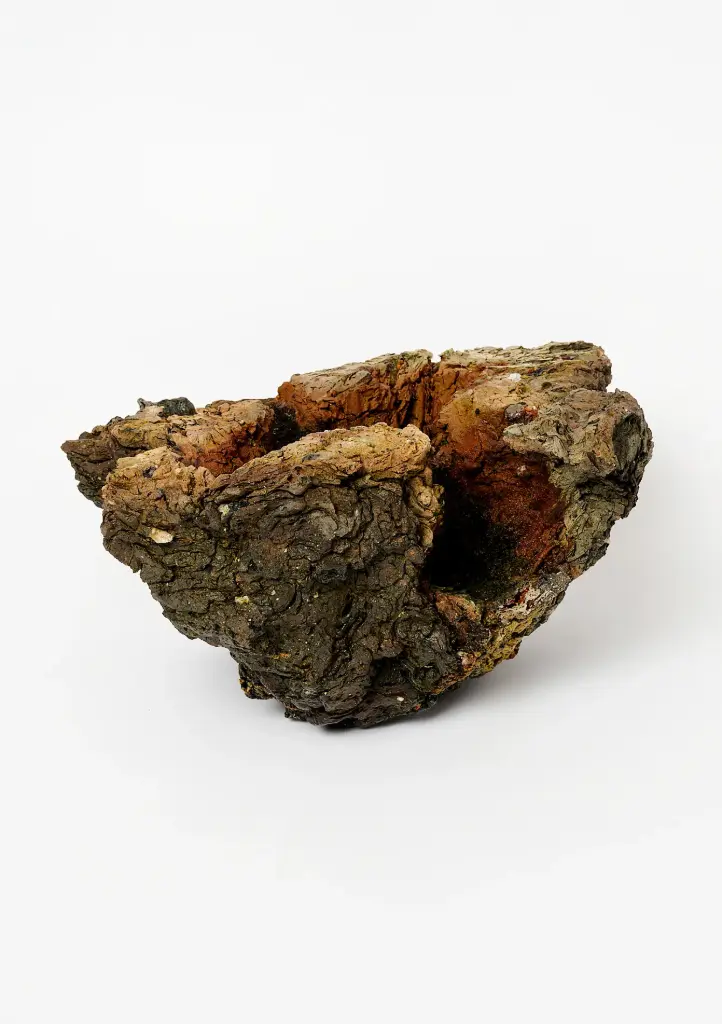
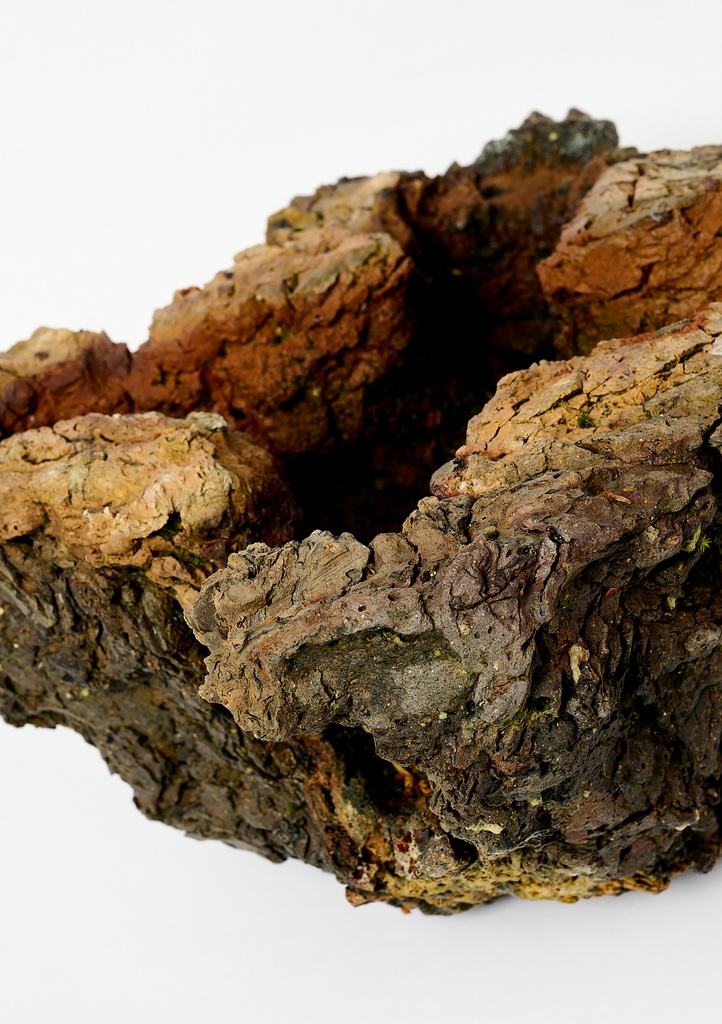
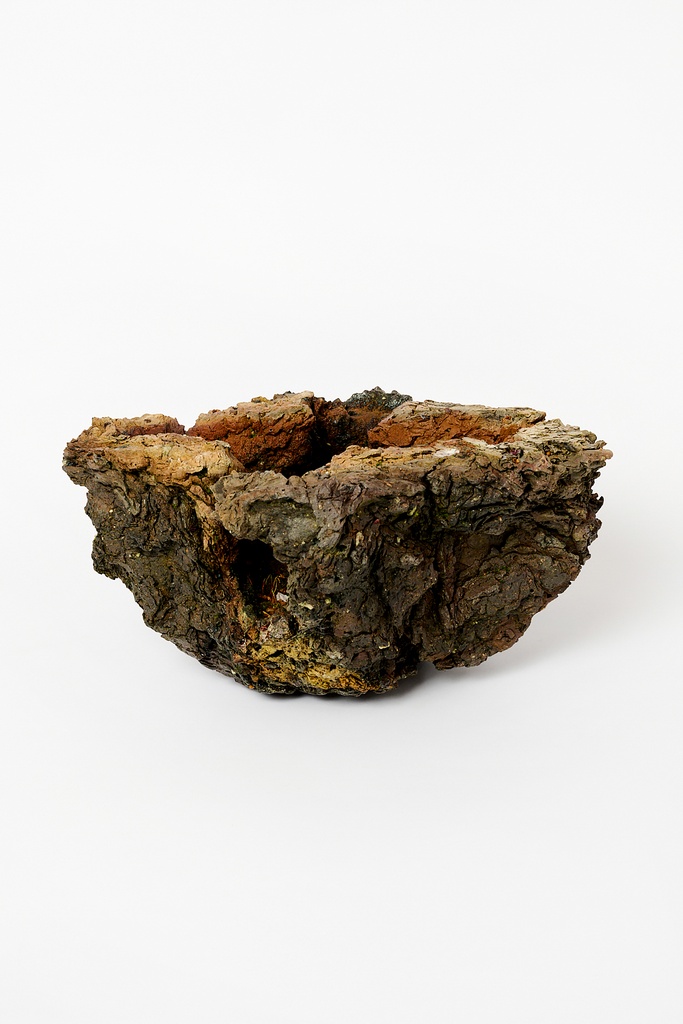
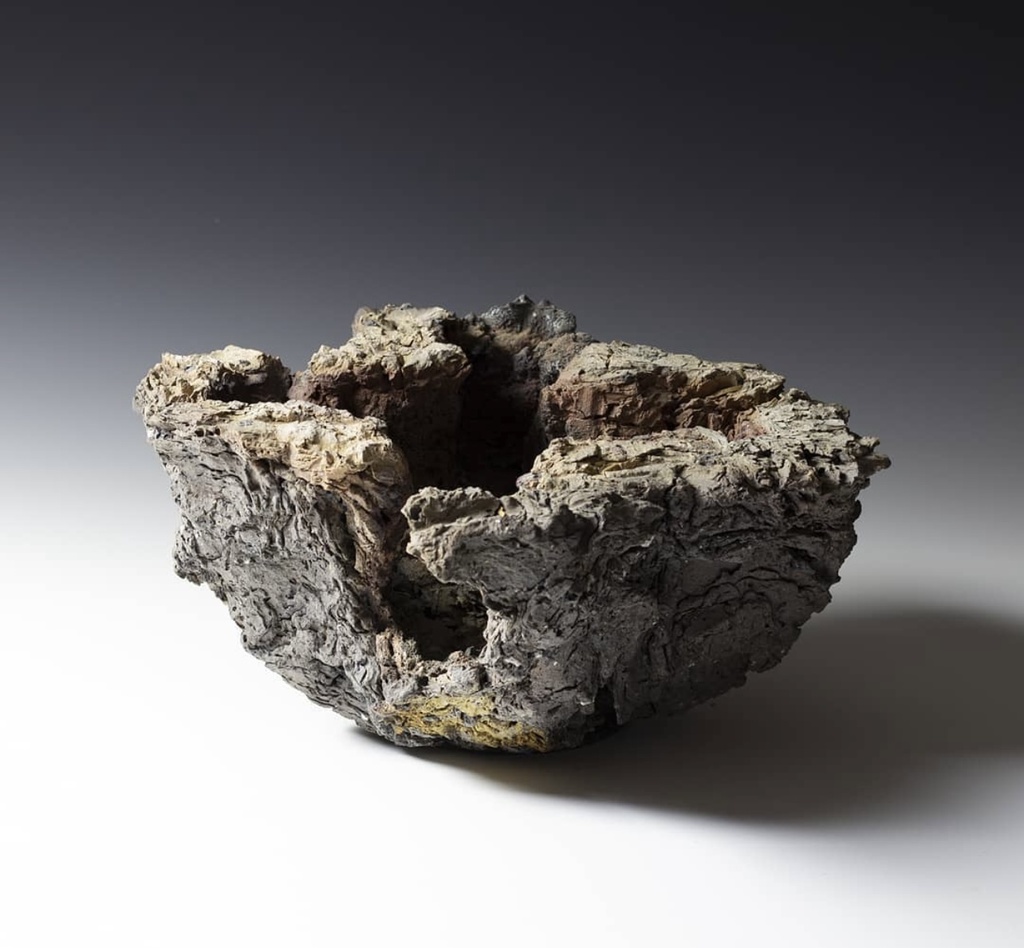
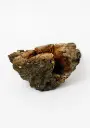
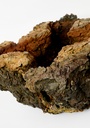
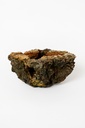
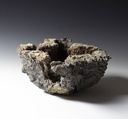
This ceramic sculpture presents a form that suggests organic or geological origins, characterized by a rough, textured surface and an irregular, hollowed-out interior. The piece exhibits a varied color palette, ranging from deep earthy browns and grays to reddish-orange tones, with subtle hints of green and lighter mineral deposits. The exterior surface displays a craggy, bark-like texture, while the interior reveals stratified layers and a darker, more cavernous appearance. The structure of the work is asymmetrical, with undulating contours and fractured edges that contribute to its naturalistic aesthetic. The interplay of light and shadow across its uneven surfaces emphasizes the depth and complexity of its form. The composition evokes natural formations, such as weathered rock, tree bark, or volcanic fragments, without directly replicating them. The artwork's dimensions indicate a substantial, freestanding object designed to be viewed from multiple angles. Its material qualities and form reflect an engagement with the raw properties of clay and the transformative processes of firing and manipulation. The piece functions as a sculptural object that explores the inherent characteristics of its medium.
Expert opinion
Claudio Casanovas occupies a position within contemporary ceramics as an artist who extends the boundaries of the medium beyond traditional vessel forms. His work is situated within a broader art historical context that values material experimentation and the exploration of natural processes in sculpture. Casanovas's approach to ceramic art, characterized by his innovative techniques and the organic, often monumental scale of his pieces, distinguishes him in the field. The market for Casanovas's work reflects his international recognition and institutional presence. His pieces are collected by major museums and are regularly offered by specialist galleries and auction houses focusing on contemporary and studio ceramics. The consistent demand for his work, particularly larger or more distinctive sculptural pieces, indicates a stable market position for the artist.
About the artist
Claudio Casanovas, born in Barcelona in 1956, is a Catalan ceramist recognized for his experimental sculptural works. He initially pursued theater studies in Barcelona before dedicating himself to ceramics around 1978. Casanovas trained in Olot, Catalonia, and was a member of the Coure Potters' Cooperative from 1978 to 1987, a period that fostered collaboration and knowledge exchange, notably with Japanese ceramists such as Ryoji Koie, with whom he developed a lasting professional relationship. Casanovas held his first solo exhibition, "Cortezas de Tierra" (Earth Bark), in 1982 at the Olot Museum, marking a shift from functional wares to sculptural forms. His career includes numerous international exhibitions and awards, such as the first prize at the III International Ceramics Competition in Mino, Japan, in 1992. His works are held in public collections worldwide, including the Victoria and Albert Museum in London, the Hermitage Museum in Saint Petersburg, and the National Gallery of Australia. In 2004, he created a monument against Fascism in Olot, titled "Memorial als Vençuts," installed in 2006. Casanovas is known for his continuous experimentation with clay, often incorporating organic materials, metals, and metal oxides. He employs techniques such as sandblasting to achieve textured and eroded surfaces, and has developed unique methods like freezing clay blocks before firing to induce natural cracks and forms. His artistic practice is characterized by a focus on the inherent qualities of the material and the unpredictable outcomes of his processes.
Additional info
Certificate
3x
OTHER ARTWORKS YOU MAY LIKE
Your Dynamic Snippet will be displayed here...
This message is displayed because you did not provide both a filter and a template to use.