Quik (Lin Fenton)
Quik Tag 1982
1982
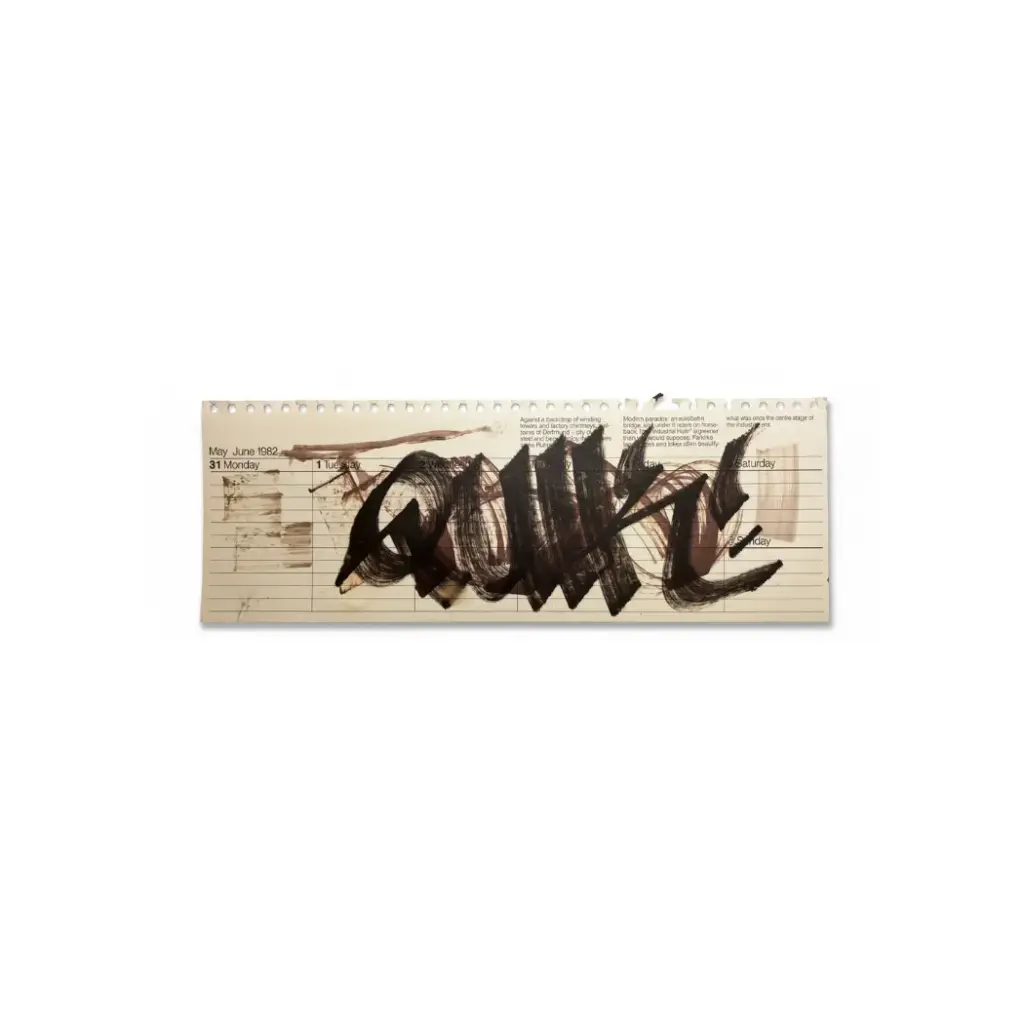
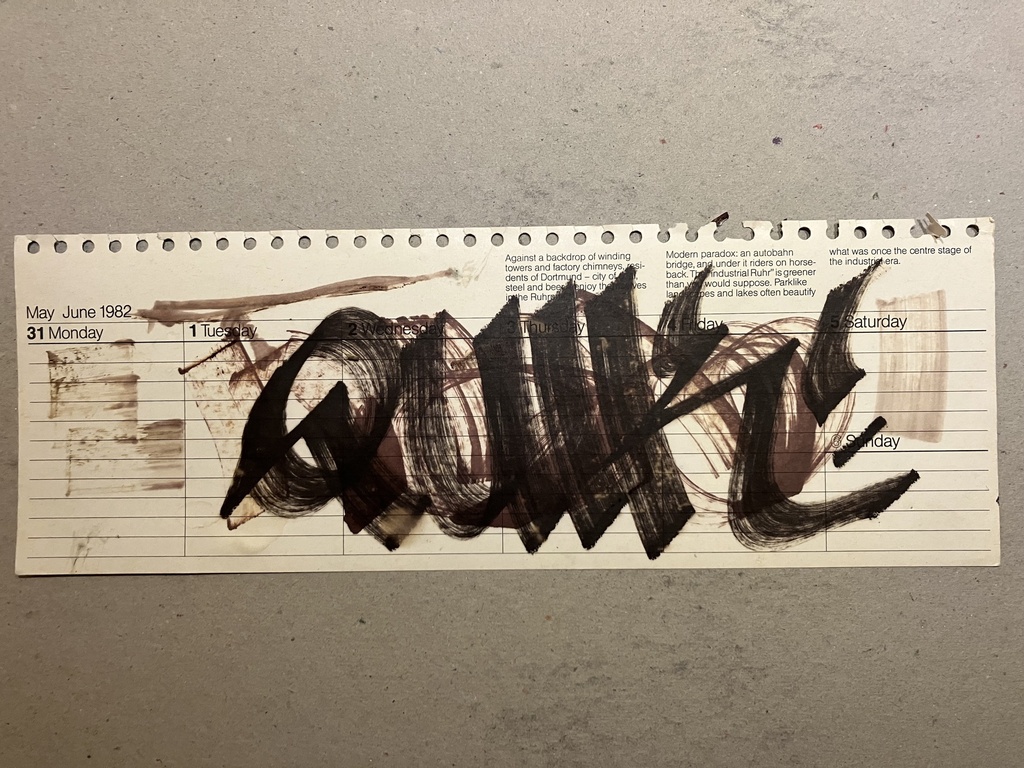
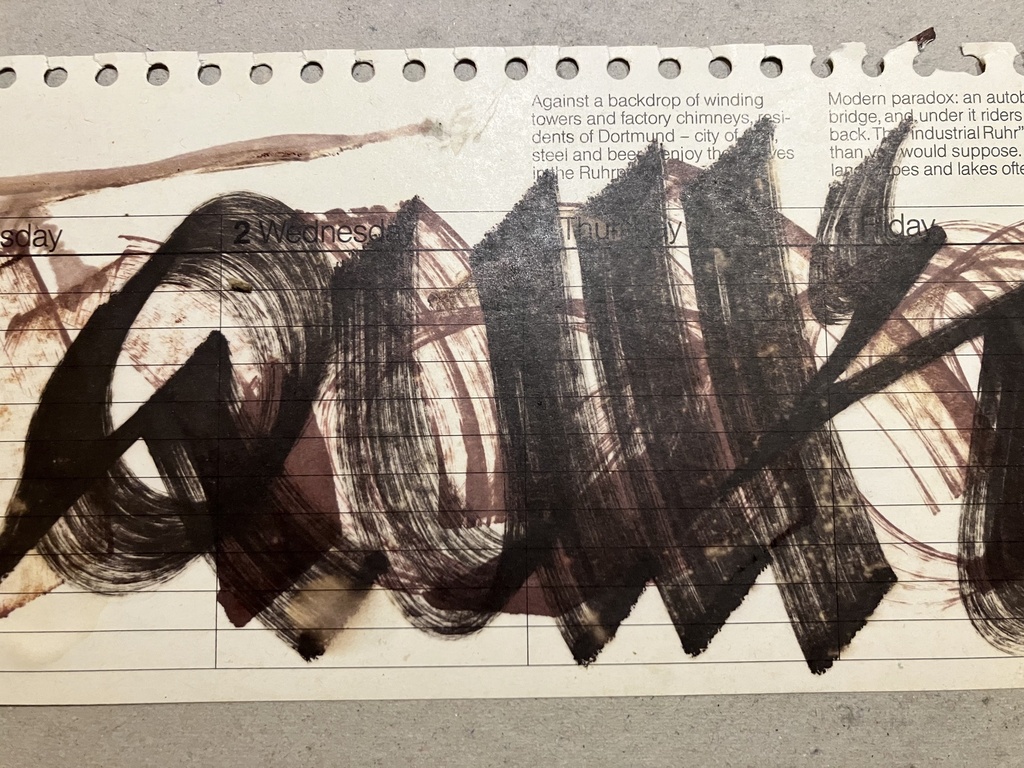
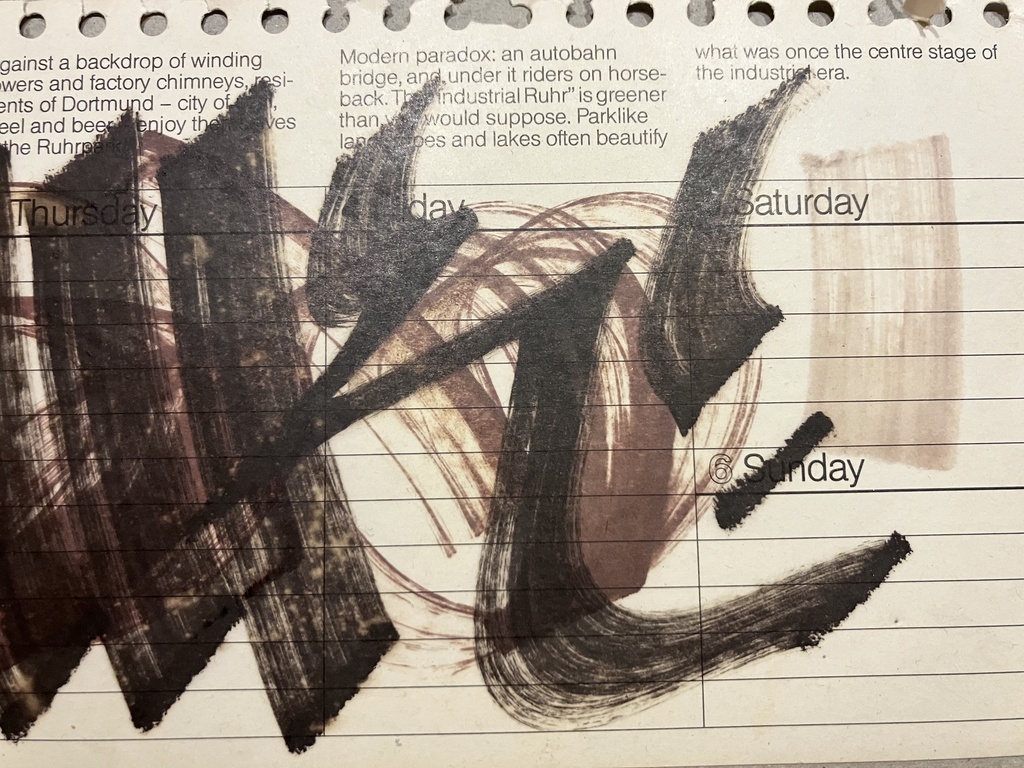
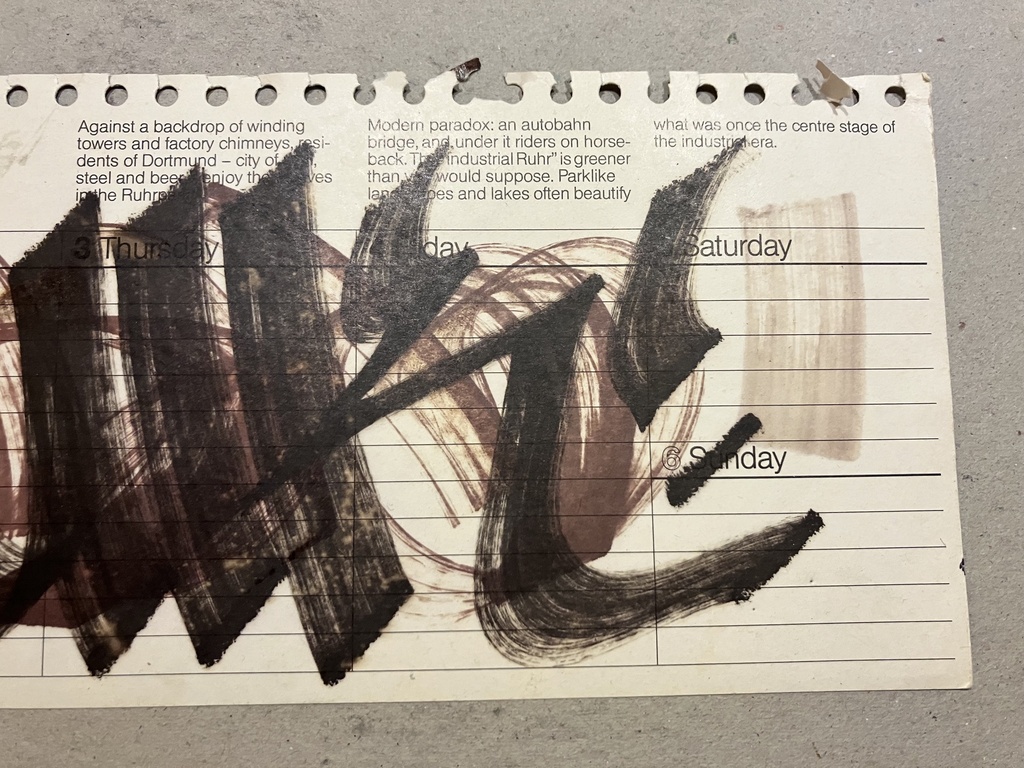
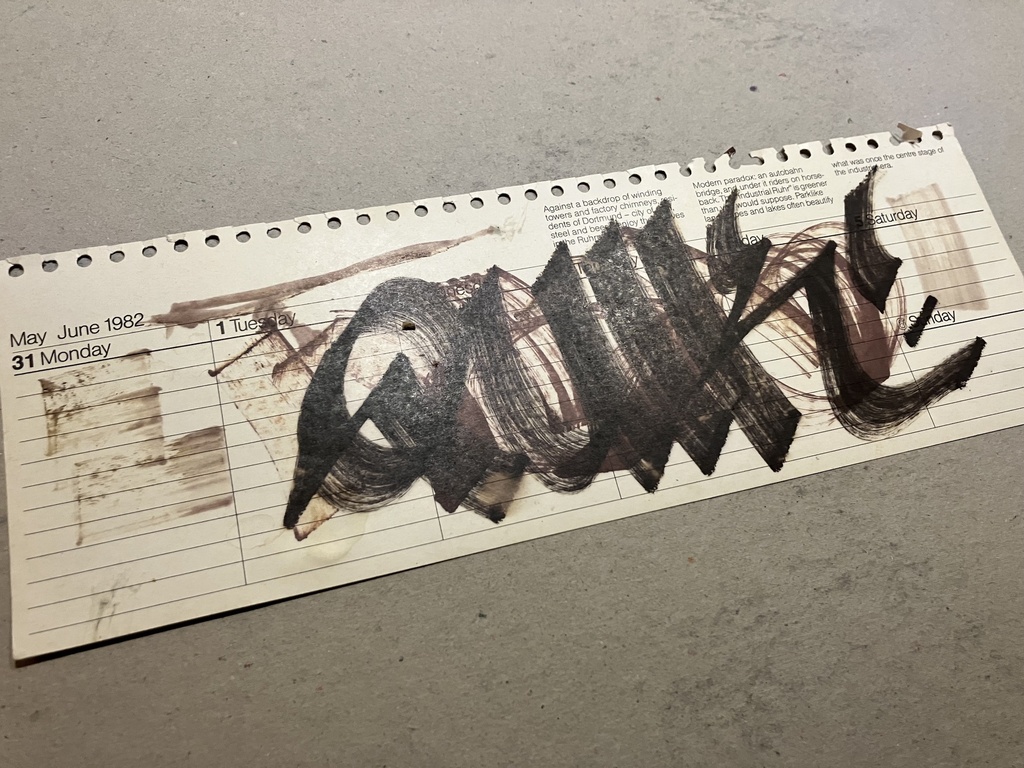
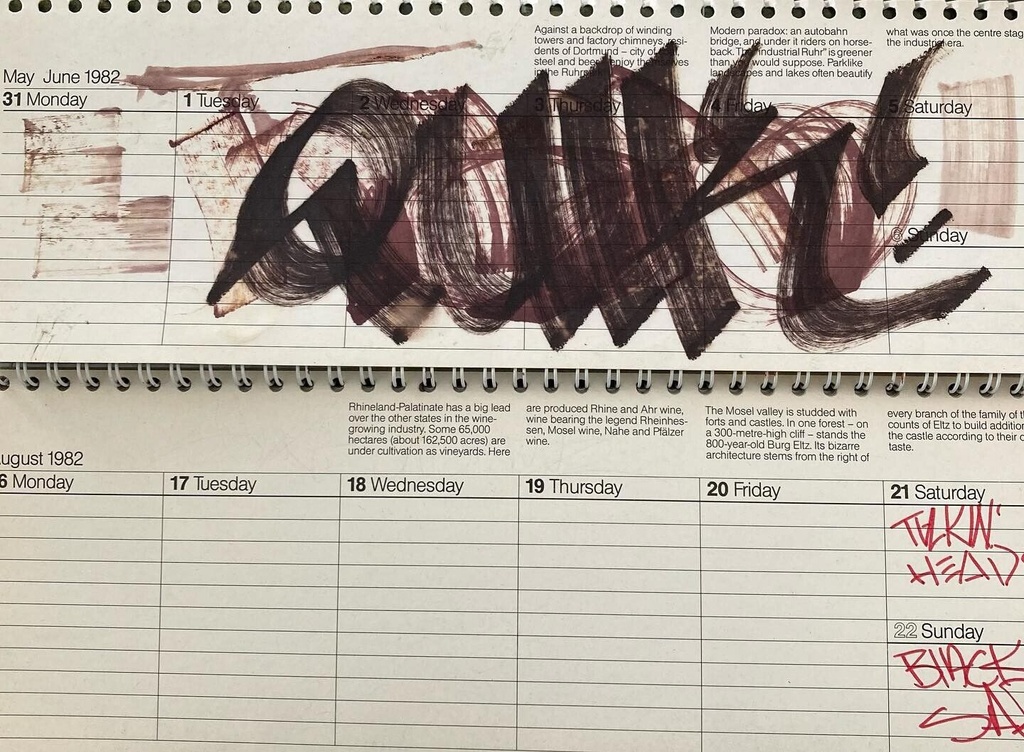
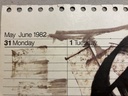
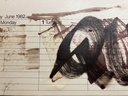
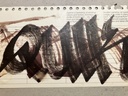
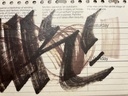
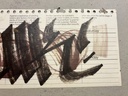
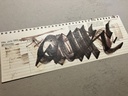
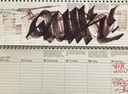
Mark made with a large flat-tipped marker on a cut-out calendar page from 1982
11 × 30 cm
Unique
Location: paris, France

Arianee token ID
439716638
Share by
Email
About the artwork
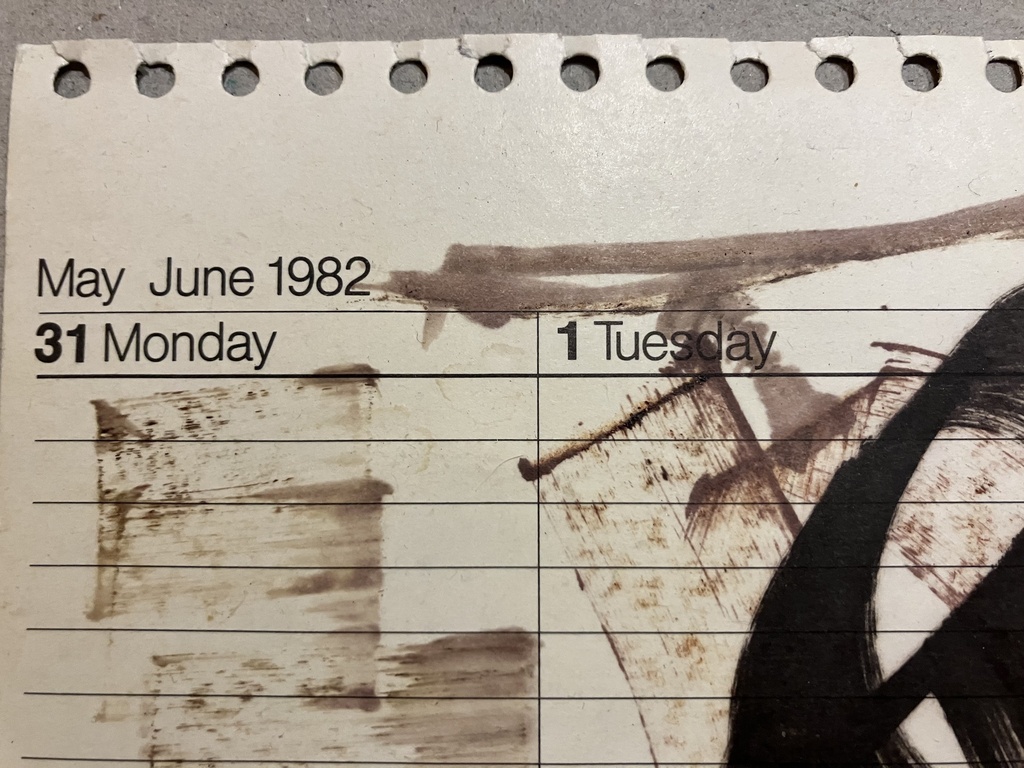
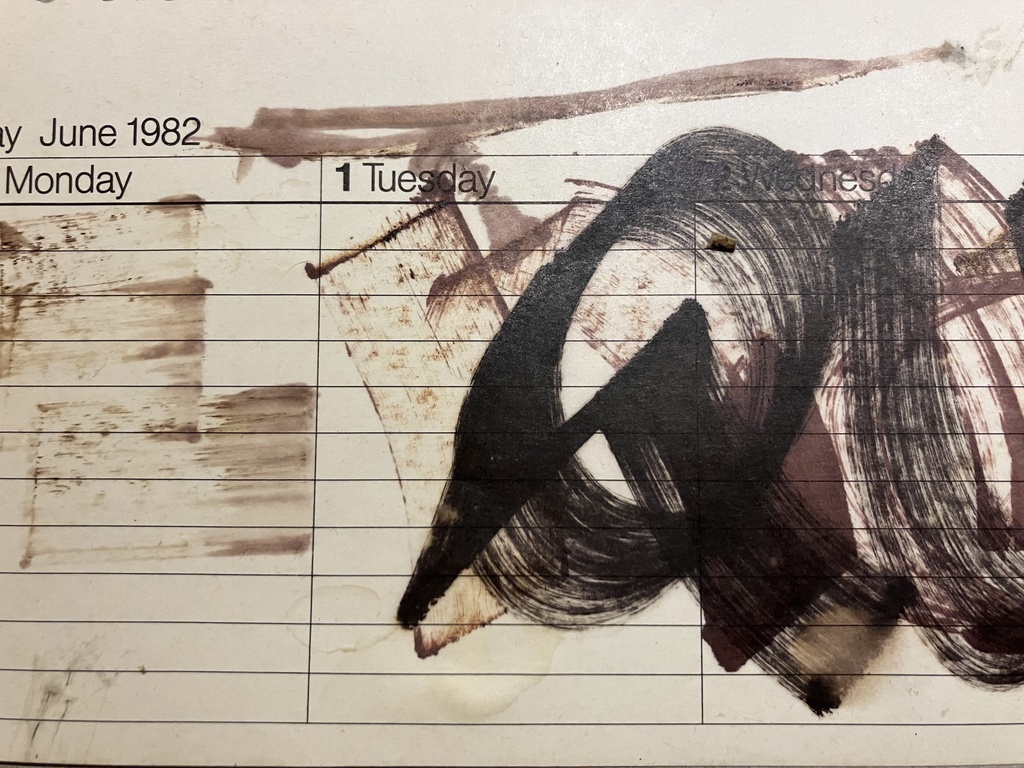
A calendar page from May-June 1982 serves as the support for this artwork, featuring bold calligraphic marks in black and brown marker. The composition is dominated by sweeping, energetic strokes that form the artist's tag, "QUIK," across the central portion of the page. The underlying calendar grid and printed text, including dates like "31 Monday," "1 Tuesday," and "2 Wednesday," remain partially visible beneath the applied marks. Textual snippets describing the Ruhr region of Germany are also discernible in the upper right section of the page. The artist's distinctive lettering style, characterized by its angular forms and fluid execution, is evident in the prominent tag. The use of a flat-tipped marker creates varied line weights and textures, from broad, opaque swaths to finer, more textured passages where the ink appears to have been dragged across the paper. The brown marks, appearing as washes or lighter applications, provide a subtle background or counterpoint to the more assertive black forms. The choice of a calendar page as a substrate places the artwork within a specific temporal context, tying it directly to the year of its creation. The presence of the artist's tag on such an ephemeral, everyday object reflects the origins of graffiti art, where public surfaces and found materials often served as canvases. This work functions as a document of the artist's early practice and his engagement with the act of ta
Expert opinion
This work belongs to a pivotal period in the history of graffiti art, specifically the early 1980s, when artists like Quik began to transition their practice from public spaces to the gallery context. The use of an everyday object like a calendar page as a canvas reflects the raw, immediate nature of street art while simultaneously elevating it to a collectible art form. Works from this specific year are particularly notable as they coincide with Quik's initial recognition by the mainstream art world, especially in Europe. The market for early works by foundational graffiti artists like Quik has demonstrated stability, driven by collectors interested in the historical development of the Street Art movement. Pieces that directly showcase the artist's iconic tag and are dated to this formative era are generally sought after, as they offer direct insight into the artist's origins and stylistic evolution.
About the artist
Lin Felton aka Quik was born in 1958 in Queens, New York. He began tagging on Queens walls at the age of 10. It wasn't long before he was covering the grayness of the city's trains with his name and recognizable graffiti. An active member of the RTW Crew, he has worked alongside the likes of Jean-Michel Basquiat, Keith Haring and Futura. After graduating from Parsons School of Design, Quik was spotted by Dutch art dealer Yaki Kornblit, who encouraged him to move to Europe, where he would become a recognized artist. His work has become a fixture on the international scene, and has been incorporated into prestigious collections. His work can be found in the collections of the Museum of the City of New York, the Studio Museum of Harlem in New York, the Becht Collection, the Martin Visser Collection and the Groninger Museum in the Netherlands.
OTHER ARTWORKS YOU MAY LIKE
Your Dynamic Snippet will be displayed here...
This message is displayed because you did not provide both a filter and a template to use.