Marcel Fiorini
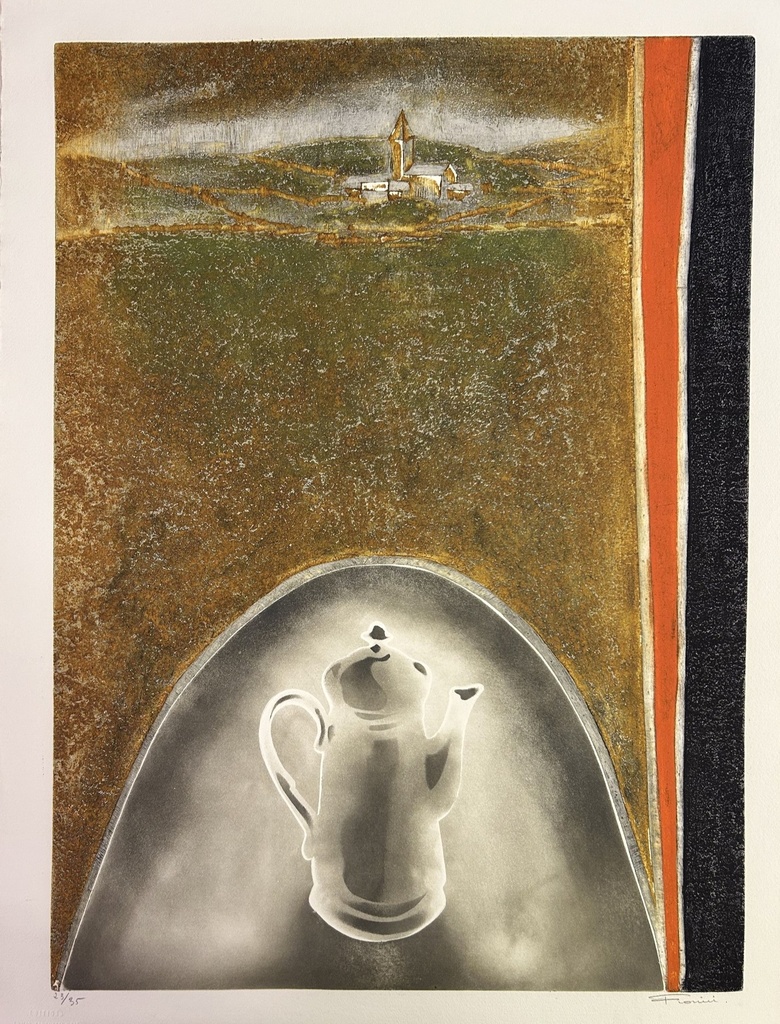
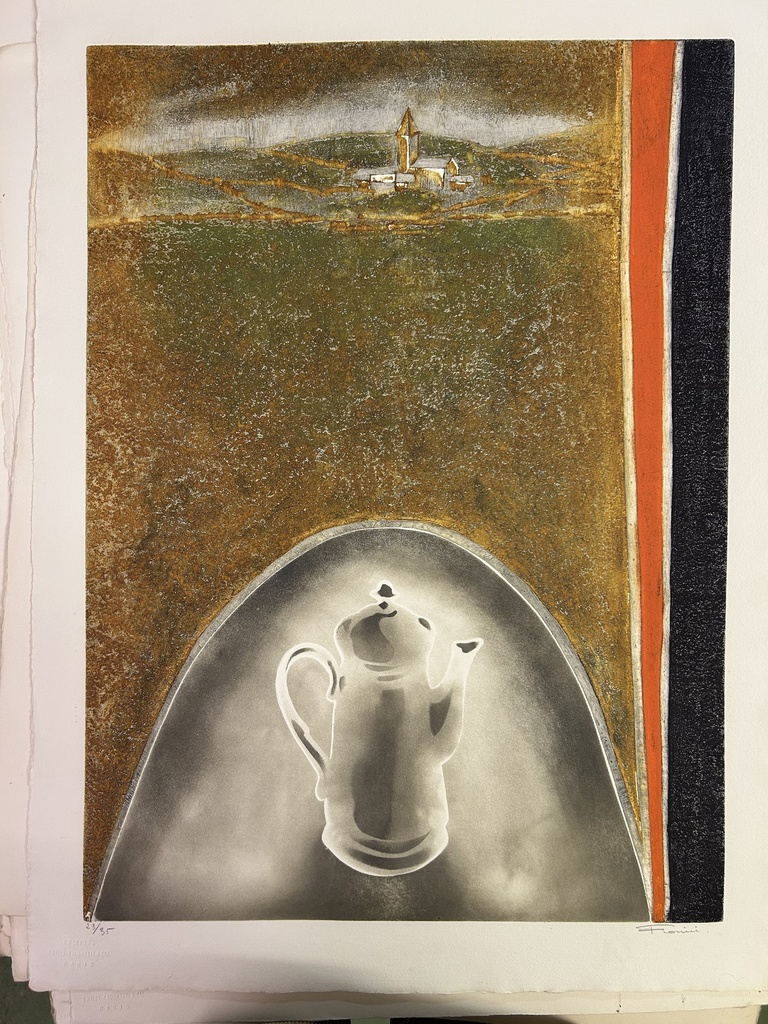
Cafetière
1974
Woodcut and aquatint on paper, embossed "Editions Emilio Jacometti - Paris".
56.5 × 76 cm
21/35
Documents
-
Invoice or proof of purchase
-
Certificate of authenticity
-
Other documents
About the artwork
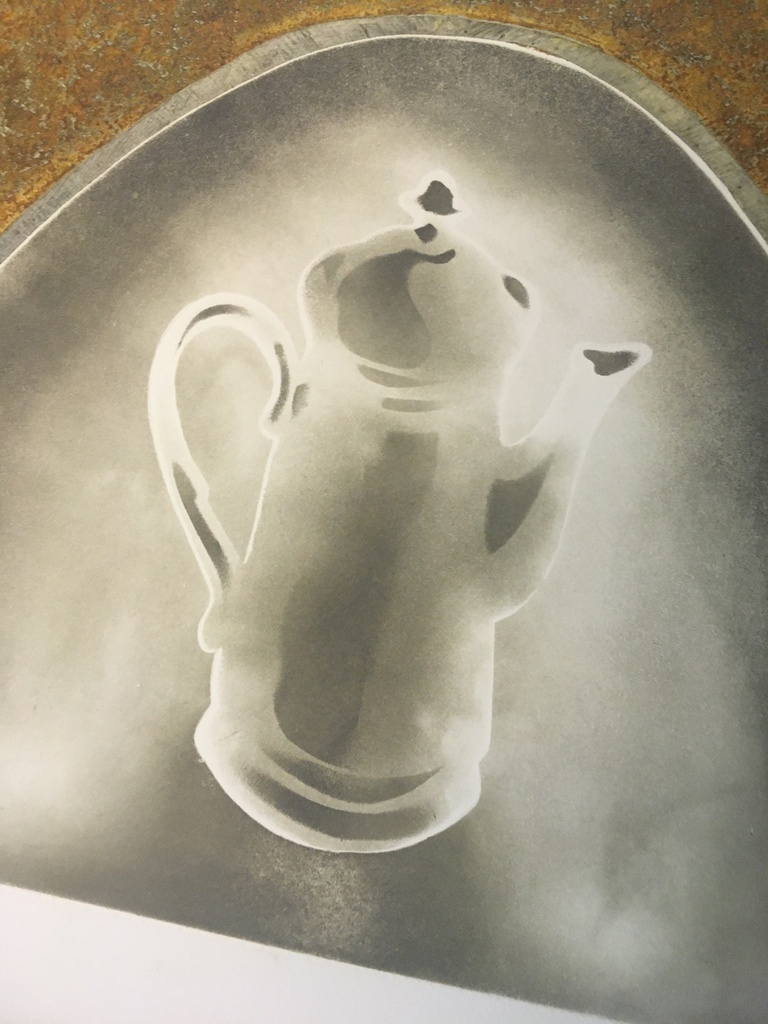
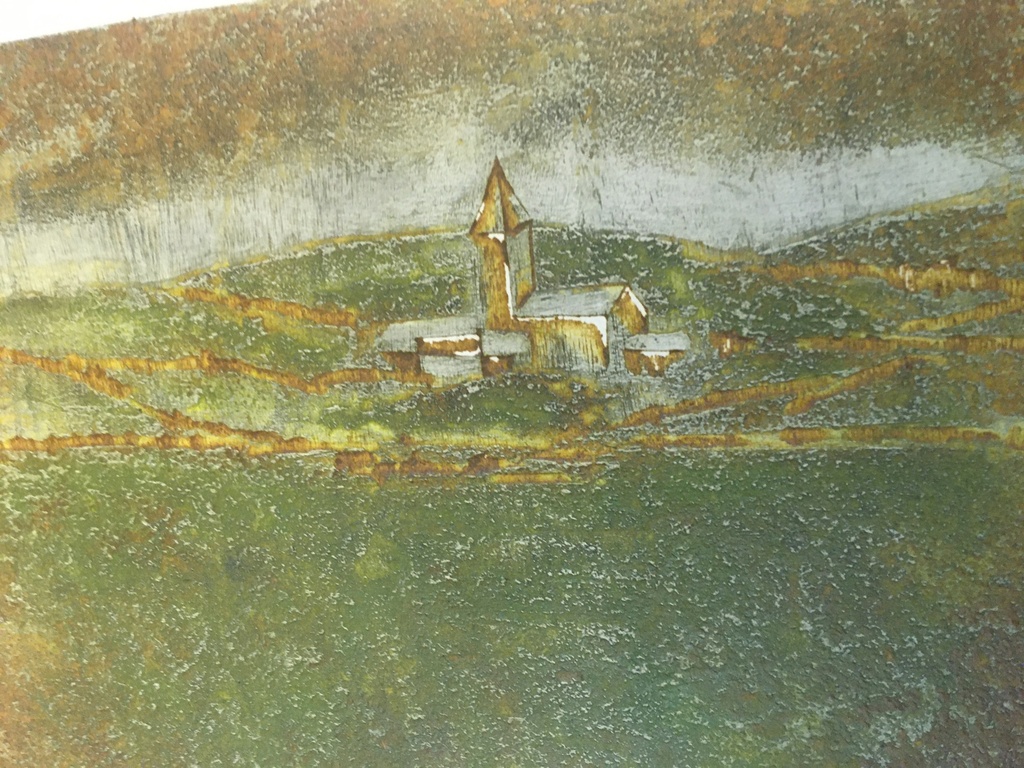
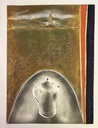
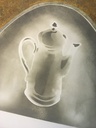
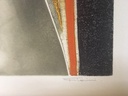
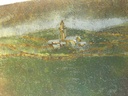
This print by Marcel Fiorini reveals his unique approach to material and form, where textures and contrasts build a subtle narrative. At the top of the composition, a rustic church emerges from a gently eroded landscape, in earthy tones of green and ochre, evoking memory and permanence. Below, isolated in a dark, arched frame, a coffee pot, done in luminous grisaille, appears almost spectral, as if an everyday object were elevated to iconic status. A vertical band of black and orange on the right-hand edge punctuates the composition with a modernist rhythm, balancing figuration and abstraction.
Expert opinion
Fiorini establishes a masterful link between the ordinary and the symbolic, infusing humble objects with an aura of timelessness. This work illustrates his technical inventiveness in printmaking and his poetic ability to combine landscape, still life and abstraction in a single visual language.
About the artist
"Born in Guelma, Algeria, into an Italian family, Marcel Fiorini began painting at a very early age and tried his hand at engraving using products from his father's pharmacy. He attended the École des Beaux-Arts in Algiers from 1940 to 1942. In 1947, his family moved to France. In 1941, he took a painting course at the École des Beaux-Arts d'Alger, then, after transferring to Paris, founded an "Atelier de peinture" with the famous pieds-noirs Louis Nallard and Maria Manton. A painter of the Nouvelle École de Paris, he was also recognized for his engravings and for the new printmaking processes he perfected, such as etching on wood, linoleum or plaster. Fiorini befriended Roger Chastel and Roger Bissière, for whom he produced engravings from 1952, as well as Bertholle, Tobey, Vieira da Silva and Jacques Villon. From 1948, he was a regular participant in the Salon des Réalités Nouvelles, the Salon de Mai and various exhibitions of young contemporary printmakers. In the early 1950s, Marcel Fiorini devoted himself almost exclusively to intaglio engraving techniques, notably aquatint and etching. He then turned to large linocuts, which he sometimes combined with the previous processes. He also made extensive use of wood and metal engraving. One of his greatest contributions remains the innovative use of linoleum to create graphic compositions integrated with modern painting."
Additional info
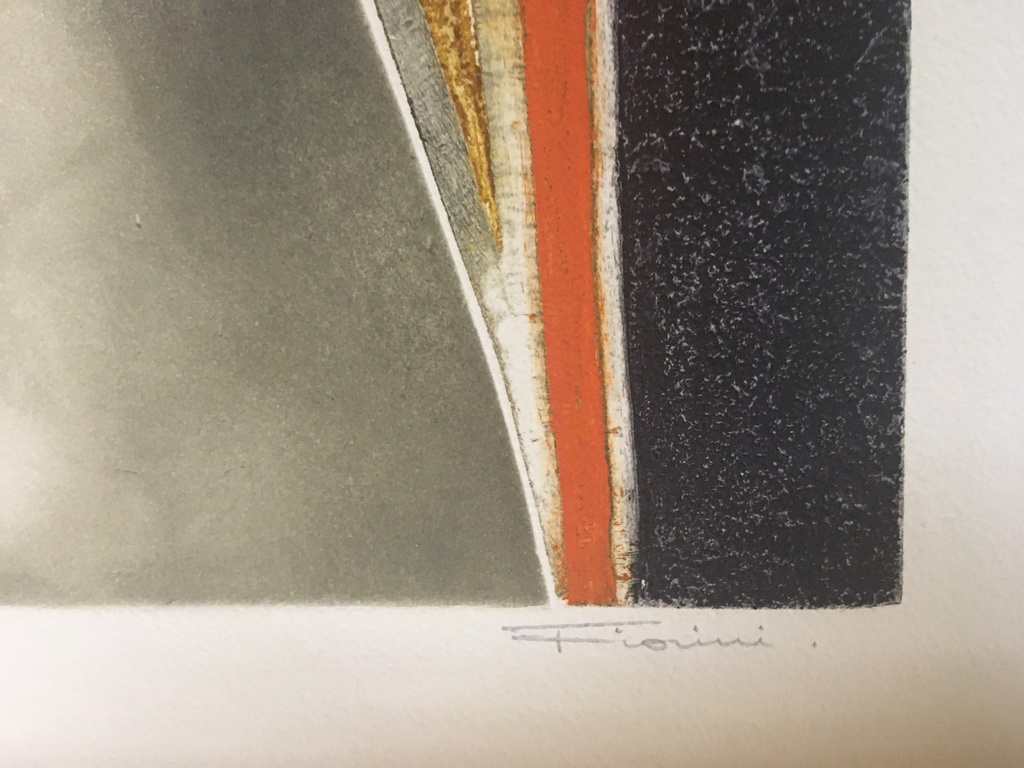
Signed
OTHER ARTWORKS YOU MAY LIKE
Your Dynamic Snippet will be displayed here...
This message is displayed because you did not provide both a filter and a template to use.