Alexandre Ouline
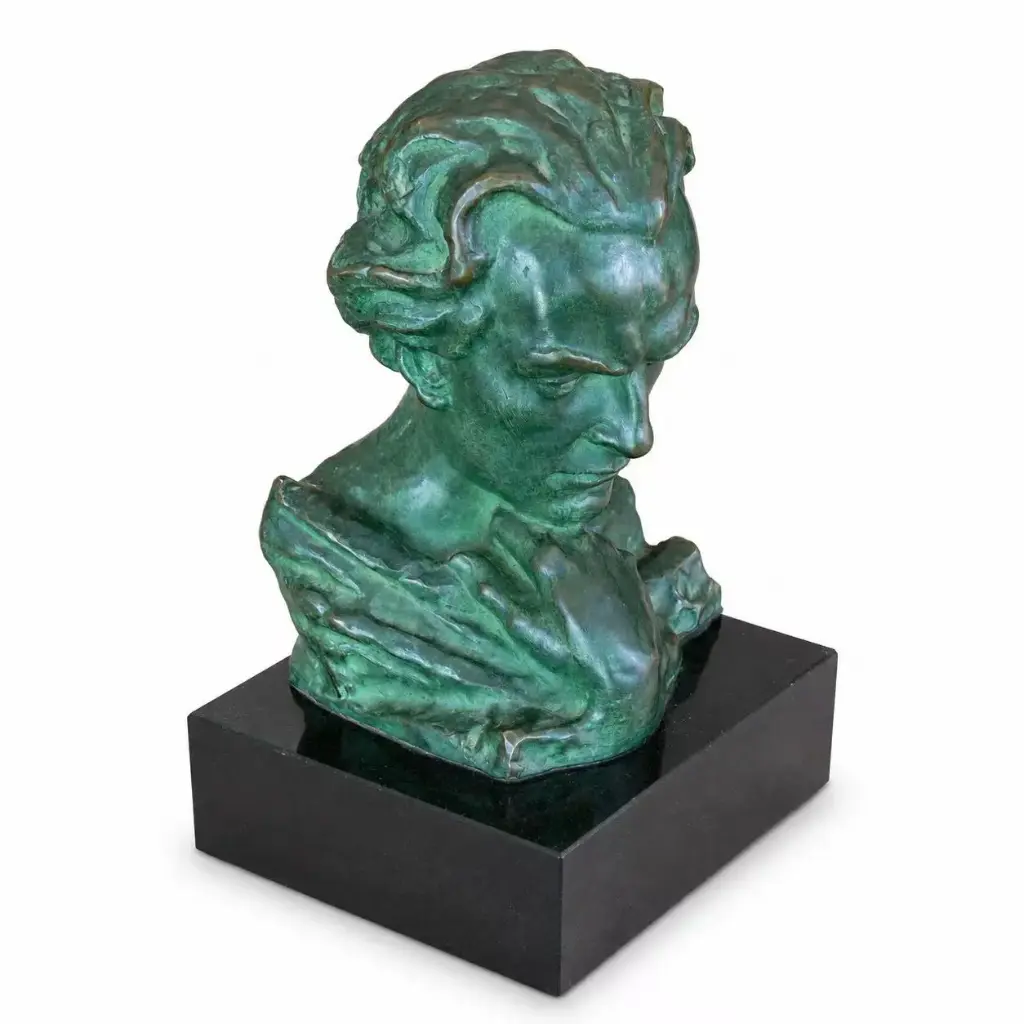
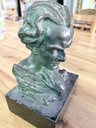
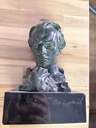
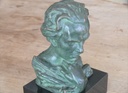
Buste en bronze de Jean Mermoz
c. 1930-1939
Bronze
18 × 10 × 10 cm
Unique
Location: TOULOUSE, France

Arianee token ID
458605669
Share by
Email
Documents
-
Invoice or proof of purchase
-
Certificate of authenticity
-
Other documents
About the artwork
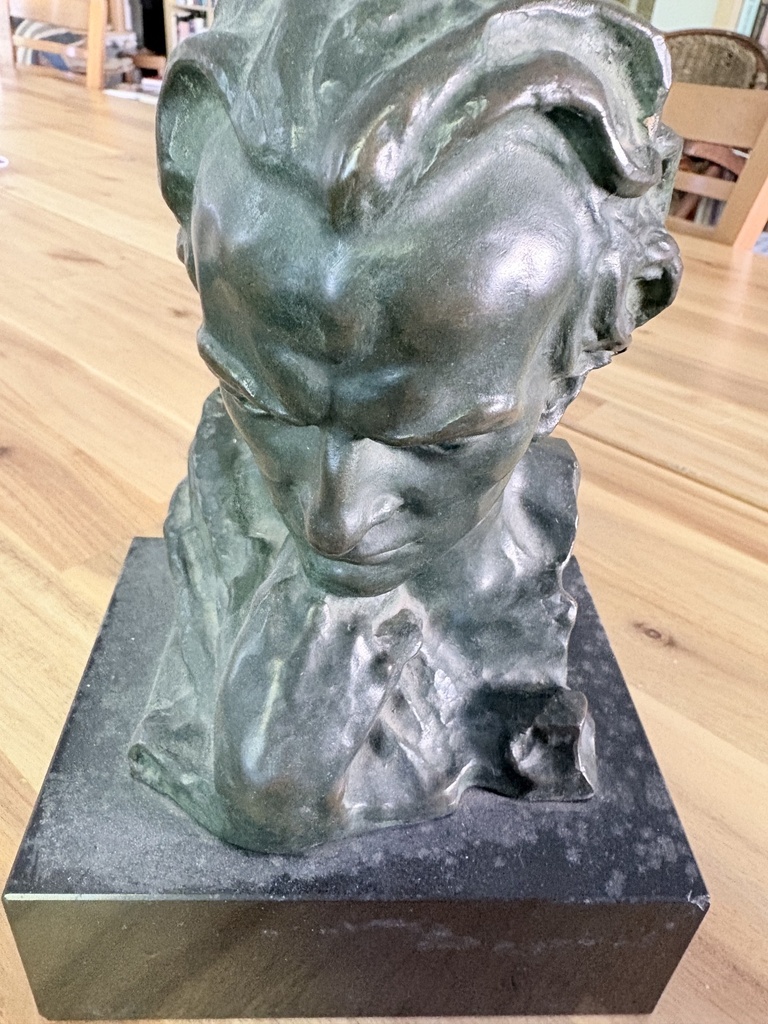
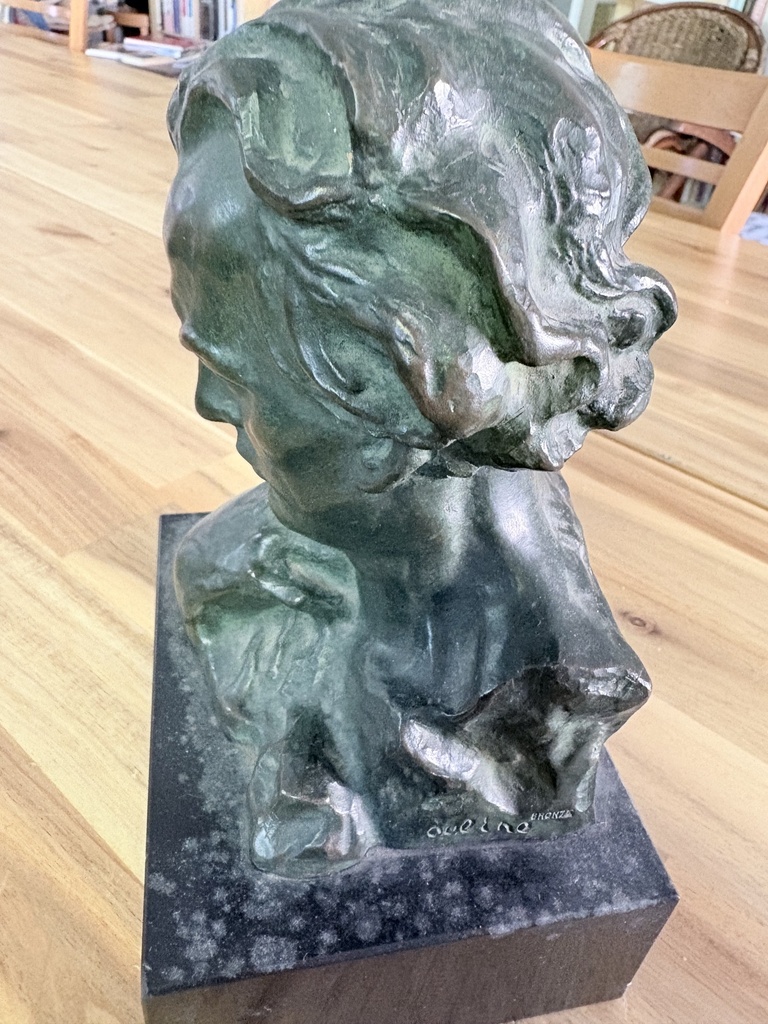
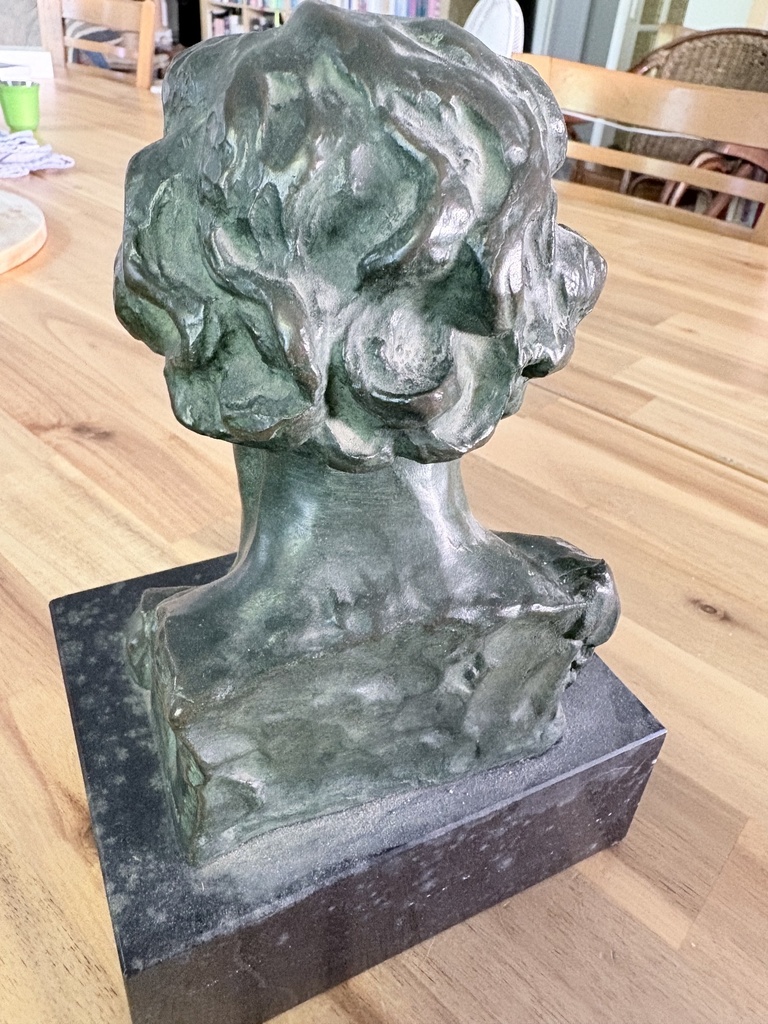
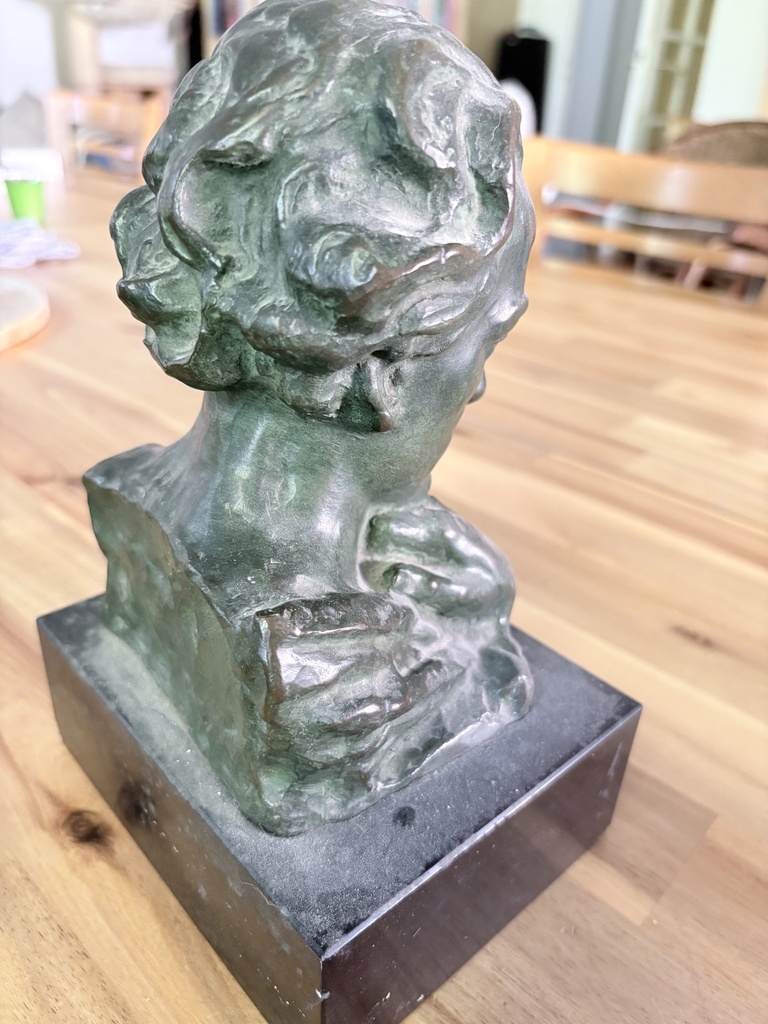
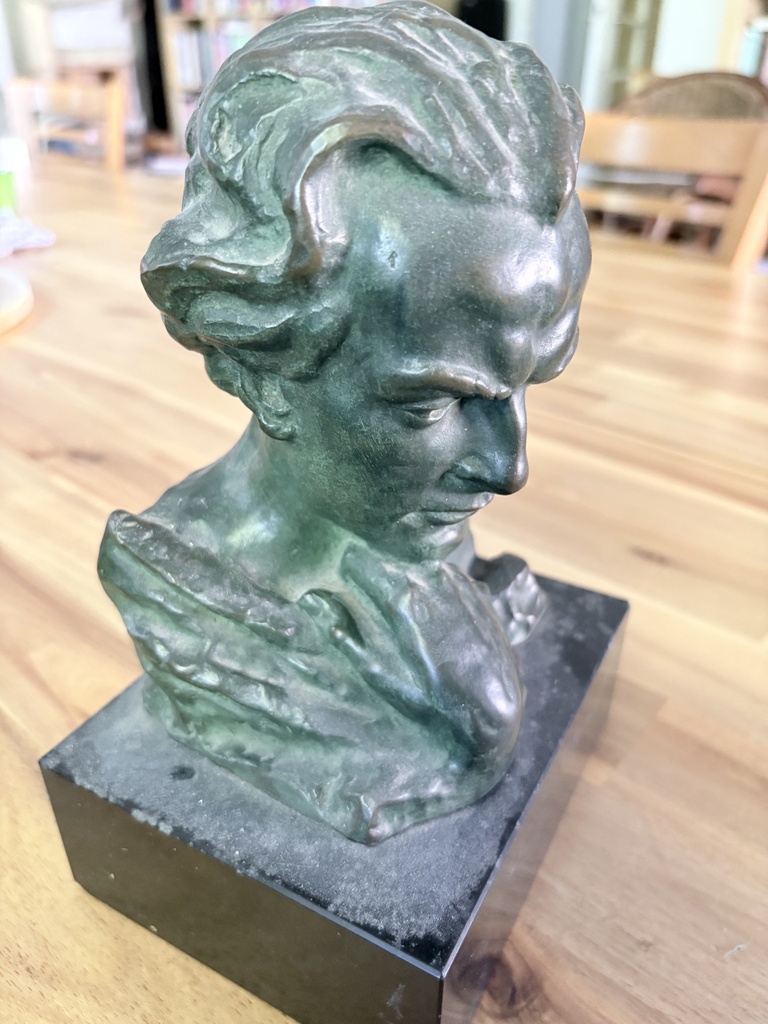
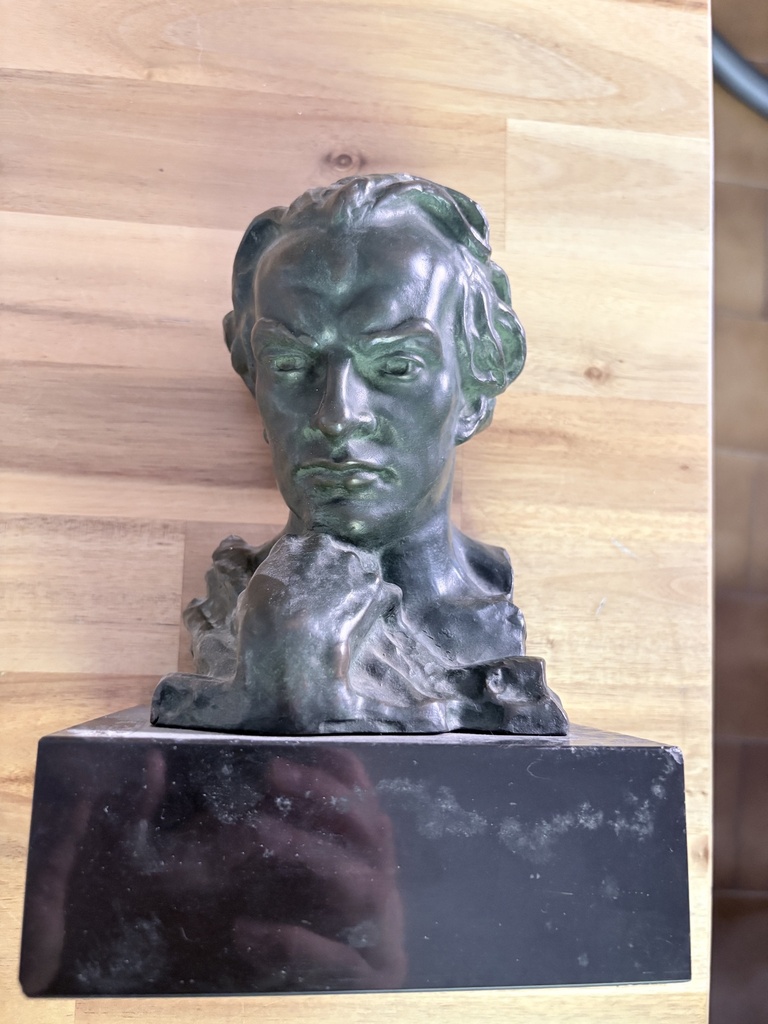
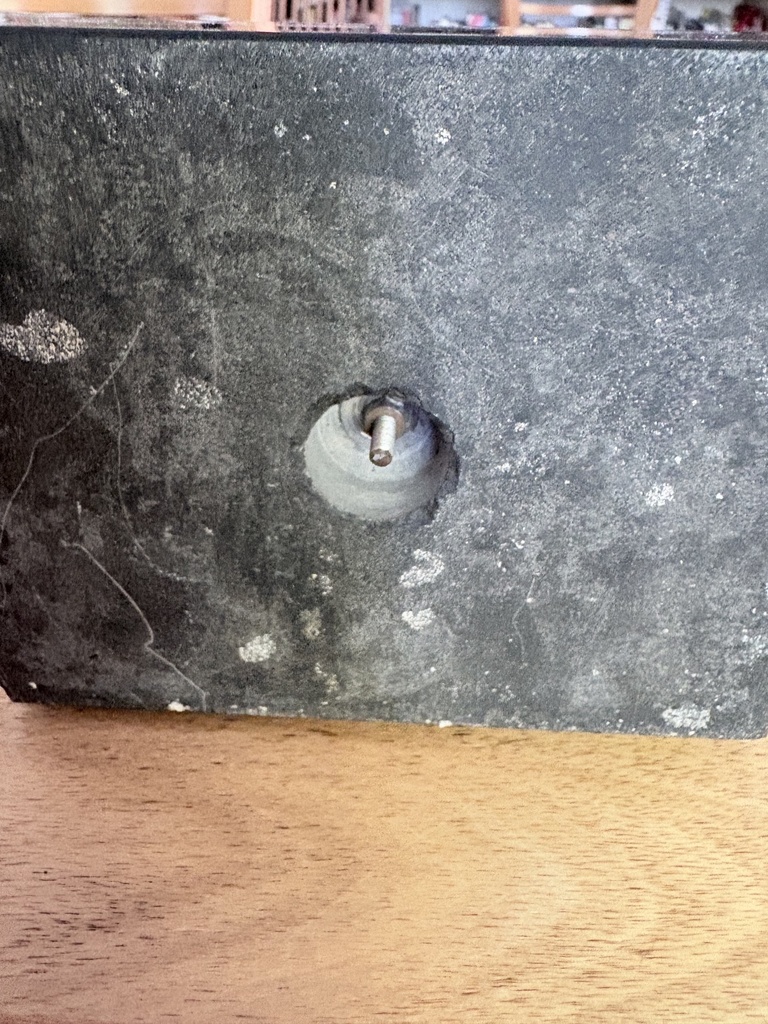
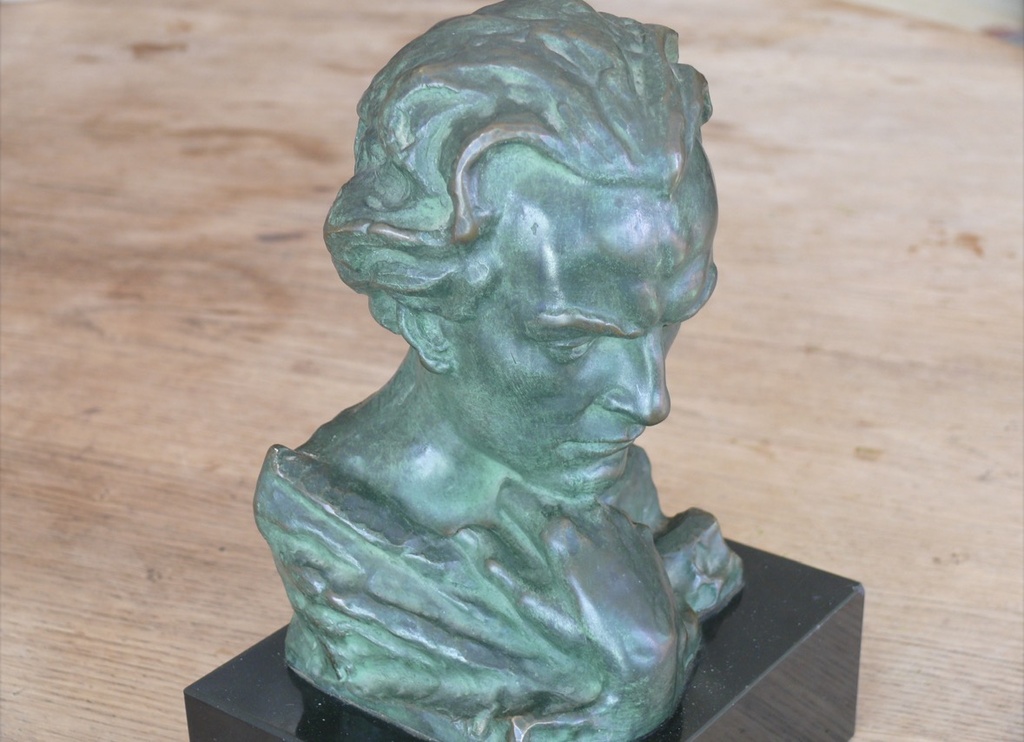
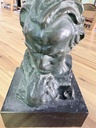
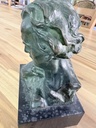
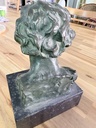
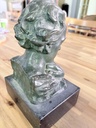
This intimate bronze bust by Alexandre Ouline portrays Jean Mermoz (1901–1936), the celebrated French aviator and one of the legendary pioneers of long-distance aviation. A leading figure of the Aéropostale, Mermoz became an emblem of courage, technological progress and the heroic age of early aviation. Ouline represents Mermoz with his head slightly inclined and his gaze lowered, giving the portrait an introspective quality rather than emphasizing conventional heroic monumentality. The aviator’s distinctive features are rendered through strong, simplified volumes, while the sweeping treatment of the hair introduces movement and vitality into the composition. The modelling becomes freer around the shoulders and clothing, contrasting with the more carefully defined facial features. The green patina accentuates these variations in the bronze surface, while the geometric black marble base anchors the composition firmly within the visual vocabulary of Art Deco sculpture. Despite its compact dimensions, the work possesses a strong sculptural presence, combining the intimacy of portraiture with the stylized elegance characteristic of European sculpture of the 1930s.
Expert opinion
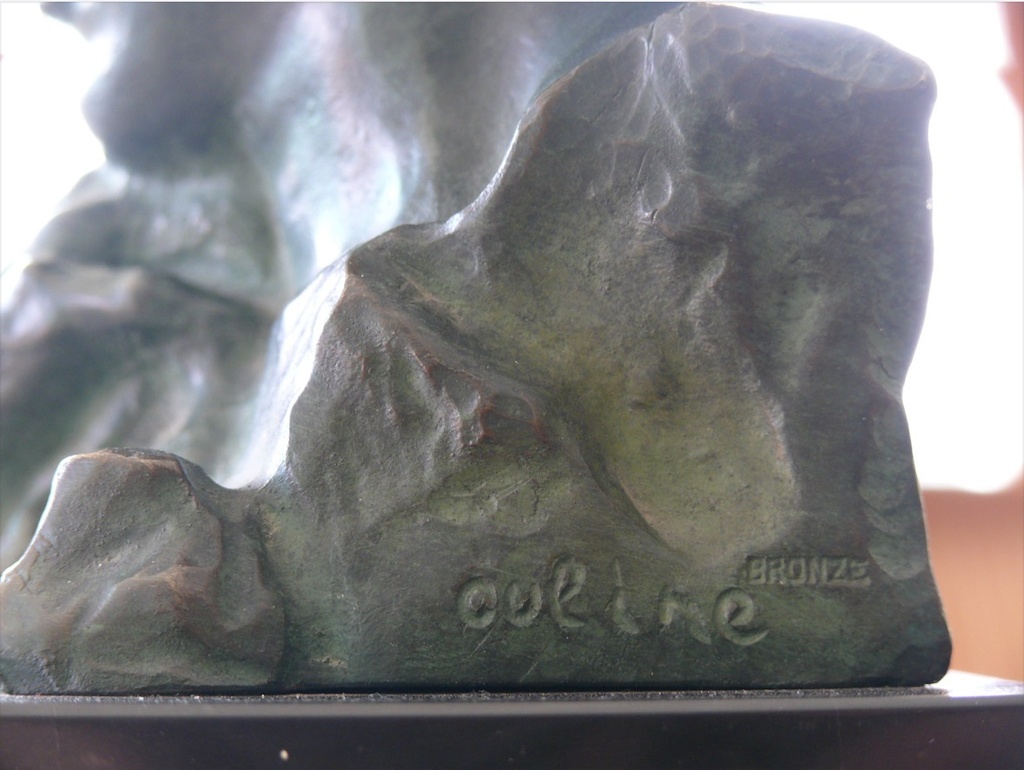
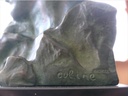
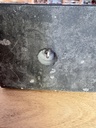
Buste en bronze de Jean Mermoz is an interesting example of Alexandre Ouline’s portrait sculpture and reflects the fascination of the interwar period with figures associated with modernity, exploration and technological achievement. Jean Mermoz was one of the great heroes of French aviation. His pioneering flights across the South Atlantic and his involvement with the Aéropostale made him an important public figure before his disappearance over the Atlantic in 1936. His image consequently acquired a particularly powerful symbolic dimension during the 1930s. Ouline’s interpretation is notable for its restraint. Rather than presenting Mermoz through overt symbols of aviation, the sculptor concentrates on the individual. The inclined head and downward gaze lend the work a reflective, almost melancholic character, while the stylization of the hair and facial structure situates it clearly within the aesthetics of the Art Deco period. The compact format of 18 × 10 × 10 cm gives this example an intimate, collectible quality without diminishing its visual presence. The contrast between the green-patinated bronze and black marble base further reinforces its period character. From a documentary perspective, the work bears the “Ouline” signature together with the inscription “BRONZE”, supporting its attribution to the sculptor. The proposed dating of c. 1930–1939 places the sculpture within the period in which Mermoz became both a contemporary celebrity and, following his disappearance in 1936, a national heroic figure. Without further documentation, however, it would be preferable not to state whether this particular model was conceived before or after Mermoz’s death. Overall, the work brings together two particularly characteristic aspects of 1930s French culture: the refined visual language of Art Deco sculpture and the fascination with the pioneers of modern aviation.
About the artist
Alexandre Ouline was a sculptor of Belgian origin active primarily in France during the interwar period, particularly between circa 1918 and 1940. Although relatively little biographical information about his life has survived and published sources sometimes differ regarding his dates, his artistic production is well documented through the numerous sculptures that have appeared in collections and on the international art market. Ouline's work belongs to the tradition of Art Deco sculpture, which flourished in Paris during the 1920s and 1930s. He worked principally in bronze and patinated metal, frequently presenting his sculptures on marble bases. His practice encompassed both figurative portraiture and animal sculpture, with subjects ranging from male and female busts to athletes and powerful animal figures, particularly panthers. His sculptures are characterized by a combination of careful anatomical modelling and Art Deco stylization. In his portraits, facial features and hairstyles are simplified into strong sculptural volumes, while polished areas contrast with more expressive modelling. His animal works similarly emphasize movement, muscular tension and streamlined silhouettes rather than strict naturalistic representation. Among Ouline's documented portrait sculptures are representations of Jean Mermoz (1901–1936), the celebrated French aviator and pioneering figure of the Aéropostale. These works demonstrate the artist's engagement with prominent figures and the heroic imagery characteristic of the interwar period. Ouline's sculptures are generally signed “Ouline”, and examples can also bear inscriptions or foundry/editor marks. His works continue to appear regularly on the French and international secondary market and are particularly appreciated by collectors of French and Belgian Art Deco sculpture. Today, Alexandre Ouline is recognized for a body of work that reflects the aesthetic ideals of the 1920s and 1930s: elegance of line, simplified volumes, expressive modelling and an interest in both the human figure and the animal world. His portrait busts, in particular, provide an evocative record of the sculptural language of the European interwar period.
Additional info
3x
OTHER ARTWORKS YOU MAY LIKE
Your Dynamic Snippet will be displayed here...
This message is displayed because you did not provide both a filter and a template to use.