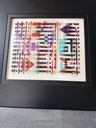
Yaacov Agam
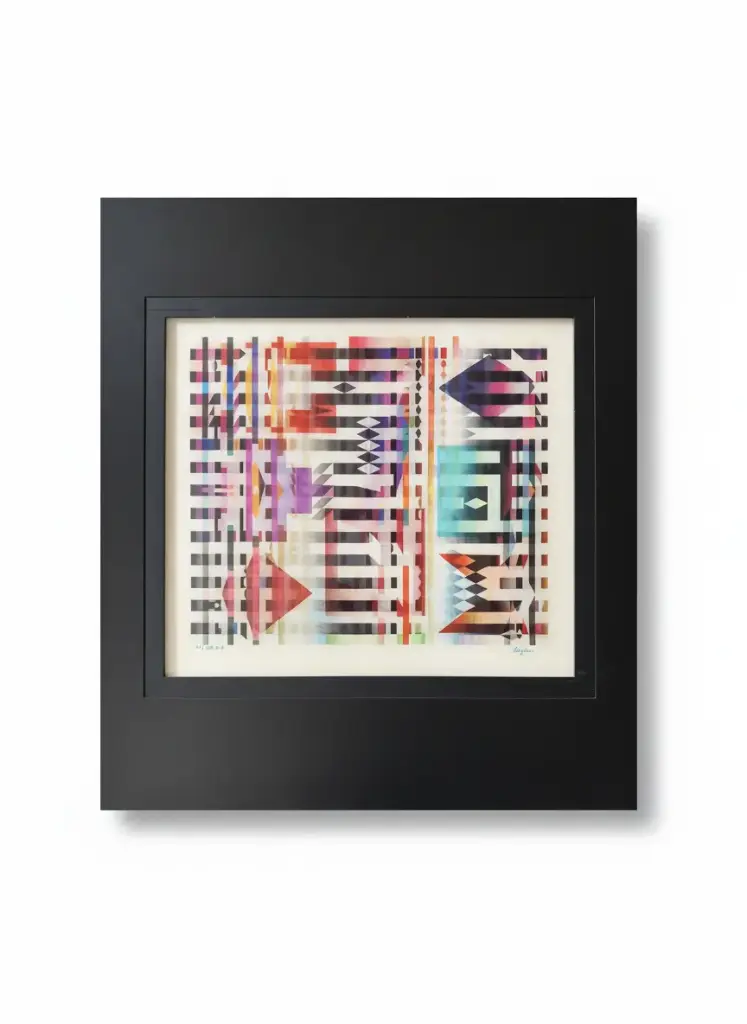
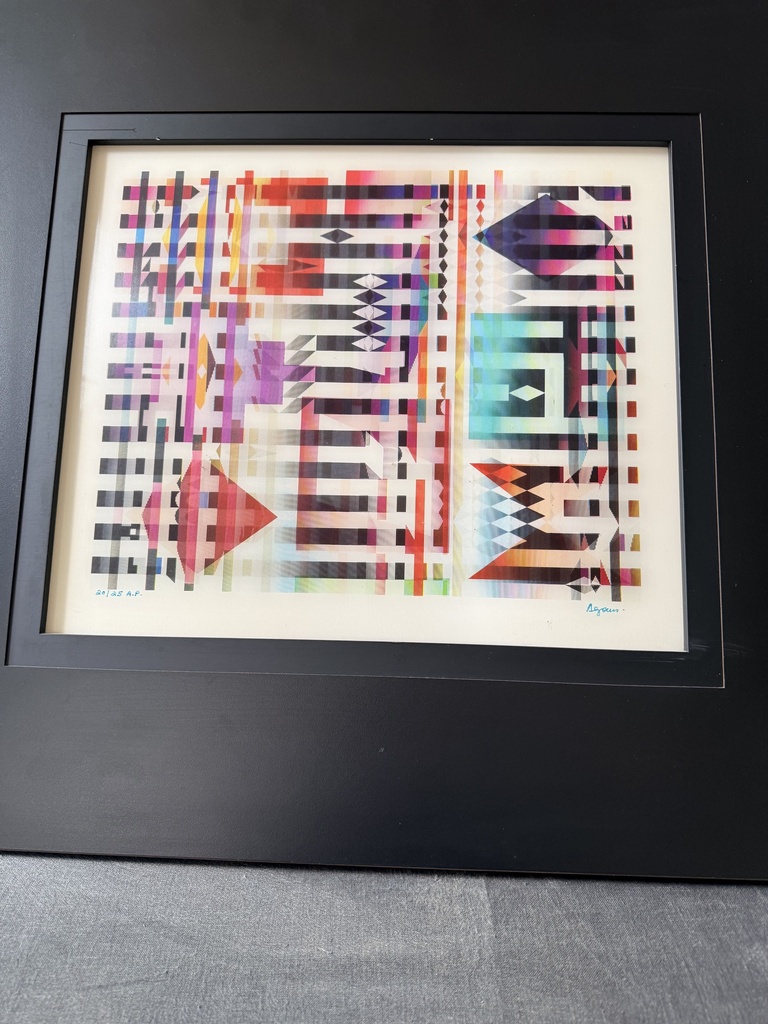
Agamographe, sérigraphie lenticulaire en couleurs sur support strié
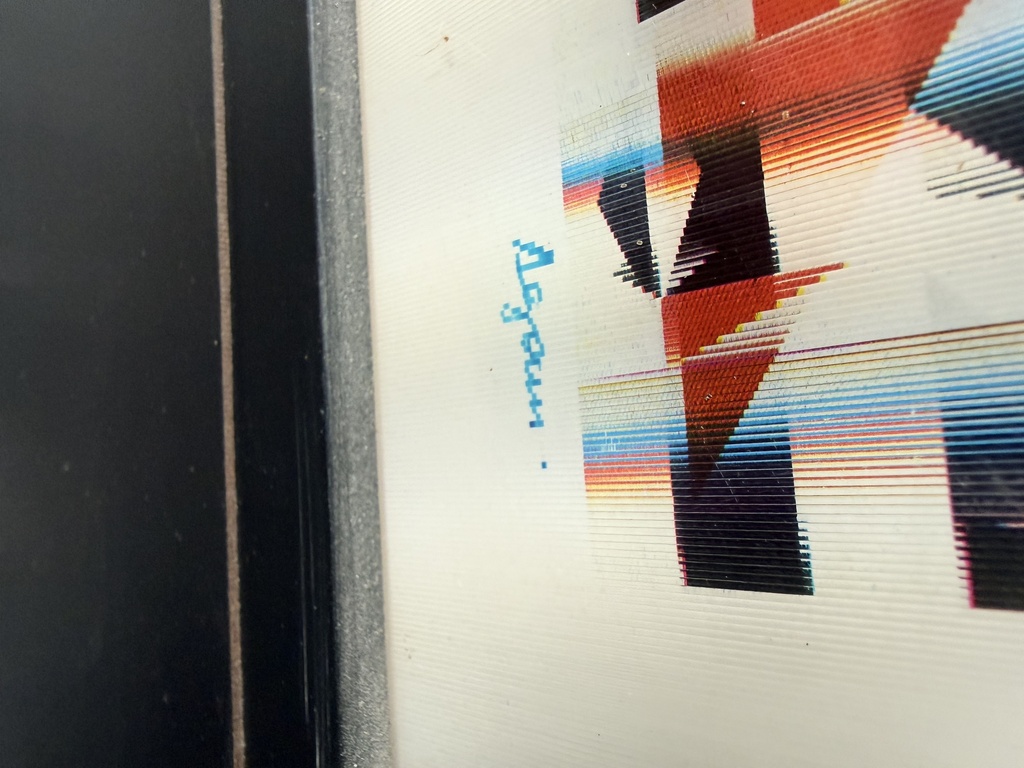
full-color lenticular screen printing on ribbed substrate
36 × 32 cm
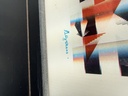
Ed. 25 A.P. — Signé au feutre bleu en bas à droite — Annoté/25 A.P. » en bas à gauche
Location: Paris, France

Arianee token ID
69976433
Share by
Email
Documents
-
Invoice or proof of purchase
-
Certificate of authenticity
-
Other documents
About the artwork
Geometric configurations composed of vertical stripes and contrasting chromatic grids shift dynamically according to the viewer's physical position. The composition relies on a specialized lenticular printing technique developed by the artist, known as an agamograph, which slices and interleaves multiple images behind a ribbed screen. This methodology prevents a static reading, causing forms and color relationships to transform continuously as the observer moves across the plane. Created during the 1980s, the piece reflects ongoing experiments with visual metamorphosis and optical instability.
Expert opinion
The methodology employed in this composition represents a significant technical contribution to kinetic and optical art of the twentieth century by decoupling visual experience from a single fixed viewpoint. By forcing the viewer into an active role of physical navigation, the object bridges traditional printmaking and multi-dimensional sculpture.
About the artist
Born in 1928 in Rishon LeZion (Israel), Yaacov Agam is a major figure in kinetic art. He first studied at the Bezalel School of Fine Arts in Jerusalem, before moving to Paris in 1951. This year also marked his interest in kinetic art. He took part in numerous exhibitions alongside Marcel Duchamp, Alexander Calder, Victor Vasarely and others. He introduced the notion of the "fourth dimension", which defines change induced by time and movement. Unlike other artists of the time, Yaacov Agam's works gain their movement from the viewer's movements. According to the artist, the resulting notion of unpredictability is the essence of this fourth dimension. Yaacov Agam's work is acclaimed worldwide, and has earned him a place in the most prestigious collections of modern and contemporary art. In Rishon LeZion, the artist's hometown, a museum has been inaugurated in his honor. He also created the Salon privé for President Georges Pompidou at the Elysée Palace between 1972 and 1974, which is now on display in the permanent collections of the Centre Pompidou.
Additional info
Signed
Framed
3x
OTHER ARTWORKS YOU MAY LIKE
Your Dynamic Snippet will be displayed here...
This message is displayed because you did not provide both a filter and a template to use.