Esmael Bahrani
380
120 × 93 cm
Unique
Location: London, United Kingdom

Arianee token ID
904259118
Share by
Email
Documents
-
Invoice or proof of purchase
-
Certificate of authenticity
-
Other documents
About the artwork
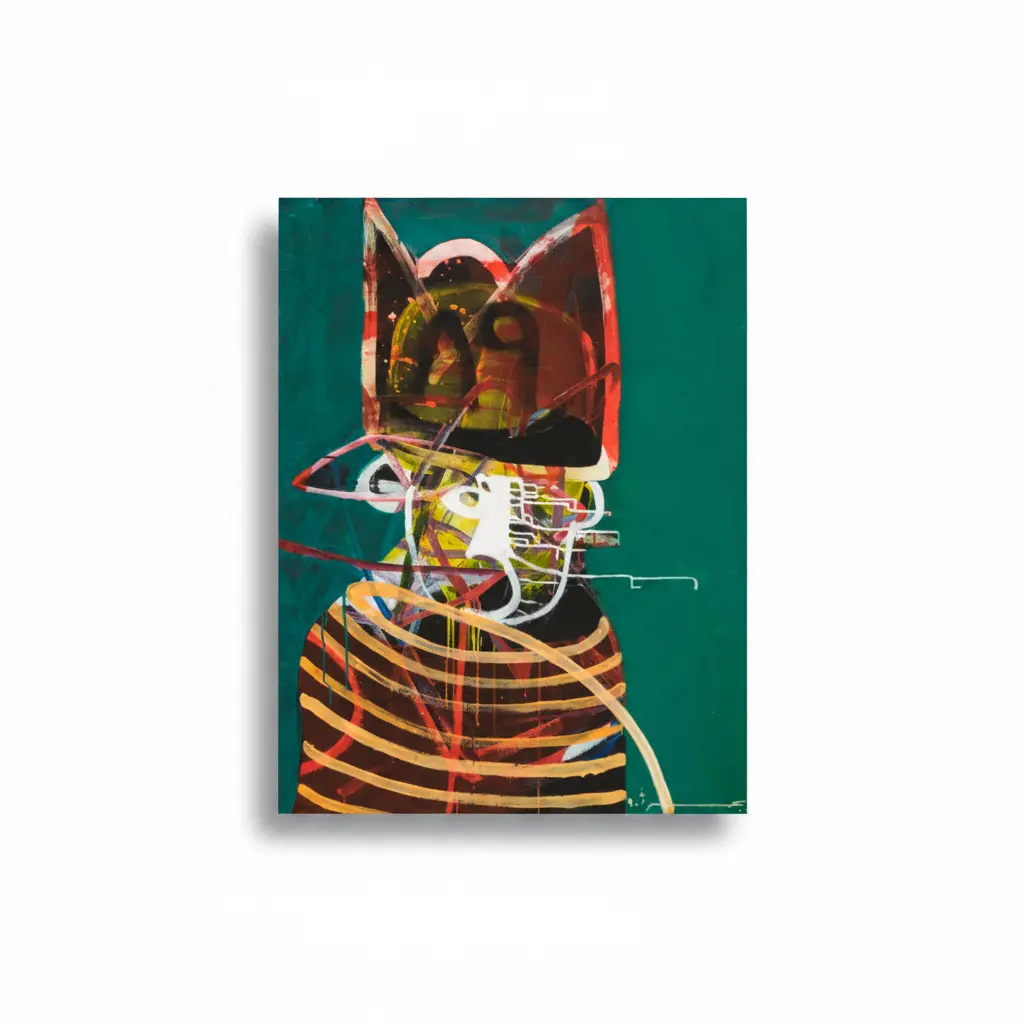
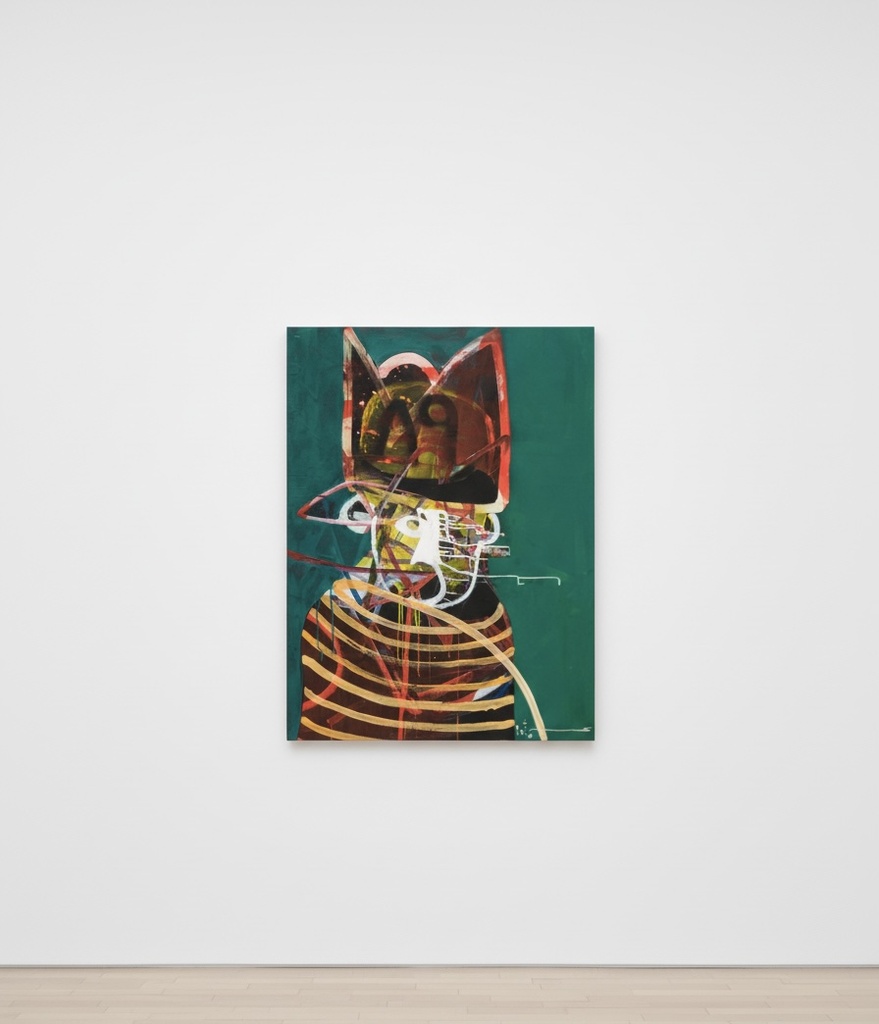
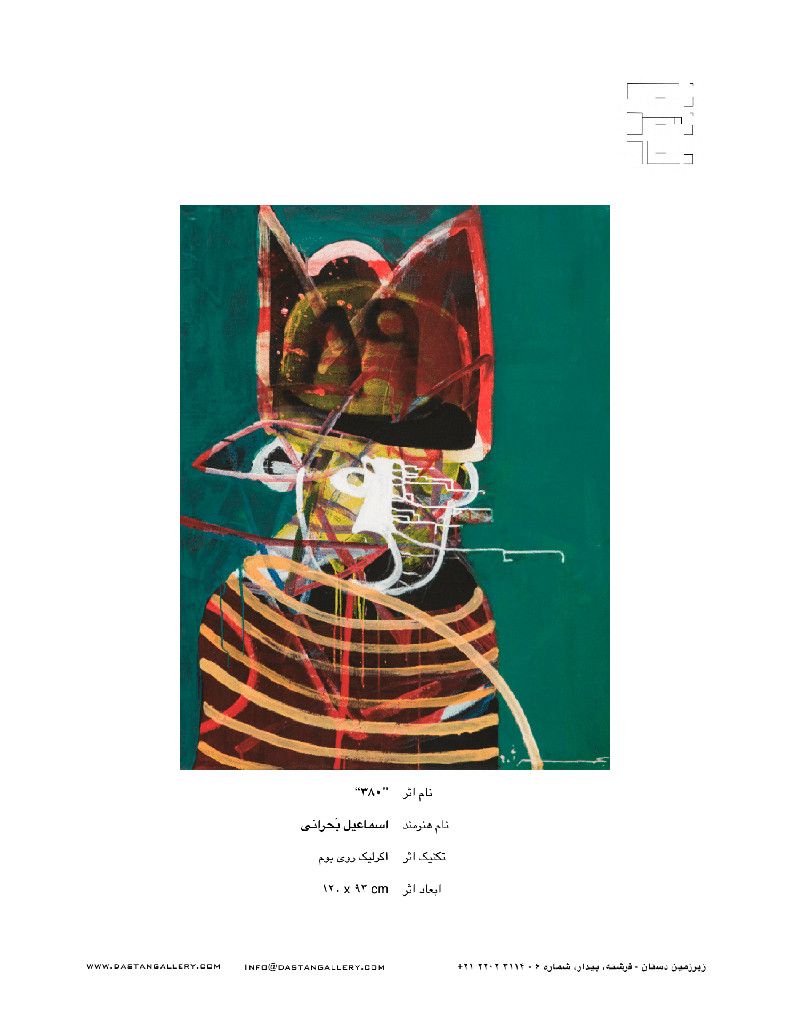
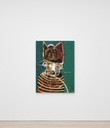
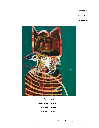
In this monumental, intense work entitled 380, Esmaeil Bahrani continues her exploration of the human condition through deeply expressive painting. Against a saturated, almost hypnotic green background, a half-human, half-totemic figure stands out, its contours dissolving in a tangle of lines, stains and transparencies. The artist juxtaposes layers of paint, superimposing spontaneous gestures and calculated constructions to create a tension between order and chaos. Colors - incandescent reds, ochre yellows, dense blacks and dazzling whites - clash and balance in a composition of great vitality. This figure, dressed in a striped tunic and wearing a form reminiscent of both a helmet and a crown, seems to be traversed by flows of energy, thoughts or cries. Bahrani eschews direct narration in favor of visceral, gestural painting, in which matter and gesture become the vectors of a universal emotional language.
The title 380 acts as a code, an enigma, deliberately leaving the viewer free to interpret. The work evokes the internal contradictions of the contemporary individual: between power and fragility, lucidity and confusion, spirituality and instinct. Through the density of his pictorial layers and the freedom of his strokes, Bahrani affirms a vision in which human identity is constantly rebuilt, in the violence of the world and the search for meaning.
Expert opinion
380 represents a major milestone in Esmaeil Bahrani's career, illustrating the fusion between his street artist heritage and his studio painting practice. The artist deploys a vigorous gestural style inherited from graffiti, which he transforms into a structured pictorial language. Each brushstroke, each splash seems to result from a struggle between instinct and control, between the urgency of gesture and plastic construction. In this way, Bahrani renews the tradition of expressive figuration by infusing it with a spiritual and contemporary dimension, close at times to art brut or abstract expressionism.
The strength of this work lies in its ability to hold the gaze in tension: the viewer oscillates between reading the portrait and the pure experience of the material. The dynamic lines, transparencies and chromatic overprints reflect a reflection on the multiplicity of the self and the fragmentation of identity in a context of cultural and political resistance. Drawing on the memory of Tehran's walls as much as on the history of Western painting, Bahrani invents a hybrid pictorial space, where gesture becomes memory and color an act of resistance. 380 is a work of rare intensity, at the crossroads of chaos and mastery, cry and silence.
About the artist
Esmaël Bahrani (b. 1978, Iran) is an Iranian artist who has lived and worked in France since 2015. Born in Tehran, he studied at the University of Art and Architecture in Tehran before turning away from academic conventions to pursue an independent artistic path. In the early 2000s, Bahrani discovered graffiti through Western publications and became one of the important figures of Iran’s underground urban art scene. Painting clandestinely at night in several Iranian cities, he developed a visual language that served as a form of protest against political oppression and restrictions on individual freedom. His works, often conceived as cries of resistance, reflect the tensions experienced by a generation seeking greater openness and personal expression. Alongside his street practice, Bahrani developed a highly distinctive studio work combining painting, drawing, spray paint, wax, scratching, and engraving techniques. His canvases frequently depict fragmented or distorted figures emerging from chaotic surfaces marked by symbols, inscriptions, and traces of violence. Military references, Persian numerals, graffiti marks, and primitive signs coexist within compositions that explore memory, repression, identity, and resilience. Bahrani first exhibited in Tehran in 2005 at Azad Art Gallery and gained wider recognition with a successful solo exhibition at Dastan Gallery in 2012. In 2007, he was invited by Hervé Di Rosa to participate in a group exhibition at the International Museum of Modest Arts (MIAM) in Sète. He was also the only Middle Eastern artist to participate in the exhibition TAG at the Grand Palais in Paris in 2009. Following increasing political pressure and threats in Iran, Bahrani moved permanently to France in 2015 after an invitation from the Institut du Monde Arabe in Paris. Since then, he has continued to develop his practice in France, where his work creates a dialogue between Eastern and Western cultures, ancestral myths and contemporary urban culture, outsider art and street art. Now based near Paris, Esmaël Bahrani continues to produce powerful and expressive works characterized by improvisation, physical engagement with the surface, and an intense emotional charge. His paintings preserve the traces of their own making through scratching, erasure, inscriptions, and scarification, transforming the canvas into both a witness and a participant in the creative process. His work has been exhibited throughout France and Europe and is represented by several galleries.
Additional info
Signed
Framed
OTHER ARTWORKS YOU MAY LIKE
Your Dynamic Snippet will be displayed here...
This message is displayed because you did not provide both a filter and a template to use.