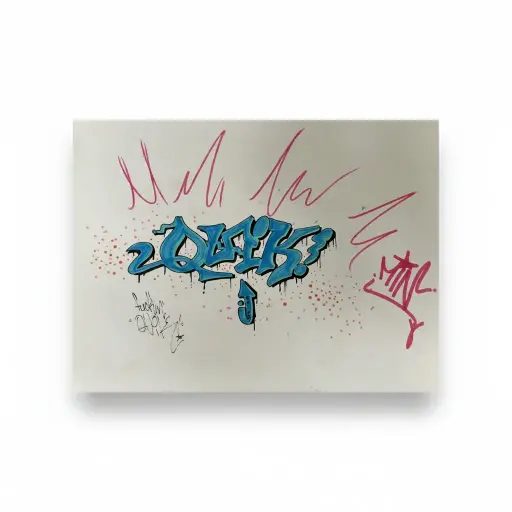
QUIK (Lin Felton) & MIN ONE
Lin Felton, better known as QUIK, is one of the pioneering figures of New York graffiti. Born in the Bronx in 1964, he began writing under the name QUIK in the late 1970s and quickly became known for his dynamic lettering, technical precision, and innovative approach to wildstyle graffiti. By the early 1980s, his work was appearing extensively on New York City subway trains, earning him recognition as one of the city's leading style writers. A member of legendary graffiti crews including TC5 (The Crazy 5) and FC (Forever Clean), QUIK helped define the visual language of New York graffiti during its formative years. His bold compositions, vibrant color palettes, and complex letter structures influenced generations of graffiti artists worldwide. Unlike many of his contemporaries, QUIK successfully transitioned from trains to the gallery scene while remaining deeply respected within graffiti culture. Since the late 1980s, he has exhibited internationally, with works presented in galleries and museums across the United States, Europe, and Asia. His paintings bridge the energy of classic graffiti with contemporary abstraction, cementing his reputation as one of the most influential artists to emerge from the New York graffiti movement. MIN ONE is an American graffiti writer and one of the notable members of New York City's first generation of subway artists. Active since the late 1970s and early 1980s, he became recognized for his clean lettering, confident handstyles, and collaborations with many of the leading writers of the era. Working during the golden age of New York subway graffiti, MIN ONE painted alongside some of the movement's most celebrated figures, contributing to the evolution of wildstyle lettering and the visual identity of early hip-hop culture. His distinctive signature and lettering style earned him lasting recognition within the graffiti community. Although less publicly visible than some of his contemporaries, MIN ONE remains an important figure among collectors and historians of graffiti. His works, particularly collaborative drawings and blackbooks created with other legendary writers, are highly sought after as authentic documents of New York's early graffiti movement.