Zhu Qizhan
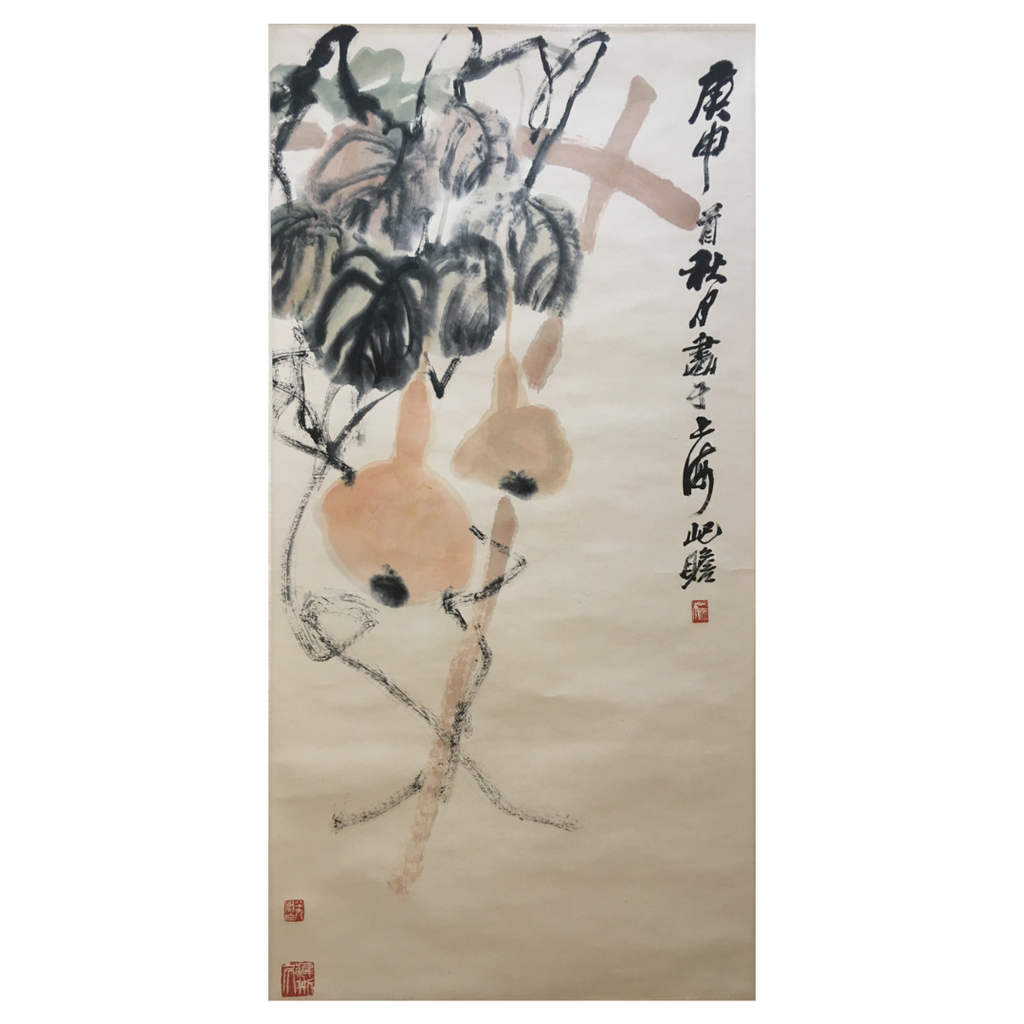
Untitled
1997
Watercolor on paper
60 × 168 cm
Unique
Location: Switzerland
Documents
-
Invoice or proof of purchase
-
Certificate of authenticity
-
Other documents
About the artwork
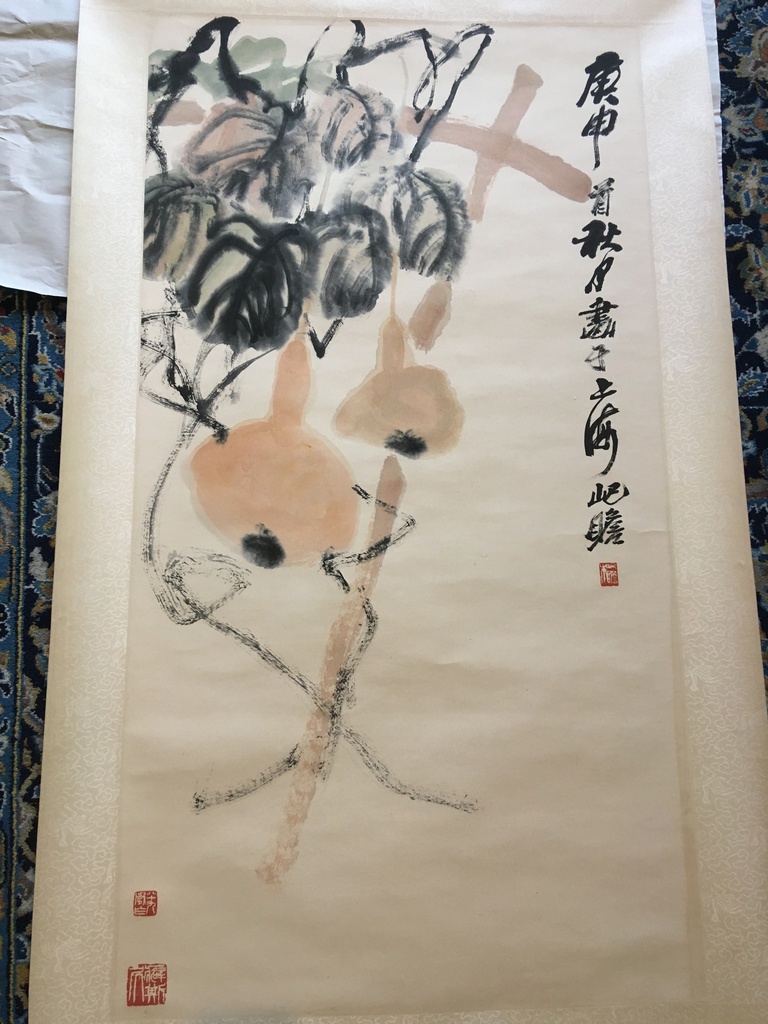
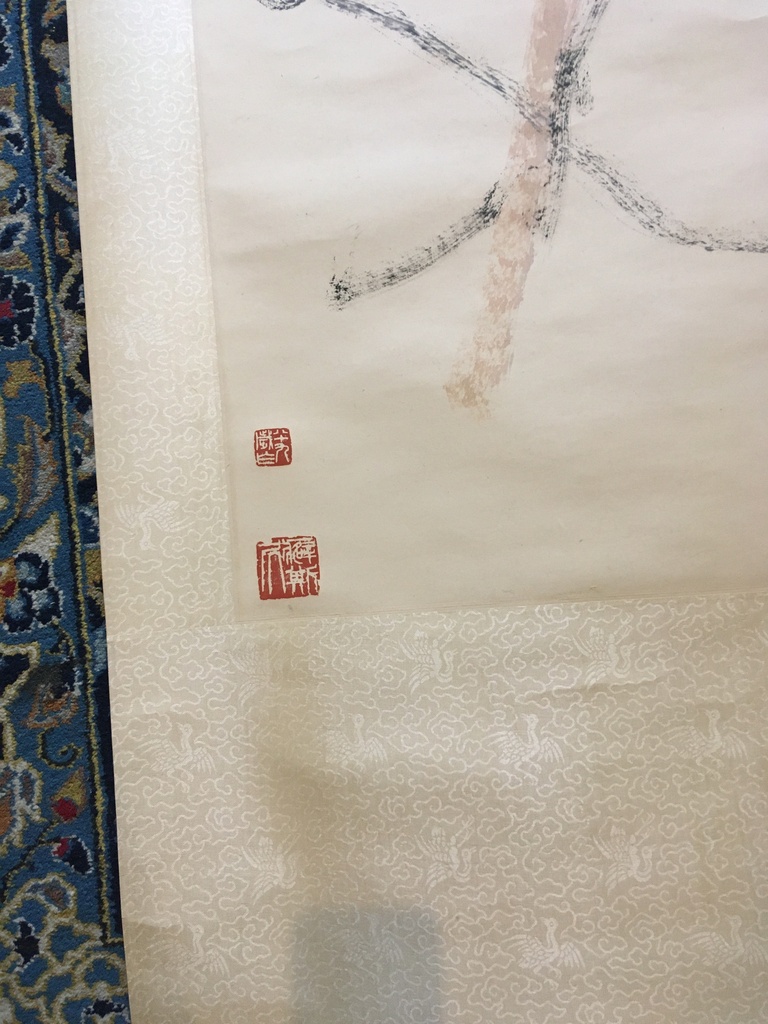
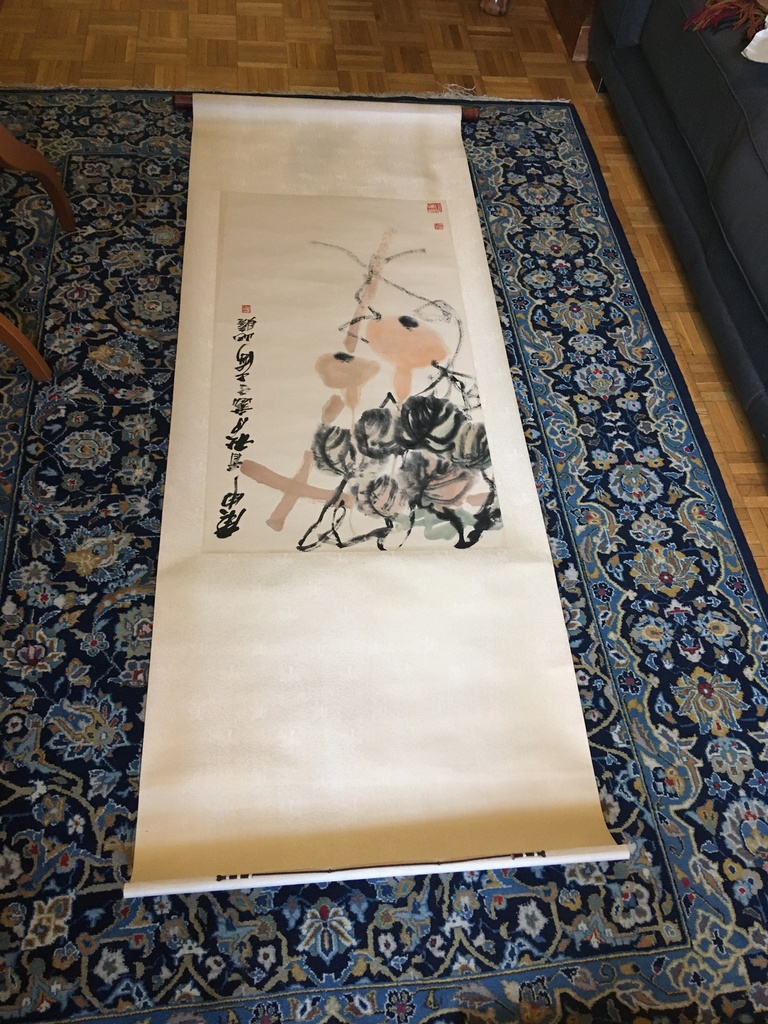
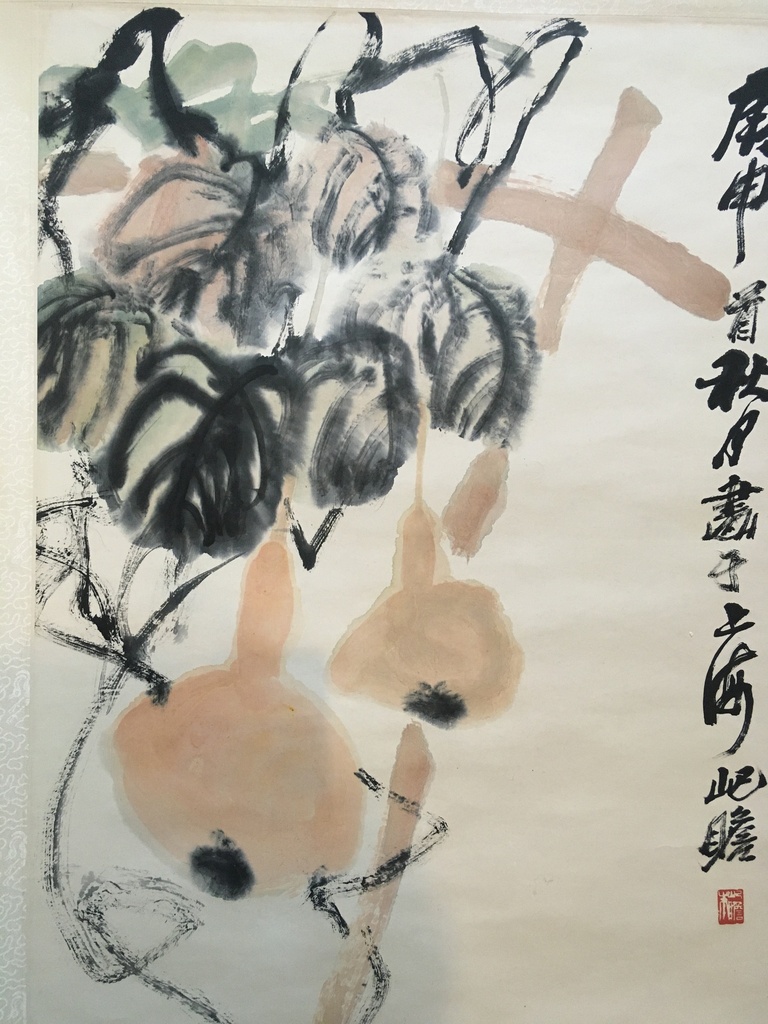
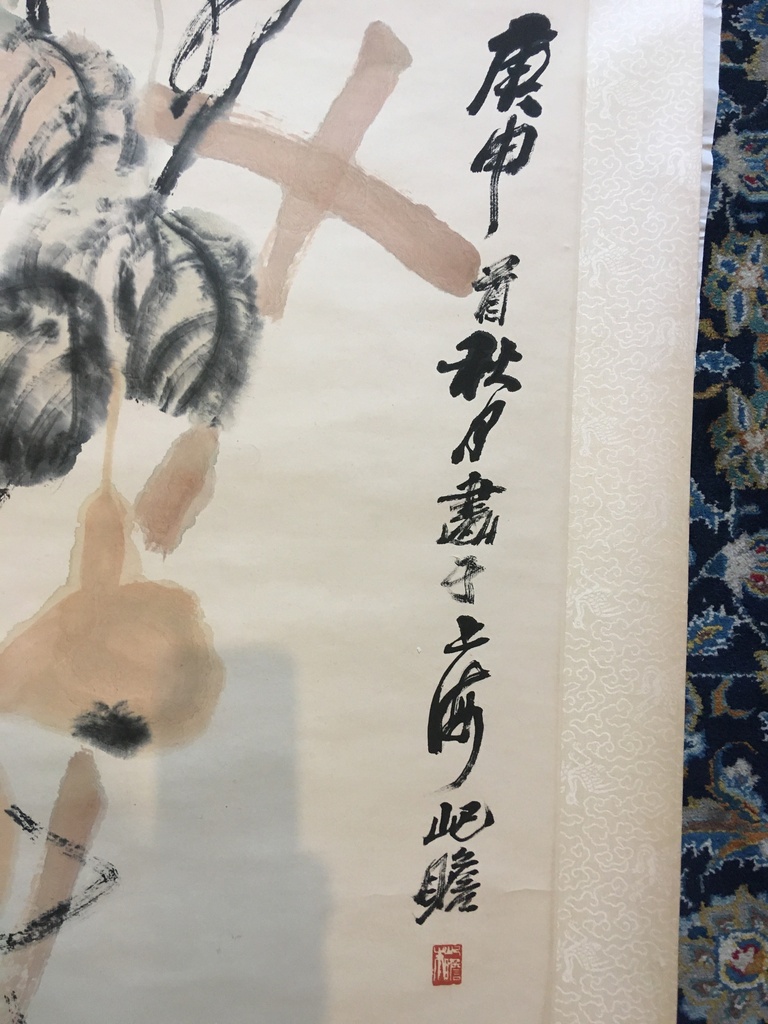
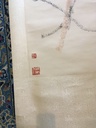
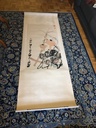
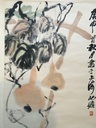
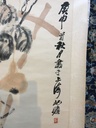
This untitled work, in watercolor on paper, takes the form of a vertical scroll measuring 60 cm wide by 168 cm long, with a pictorial area measuring 48 × 90 cm. Unrolled, the painting reveals an ample composition, typical of the hanging scroll format, where empty space and verticality play a structuring role. Delicate washes, light tonal transitions and the fluidity of the brushwork suggest a landscape or expressive scene treated with great economy of means. Watercolor, applied in translucent layers, creates a subtle atmospheric effect, characteristic of modernized Chinese scholarly painting. The work as a whole is in good condition, with no major visible alterations.
Expert opinion
This piece is fully in the tradition of painted scrolls, yet bears the stamp of a modernized sensibility: simplification of form, emphasis on gesture, and very free, nuanced use of watercolor. The long, slender vertical format lends the work a meditative dimension, while emphasizing the fluidity of the composition. The superimposed washes, with their delicate transitions, testify to remarkable technical mastery and a deep understanding of the atmospheric effects typical of Chinese painting. The absence of a frame is in keeping with the traditional presentation of scrolls, allowing the work to retain its original breath and elegance. The state of preservation, described as good, is a very positive point for a medium as sensitive as paper, especially in such a generous format. As a whole, the work is refined, controlled and balanced, highlighting the artist's ability to combine tradition with contemporary freedom.
About the artist
Zhu Qizhan (1892-1996) lived through all the upheavals of modern China before reinventing himself, at over eighty years of age, as one of the major artists of the 20th century. Born in Jiangsu province in 1892, seven years before the Boxer Rebellion and in the twilight of the Empire, he went on to become one of China's most celebrated modernists, to the extent that a museum is now dedicated to him in Shanghai. His still lifes and landscapes, imbued with profound vitality, are renowned for their ability to deliberately integrate Western influences - those of Van Gogh, Cézanne and Matisse - with traditional Chinese pictorial language. His works are in the collections of the British Museum in London and the Metropolitan Museum of Art in New York, and in 1991 he received the first-ever Shanghai Literature and Art Outstanding Contribution Award.
Zhu is also a fervent advocate of cultural renaissance. At the age of 18, he witnessed the fall of the Qing dynasty and took an active part in the movement for artistic renewal, as the social and economic reforms of the new Nationalist government prompted a whole generation of artists to rethink the place of Chinese art in a modern world. In 1918, he left to study in Japan, where he discovered the Post-Impressionists and the European avant-garde, before returning to teach at the Shanghai Art Academy and found the Moshe Art Society with Xu Beihong, another key figure in Chinese modernism.
After 1949, Zhu returned to traditional painting (guohua). He traveled the countryside, drawing workers and peasants on the spot, in a vigorous aesthetic that would later associate him with the Xie Yi school - "writing thought". His paintings from this period, marked by a dark expressionist force, bear witness to an artist who seeks to reconcile tradition, modernity and social commitment.
But in the 1960s, his career came to an abrupt halt. Like so many artists, Zhu was persecuted during the Cultural Revolution: expelled from his teaching post, forbidden to paint, forced into manual labor, he became a street sweeper. He was 75 years old at the time.
His artistic renaissance began at the age of 80. Weakened by illness, he obtained permission to recuperate at home, and it was in this intimate space that he took up his brush again. The works he produced during this period were strikingly original: still lifes and landscapes of radical simplicity, carried by a stripped-down gesture and extreme mastery of ink. At the time, he wrote: "To be free, simple and concise is extremely difficult: one stroke more is too much, one stroke less is not enough." Beneath the apparent spontaneity of his late works lies obsessive precision, with his ink penetrating deep into the paper - an essential feature, given that forgeries are so easily detected by their ink on the surface.
Zhu enjoyed growing success on the international market: Monastery on the Mountain Ridge fetched HK$937,500 at Christie's in 2013, and a month before his death, he painted the delightful Loquats and Persimmons, all silent poetry. Zhu Qizhan died in 1996 at the age of 103, leaving an immense body of work, born of adversity, resilience and inexhaustible creativity.
OTHER ARTWORKS YOU MAY LIKE
Your Dynamic Snippet will be displayed here...
This message is displayed because you did not provide both a filter and a template to use.