Keith Haring
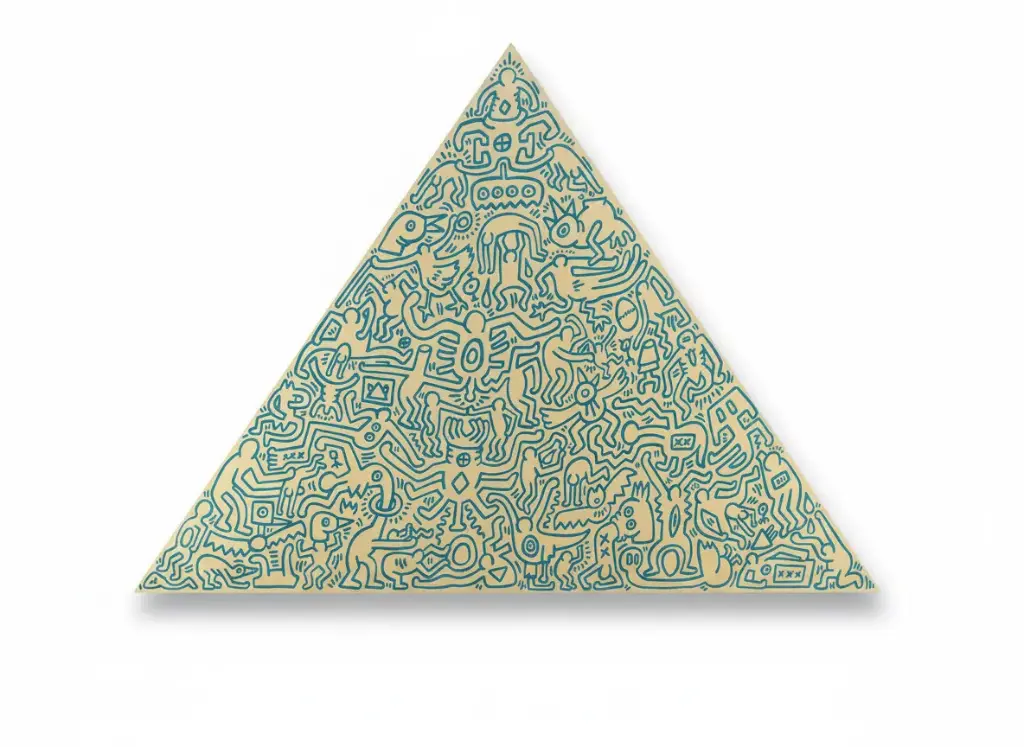
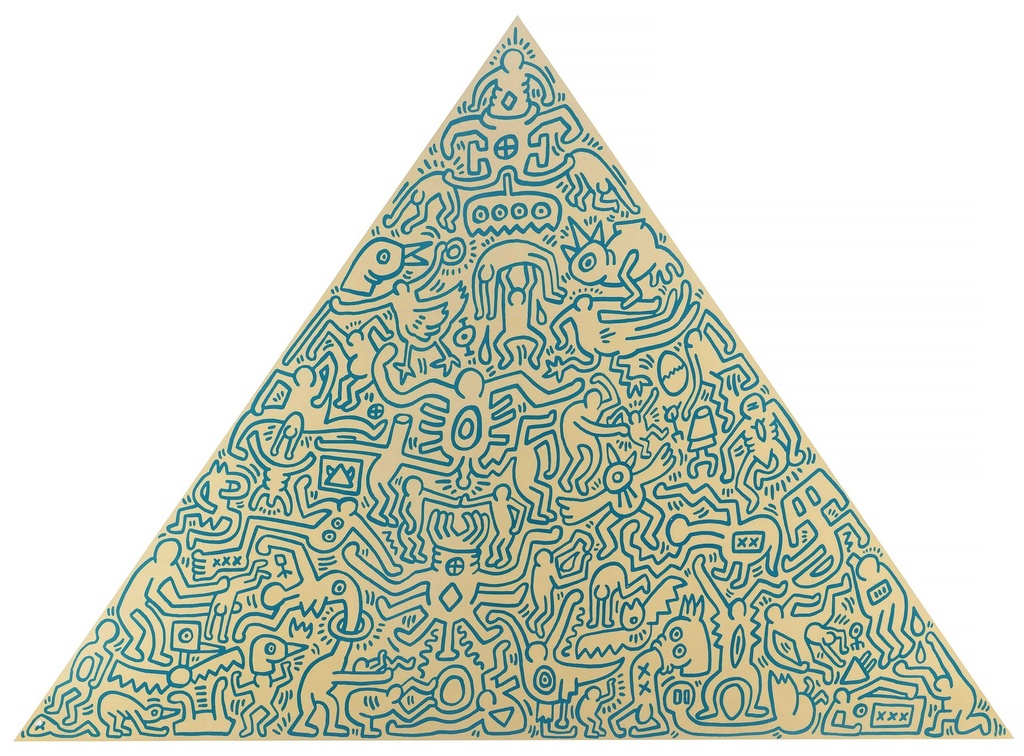
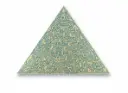
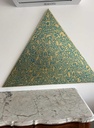
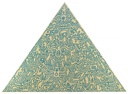
Pyramid (gold I)
1989
Screen printing on metal
103 × 145 cm
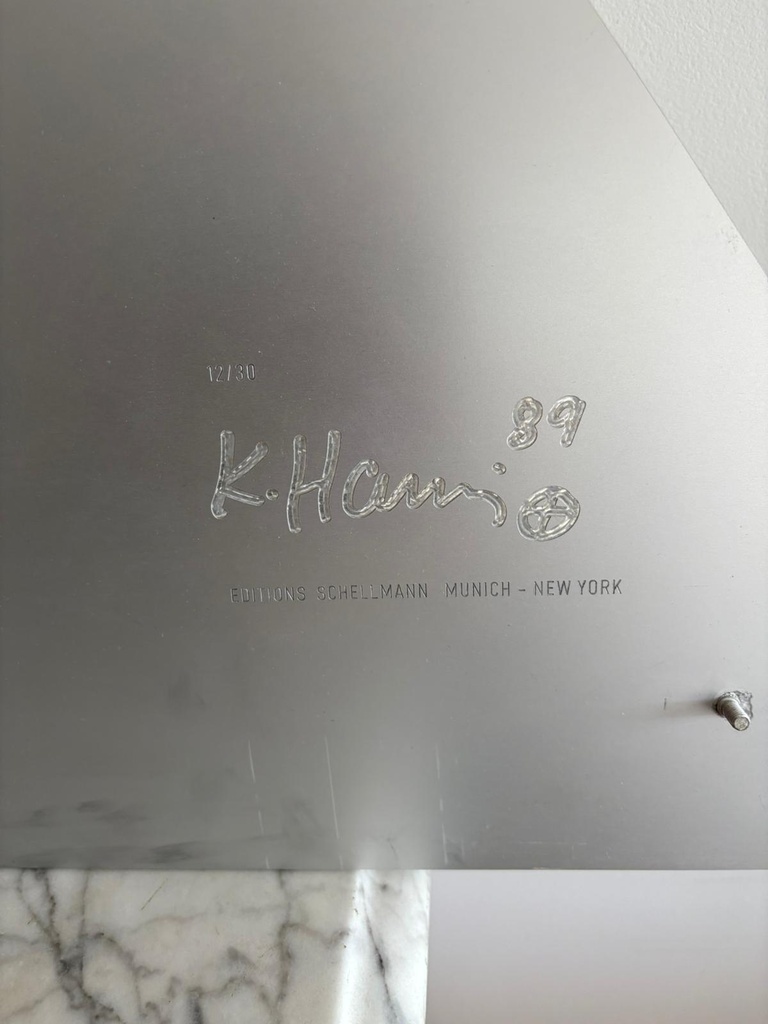
Edition 12/30. Limité à 30 exemplaires + 6 AP (artist’s proofs)
Location: Sainte Maxime, France
About the artwork
In Pyramid (gold I), Keith Haring uses the shape of the pyramid - an ancient symbol of power, mystery and eternity - as a "graphic terrain" on which to deploy his characteristic visual vocabulary: dancing figures, dogs, beaming babies, abstract symbols. The gold or metallic surface amplifies the visual effect, giving the work an almost ritualistic glow. The green-blue or black lines that animate the composition create a dense, rhythmic graphic universe, a fusion of street culture, pop art and references to art history. The effect is both festive and serious: Haring was aware, at the turn of the 90s, of the fragility of life in the face of the AIDS epidemic, and this series expresses a creative urgency while addressing themes of transmission, vital energy and community.
This work is part of the "Pyramid" series created by Haring in 1989, shortly before his death, and is considered a high point in his graphic output.
Expert opinion
This edition of Pyramid (gold I) stands out for several reasons:
- It belongs to a limited series (edition of 30 + AP) produced in 1989, a pivotal year in Haring's career, making it a major object for any serious collector of his graphic work.
- The anodized aluminum base provides technical durability (resistance to deformation and UV depending on exposure conditions) as well as a luminous visual effect that enhances the work's value in a high-end reception environment.
- The pyramid motif, rarely used in large format in Haring's work, makes it even more distinctive. Well-preserved copies achieve significant valuations for an auction edition.
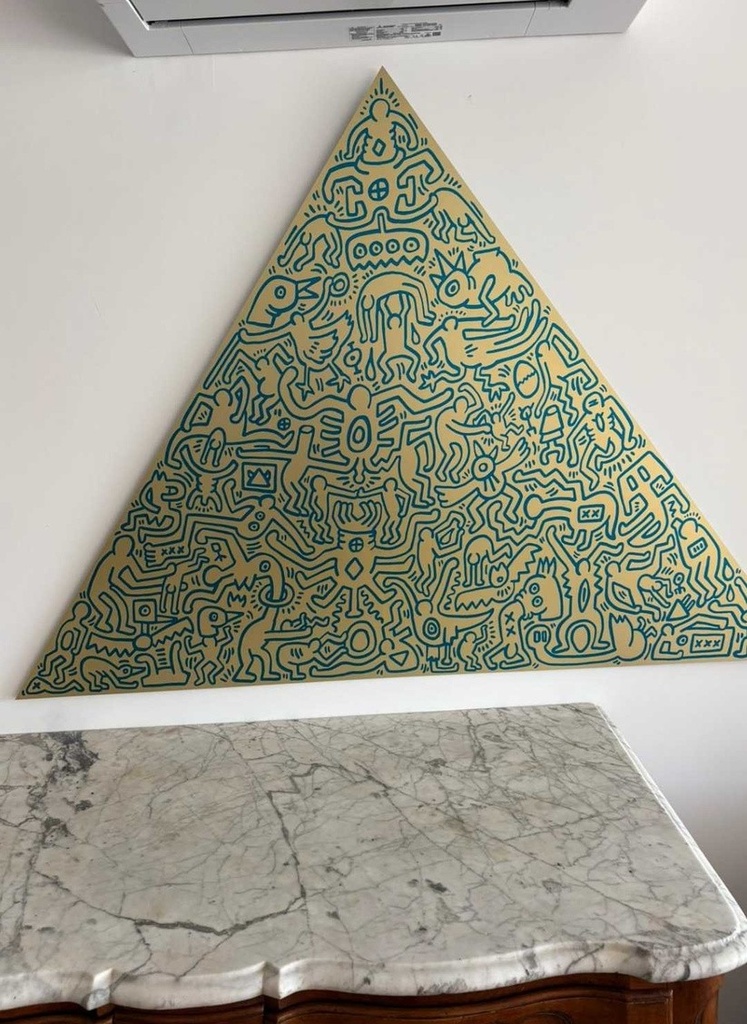
- From the point of view of wall presentation, this is a piece of interesting dimensions (around 1 metre high) which requires good, careful lighting to reveal the full brilliance of the metal.
In conclusion, for the art lover, this work represents an exceptional opportunity to acquire a key element of Keith Haring's work, combining iconic dimension, rarity and quality of manufacture.
About the artist
Keith Haring (1958-1990) was one of the leading figures of New York urban art in the 1980s. After studying at the School of Visual Arts in New York, he made a name for himself by spontaneously drawing with white chalk on black subway billboards. His playful, immediate and engaging style soon met with great success. His work is deeply influenced by graffiti, comics and street culture, but also by strong political themes: the fight against racism, the prevention of AIDS (from which he died in 1990), and the denunciation of social injustice.
Haring firmly believed in the accessibility of art: he opened his Pop Shop in 1986 to make his works affordable, while continuing to produce monumental public works around the world. His works have been exhibited many times, notably in New York in 1982 and in 2013 at the Musée d'Art moderne de la Ville de Paris.
Additional info
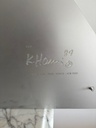
Signed
Certificate
OTHER ARTWORKS YOU MAY LIKE
Your Dynamic Snippet will be displayed here...
This message is displayed because you did not provide both a filter and a template to use.