Maurice de Vlaminck
Nouvelle Rencontre de Salavin (II)
1927
Lithography
19 × 14 cm
Ed. 219/280
Location: Saint-Gervais les bains, France
About the artwork
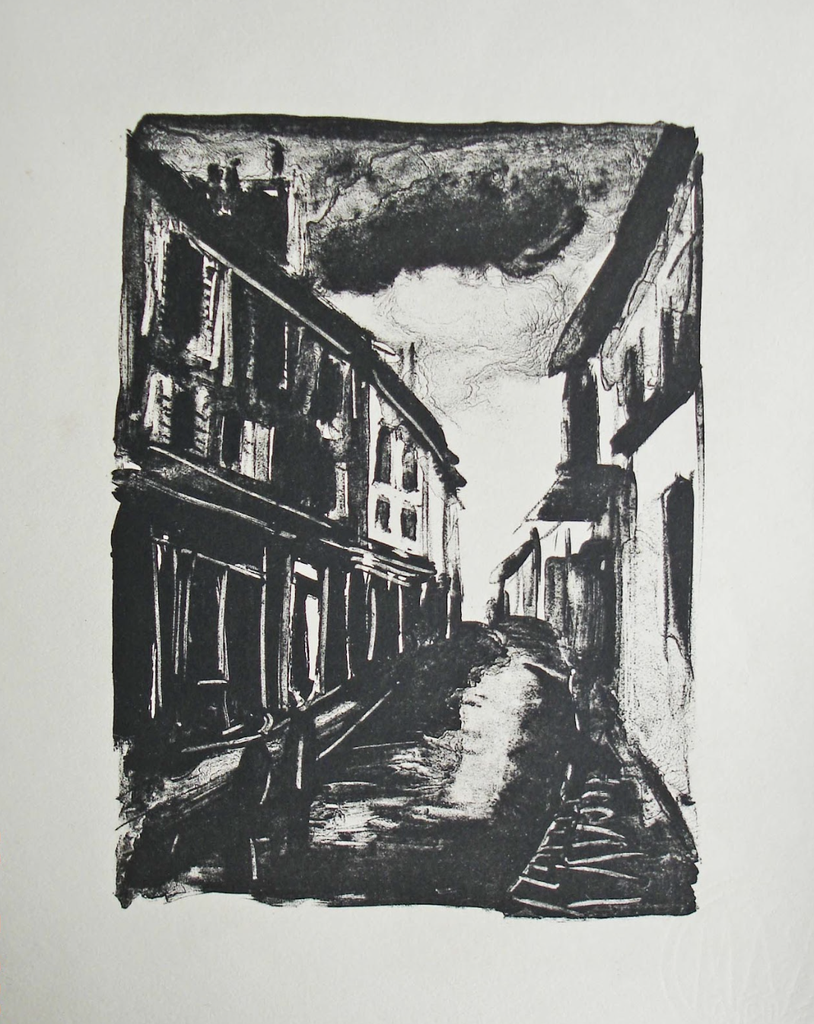
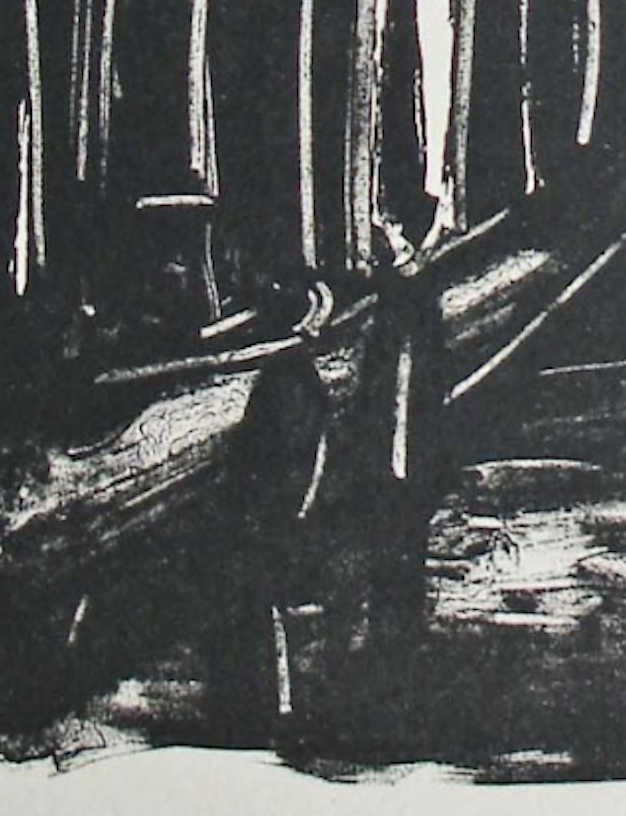
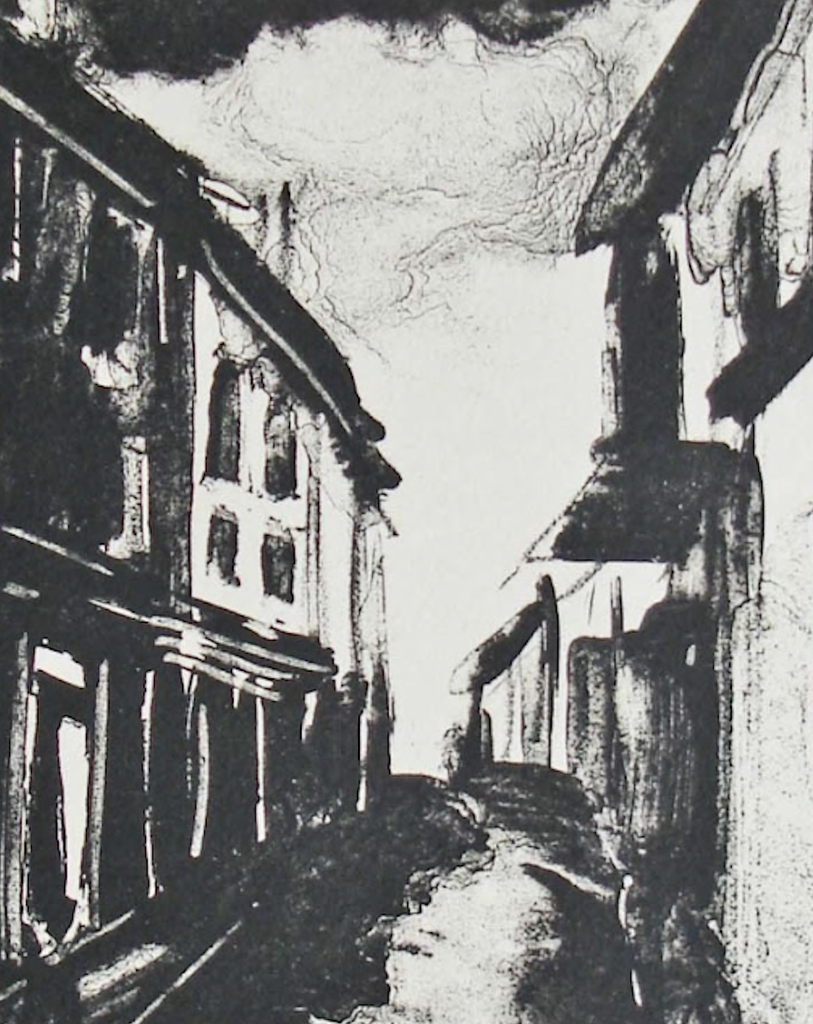
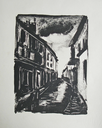
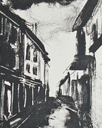
This black-and-white lithograph shows two figures with their backs to an empty alley. The viewpoint and perspective created make the surrounding houses seem immense, and almost make our protagonists disappear in their shadows. Vlaminck's expressive brushwork, with its interplay of shadows on stones and clouds, makes any ordinary scene unique.
The title of this work echoes the tale of an anti-hero named Salavin by Georges Duhamel, a highly acclaimed 20th-century French writer. In the midst of moral distress, Salavin wanders off with a friend on a quest for sanctity. In this empty street, the two friends find themselves alone and seem to be walking in search of an absolute far greater than themselves.
Expert opinion
In this lithograph, we find all the ardor of Georges de Vlaminck's stroke and his love for landscapes and scenes of everyday life. However, this scene is not as banal as it seems, since it is a quotation from a passage in Georges Duhamel's fairy tale, and thus takes on a metaphysical meaning.
About the artist
Maurice de Vlaminck (1876 - 1958) was a French painter emblematic of Fauvism. Self-taught, he discovered painting at the age of 16 and, in 1900, met André Derain and Matisse, with whom he joined the Fauvist movement, characterized by the bold use of pure, vivid colors.Vlaminck is distinguished by his vibrant landscapes and scenes of daily life, in which he favors expressive color over realistic detail. Influenced by Van Gogh, he developed a personal style marked by chromatic intensity and raw energy. From 1908 onwards, his style evolved towards darker tones, inspired by the Dutch masters and Cézanne.
Exhibited in the major Parisian galleries, Maurice de Vlaminck is recognized as one of the leading exponents of Fauvism. Despite his gradual withdrawal from the Paris art scene, he continued to paint until his death in 1958, leaving behind a major body of work that helped redefine modern painting.
Additional info
Framed
OTHER ARTWORKS YOU MAY LIKE
Your Dynamic Snippet will be displayed here...
This message is displayed because you did not provide both a filter and a template to use.