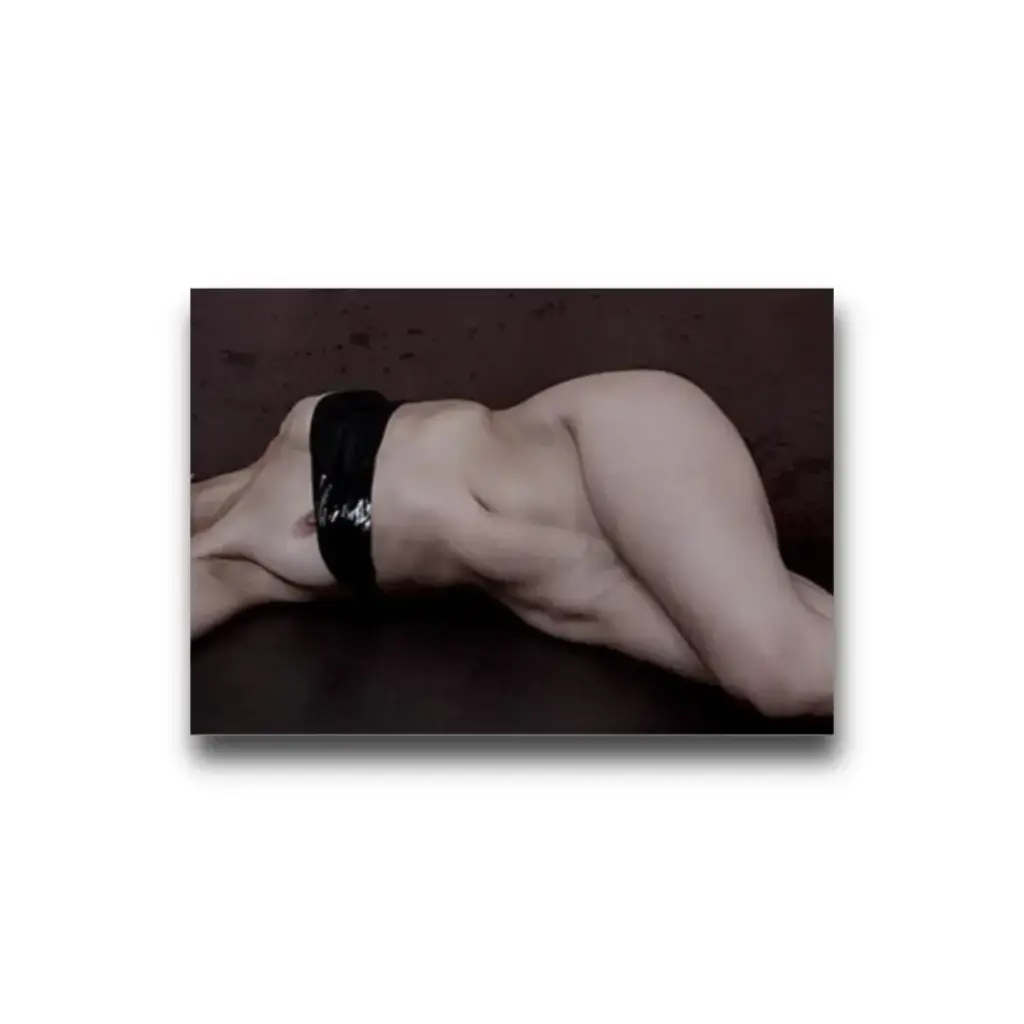

About the artwork
through the conventions of classical portraiture. The figure lies horizontally across a dark, almost monochromatic setting, her body curved and partially turned away from the viewer. A glossy black band obscures the face, immediately disrupting the intimacy traditionally associated with the photographic nude. The contrast between exposed skin and the dark material covering the face creates a powerful visual tension between revelation and concealment, vulnerability and restraint. By removing the sitter's facial identity, Arnone redirects attention toward posture, gesture and bodily form. The pronounced curvature of the figure gives the composition an almost sculptural quality, while the restrained palette reinforces its quiet and unsettling atmosphere. The work is characteristic of Arnone's broader interest in beauty tinged with sadness and silence, and in finding equilibrium within states of discomfort or imperfection.
Expert opinion
Nancy is a compelling example of Salvatore Arnone's early photographic language. Rather than treating the nude primarily as an erotic subject, the artist uses the body to construct an image centered on identity, absence and psychological tension. The decision to conceal the face is particularly significant: individuality is simultaneously suggested by the work's personal title, Nancy, and denied by the impossibility of identifying or engaging directly with the sitter. From a compositional perspective, the photograph is carefully controlled. The pale body emerges strongly against the dark ground, while its continuous curved silhouette leads the eye across the image. The black band becomes the composition's principal interruption, introducing a deliberately artificial element into an otherwise organic study of the human form. The work's appeal lies particularly in this ambiguity. It can be read simultaneously as an intimate portrait and as an anonymous study of the body. This tension corresponds closely with Arnone's documented exploration of beauty, silence and isolation. From a collecting perspective, the signed and numbered example, documented photographic process, Fine Art baryta printing and certificate of authenticity are positive elements. One point should nevertheless be clarified in the documentation before presenting the work for sale: the information provided describes the edition both as 1/7 and as five examples in this format, eight overall plus two artist's proofs. These statements are not necessarily incompatible if different formats have separate edition structures, but the precise edition should be confirmed from the certificate or directly with the artist before publication.
About the artist
Salvatore Arnone (b. 1973) is an Italian photographer who has lived and worked in Paris since 2014. His path to photography is notably multidisciplinary: after beginning his professional career as an engineer, he moved into jewellery design, working internationally for almost a decade before ultimately deciding to devote himself fully to his personal photographic practice. His work was first published in Vanity Fair Italia in 2010 and has subsequently appeared in publications and exhibitions internationally. Arnone's photography is deeply introspective, exploring a personal conception of beauty in which sensuality frequently coexists with melancholy, silence, vulnerability and isolation. Recurring throughout his work is a search for harmony within chaos and balance within imperfection. His progressive hearing loss, which began in his twenties, has also had a significant influence on his perception of his surroundings and interpersonal relationships, contributing to the sense of introspection and detachment that characterizes much of his imagery.
While photography remains central to his practice, Arnone has increasingly experimented with other media, expanding the formal vocabulary through which he investigates the body, identity, beauty and emotional states.
Additional info
Framed
3x
OTHER ARTWORKS YOU MAY LIKE
Your Dynamic Snippet will be displayed here...
This message is displayed because you did not provide both a filter and a template to use.