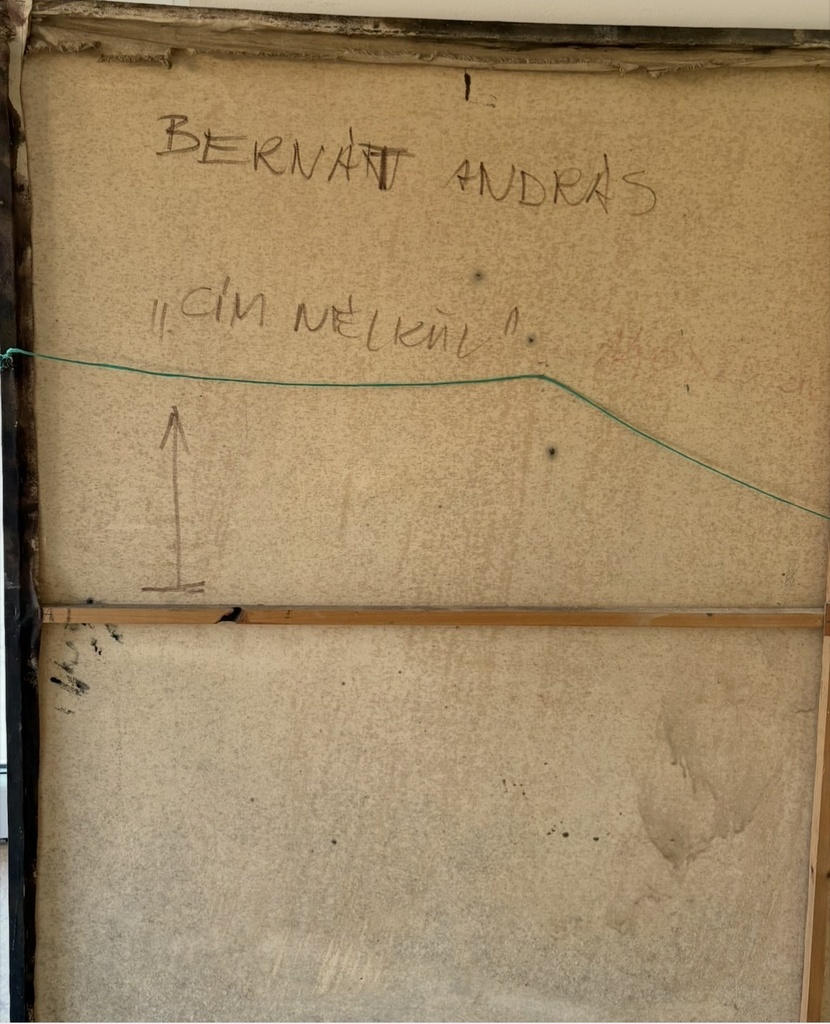

András Bernát
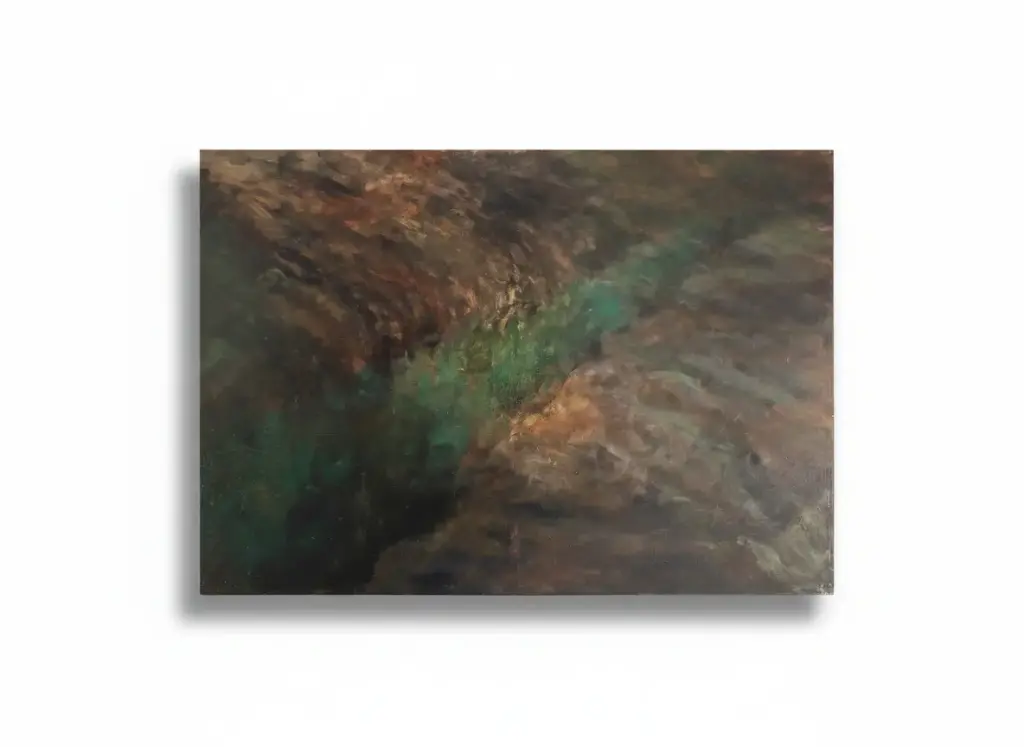
Landscape
1995
Oil on canvas
134 × 196 × 3 cm
Unique
Location: TOULOUSE, France

Arianee token ID
941601583
Share by
Email
Documents
-
Invoice or proof of purchase
-
Certificate of authenticity
-
Other documents
About the artwork
Dark, earthy tones dominate the horizontal expanse of the canvas, which features a diagonal slash of luminous green cutting through shadowed, churning masses. The surface treatment combines layered oil pigments applied with varied brushwork to produce an ambiguous spatial depth. Created in 1995, the composition bridges the artist's earlier figurative landscape references and the fully non-objective explorations that characterized his output later in the decade. The interplay between dense, light-absorbing dark areas and brighter chromatic streaks generates a sense of internal movement without relying on traditional perspective.
Expert opinion
This canvas exemplifies the transitional phase of the artist's 1990s oeuvre, wherein recognizable natural motifs dissolve into shifting fields of abstract illusionism. Within the broader context of Central European contemporary painting, the piece reflects a sustained engagement with atmospheric depth and surface texture. Market reception for this period remains steady among regional collectors focusing on late twentieth-century abstraction.
About the artist
András Bernát was born in Törökszentmiklós, Hungary, in 1957. He completed his formal education at the Hungarian Academy of Fine Arts between 1980 and 1986, studying under the direction of Ignác Kokas and Gábor Dienes. Following his graduation, he established himself within the contemporary Hungarian art scene, participating in numerous institutional exhibitions both domestically and internationally. His career evolved from dark, structurally sparse figurative works in the 1980s toward increasingly abstract, atmospheric surfaces during the 1990s. This stylistic transition focused on organic forms, spatial illusions, and light diffusion across textured planes. His output includes well-documented series such as the Object and Space study groups, which have been collected by major public institutions including the Hungarian National Gallery.
Additional info
3x
OTHER ARTWORKS YOU MAY LIKE
Your Dynamic Snippet will be displayed here...
This message is displayed because you did not provide both a filter and a template to use.