Richard Estes
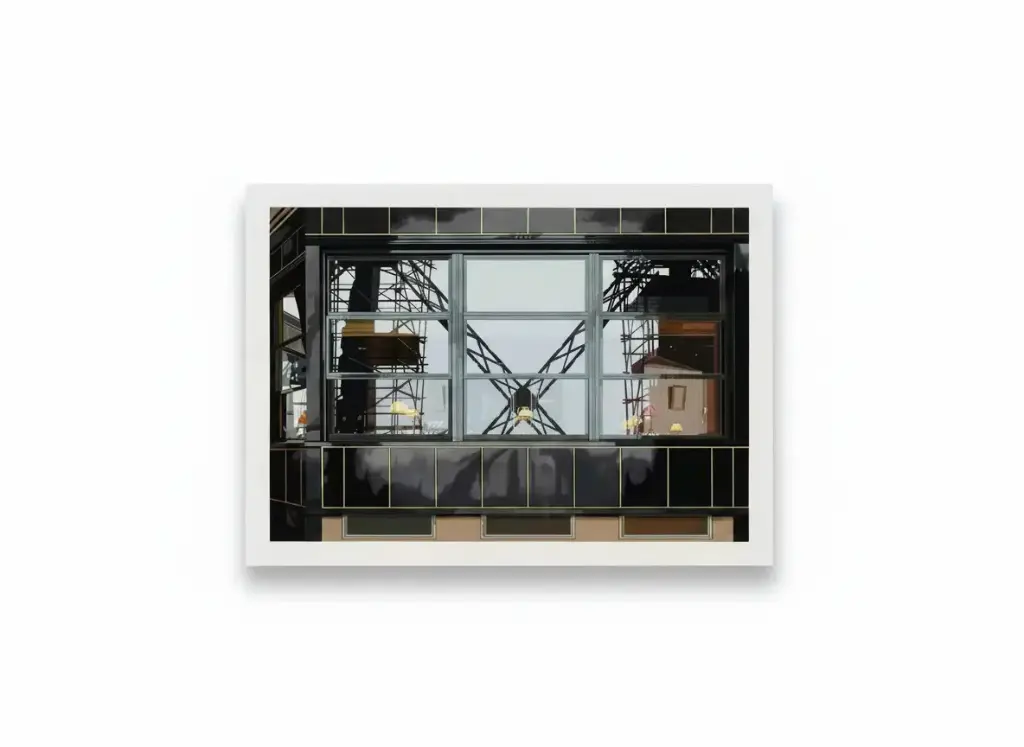
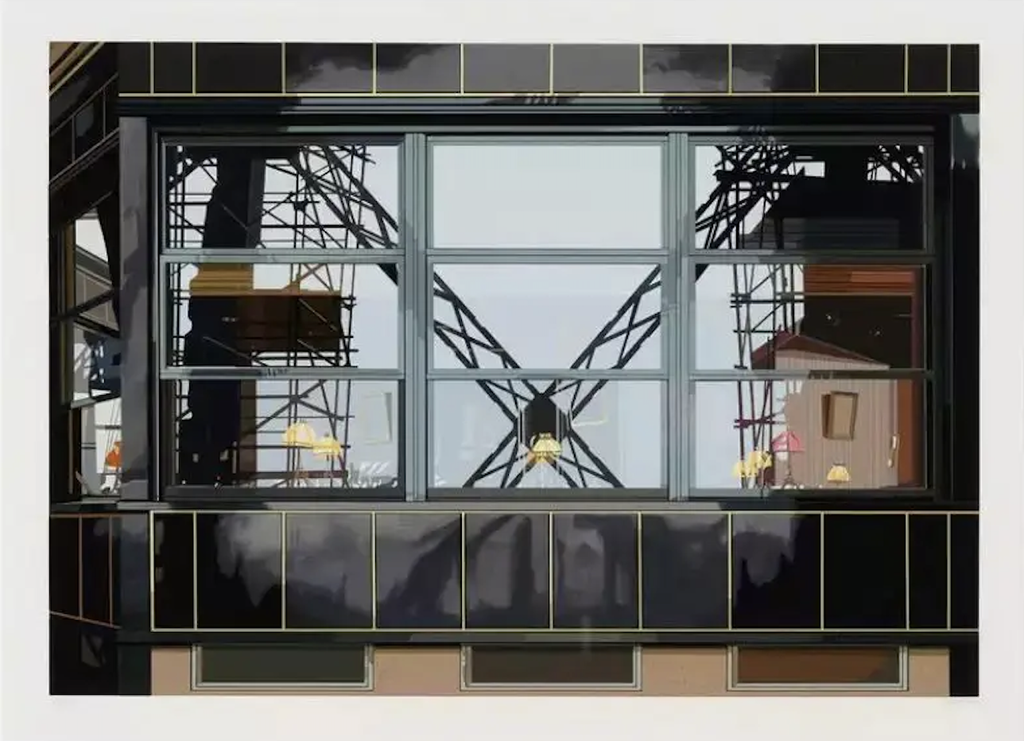
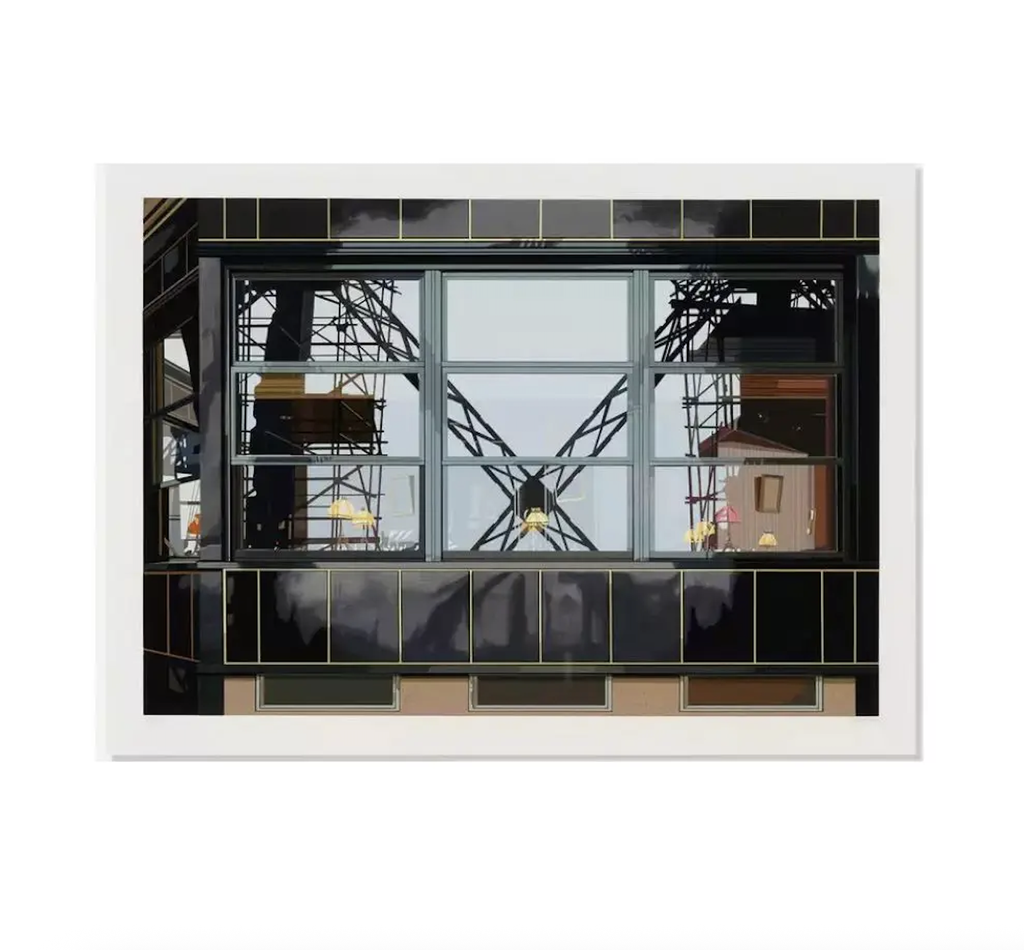
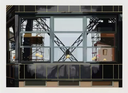
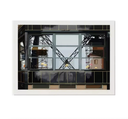
Eiffel Tower (from Urban Landscapes III)
1981
Color silkscreen on Fabriano paper
35.6 × 50.8 cm
Ed. /250
Location: Vincennes, France
Documents
-
Invoice or proof of purchase
-
Certificate of authenticity
-
Other documents
About the artwork
This silkscreen print presents a detailed view of a large window facade, reflecting elements of an urban environment. The composition is dominated by a grid of glass panes, framed by dark, possibly tiled, architectural elements above and below. Through the transparent and reflective surfaces of the glass, a complex interplay of interior and exterior elements is visible. Within the reflections, structural scaffolding and parts of buildings, including what appears to be a small, light-colored structure, are discernible. Several ornate, possibly brass, lamps are visible through the windows, suggesting an interior space or further reflections. The precision of the lines and the rendering of light and shadow contribute to the illusion of depth and the material qualities of glass and metal. The overall impression is one of a constructed reality, where multiple perspectives are layered within a single frame.
Expert opinion
Richard Estes is a central figure in the Photorealism movement, which emerged in the late 1960s and early 1970s. This movement distinguished itself by its meticulous rendering of photographic imagery, often focusing on ordinary urban scenes with an almost scientific precision. Estes's work stands out for its particular emphasis on reflective surfaces, which he uses to create layered and sometimes disorienting perspectives, challenging the viewer's perception of space and reality. In the art market, Estes's paintings command high prices, reflecting his status as one of the pioneers and most consistent practitioners of Photorealism. His prints, while more accessible, are also sought after, particularly those from well-known series or with iconic urban imagery. The market for his prints remains stable, supported by institutional recognition and a dedicated collector base appreciating the technical skill and intellectual rigor of his compositions.
About the artist
Born in 1932 in Kewanee, Illinois, Richard Estes is considered one of the founders of photorealism, a movement that emerged in the 1960s as a reaction to abstraction. A graduate of the School of the Art Institute of Chicago, he moved to New York and began painting urban scenes from his own photographs. His work focuses on reflections, shop windows, buses and empty streets, with impressive technical virtuosity. In contrast to the spontaneity of street photography, his paintings are the fruit of methodical, thoughtful construction. Exhibited in major museums, he is recognized as a cold but fascinating observer of modernity.
OTHER ARTWORKS YOU MAY LIKE
Your Dynamic Snippet will be displayed here...
This message is displayed because you did not provide both a filter and a template to use.