
Georges Braque
Disque en plâtre
1938
Bronze
32.5 × 32.5 × 32.5 cm
Unique
Location: Vincennes, France
Documents
-
Invoice or proof of purchase
-
Certificate of authenticity
-
Other documents
About the artwork
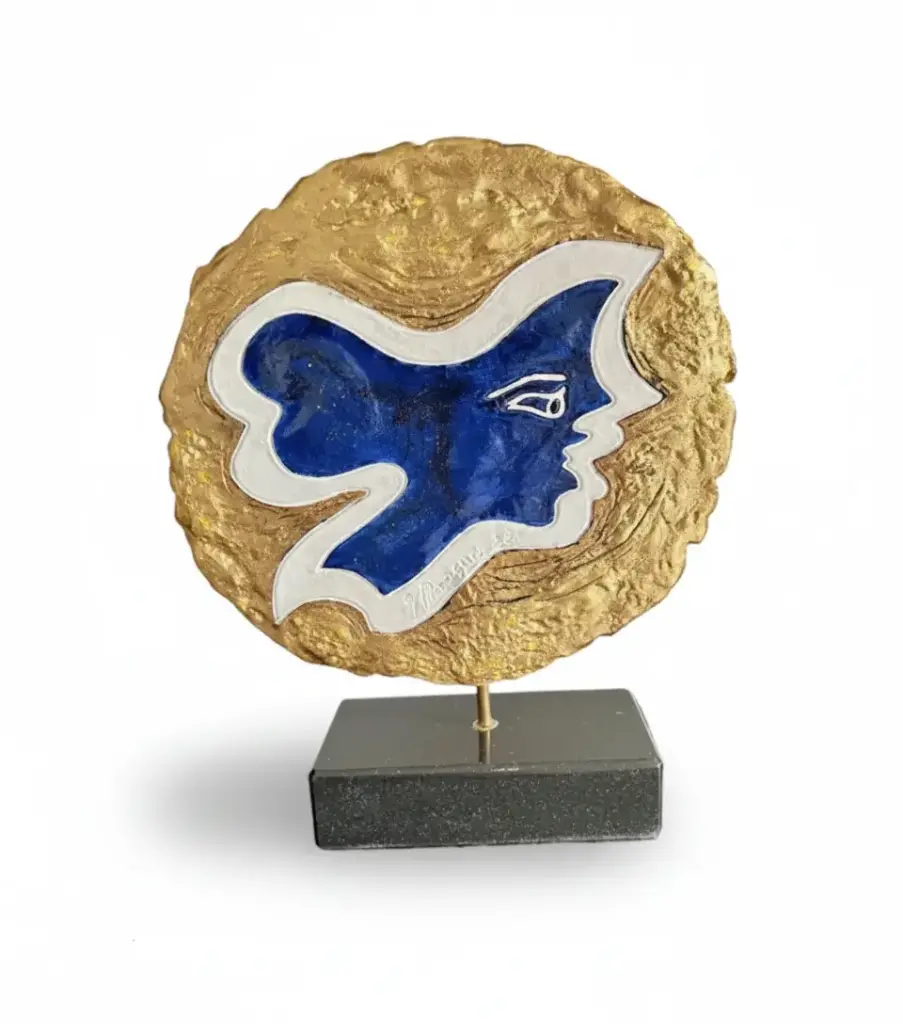
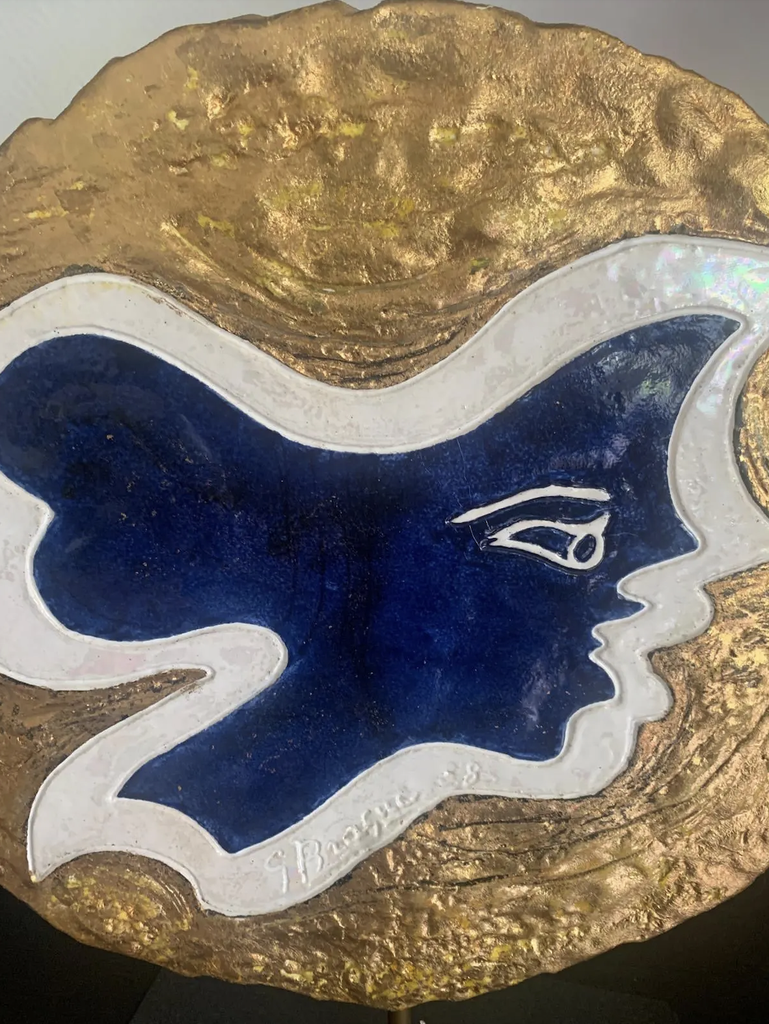
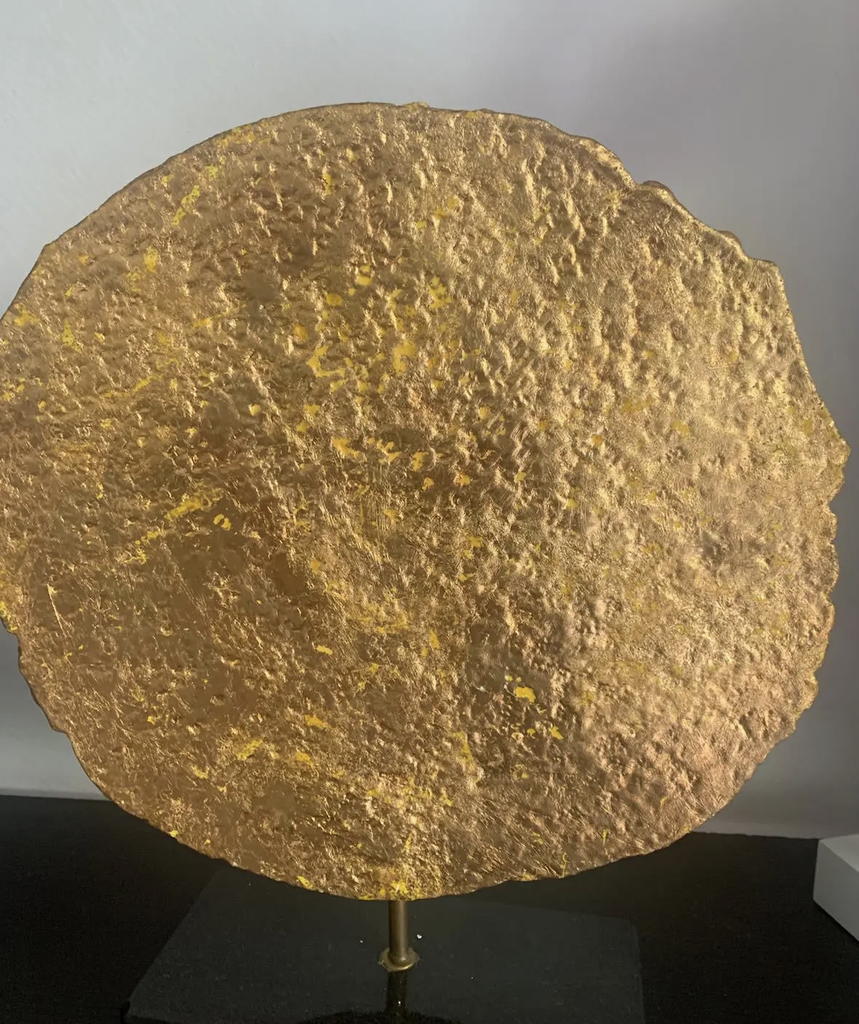
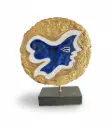
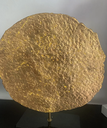
This sculptural object, dated 1938, presents a circular form with a textured, gold-toned surface that frames a central, deeply recessed blue area. Within the blue, an abstract, curvilinear white shape is delineated, outlining two profiles facing each other. One profile is more fully rendered, featuring a distinct eye, while the other is suggested by the contour of the white shape.
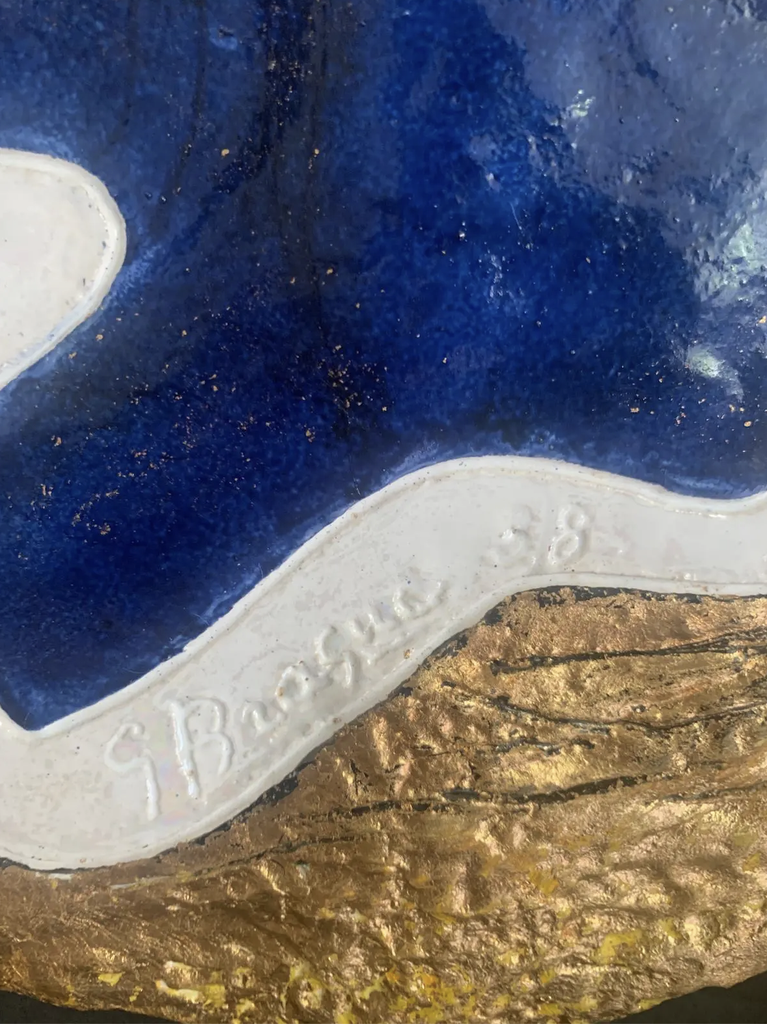
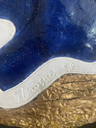
The work is mounted on a slender metal rod that extends from a rectangular black marble base, elevating the disk. The artist's signature and date are visible within the blue section, confirming its creation in 1938. The interplay of positive and negative space, along with the contrasting colors and textures, are characteristic elements of Braque's artistic vocabulary during this period.
Expert opinion
Georges Braque's sculptural output, though less extensive than his painting, offers insight into his continuous exploration of form and space across different dimensions. Pieces like this one from the late 1930s reflect his post-Cubist period, where he often revisited classical themes and incorporated symbolic elements within a more lyrical and decorative framework. The market for Braque's unique objects is stable, driven by collectors seeking works that demonstrate his stylistic evolution beyond his most recognized Cubist paintings.
About the artist
Georges Braque (1882–1963) was a French painter and sculptor who, alongside Pablo Picasso, developed Cubism. His early career was influenced by Fauvism, but by 1908, he began to simplify forms and explore multiple perspectives, leading to the analytical phase of Cubism. After serving in World War I, Braque's style evolved, incorporating more color and texture, and moving towards a more personal interpretation of Cubism.
Throughout his career, Braque explored various mediums, including painting, printmaking, and sculpture. His later works often featured still lifes and landscapes, characterized by a subdued palette and a focus on the tactile qualities of surfaces. He is recognized as a pivotal figure in 20th-century art, whose innovations profoundly influenced subsequent artistic movements.
Additional info
Signed
Dated
3x
OTHER ARTWORKS YOU MAY LIKE
Your Dynamic Snippet will be displayed here...
This message is displayed because you did not provide both a filter and a template to use.