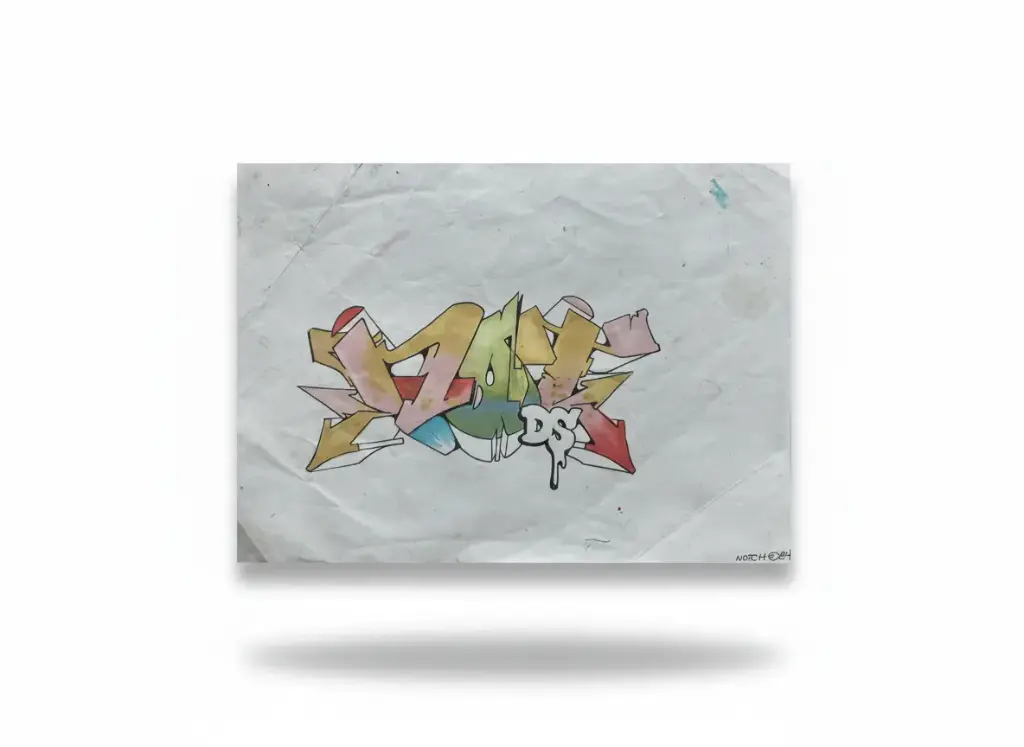
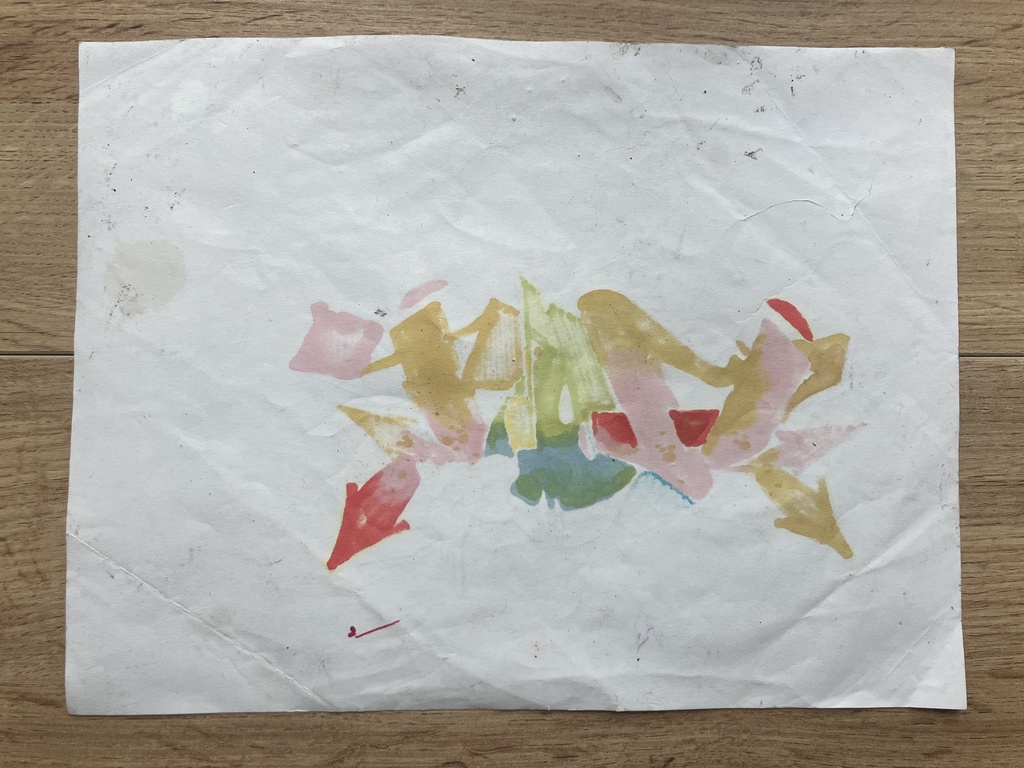
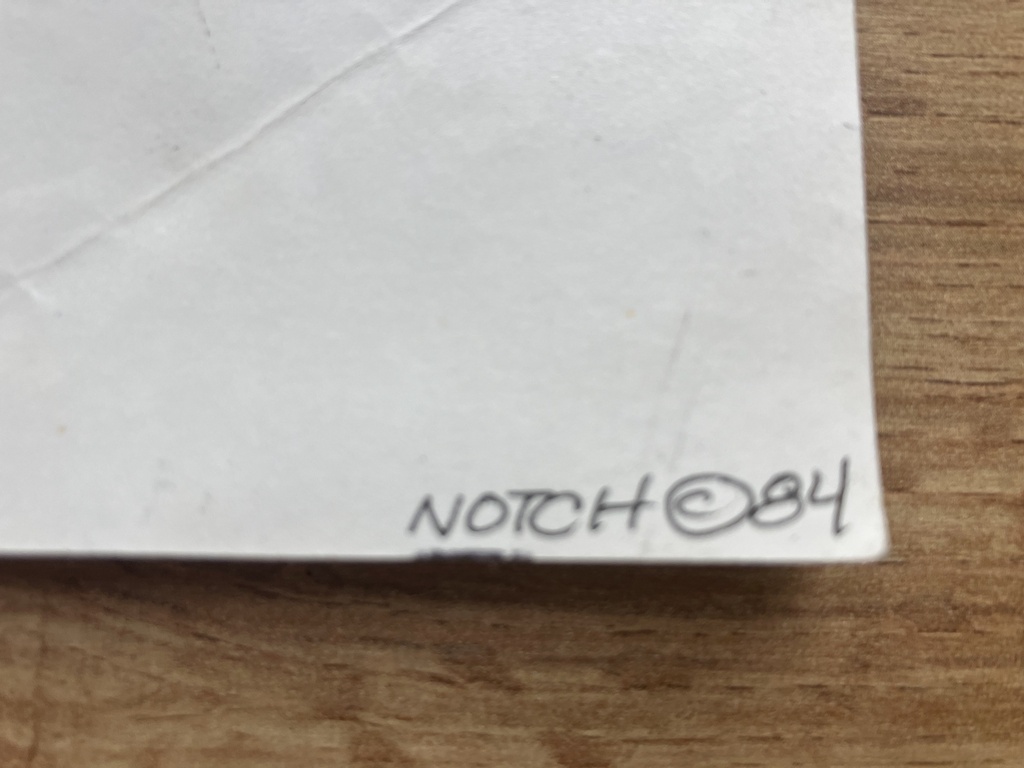
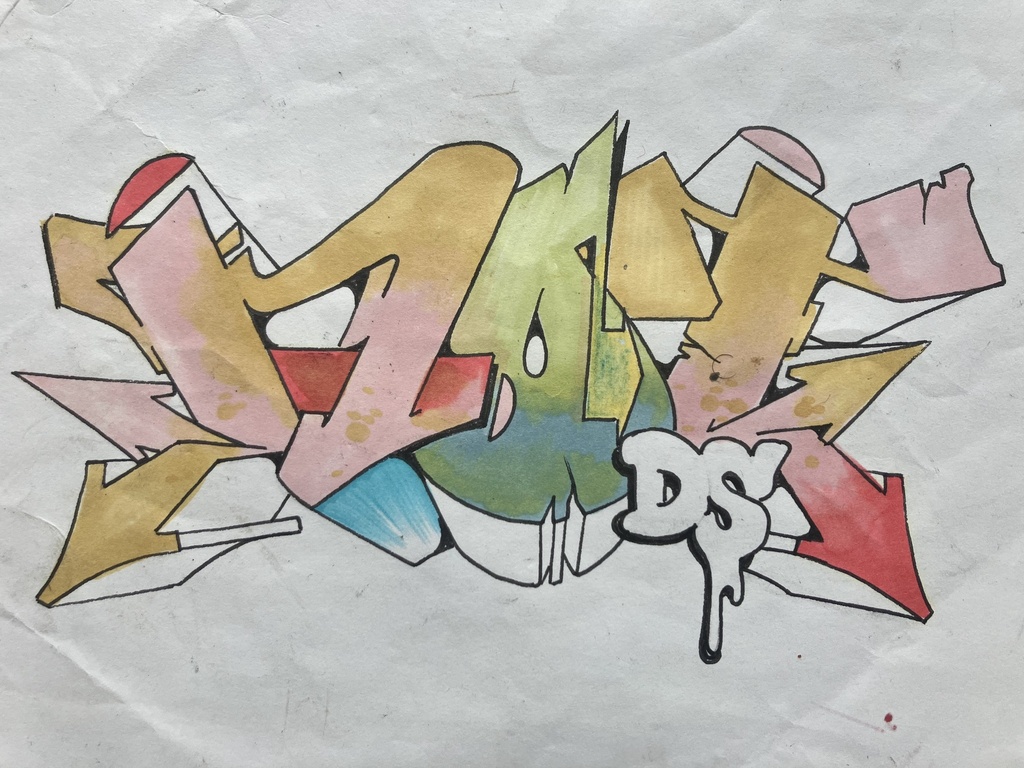
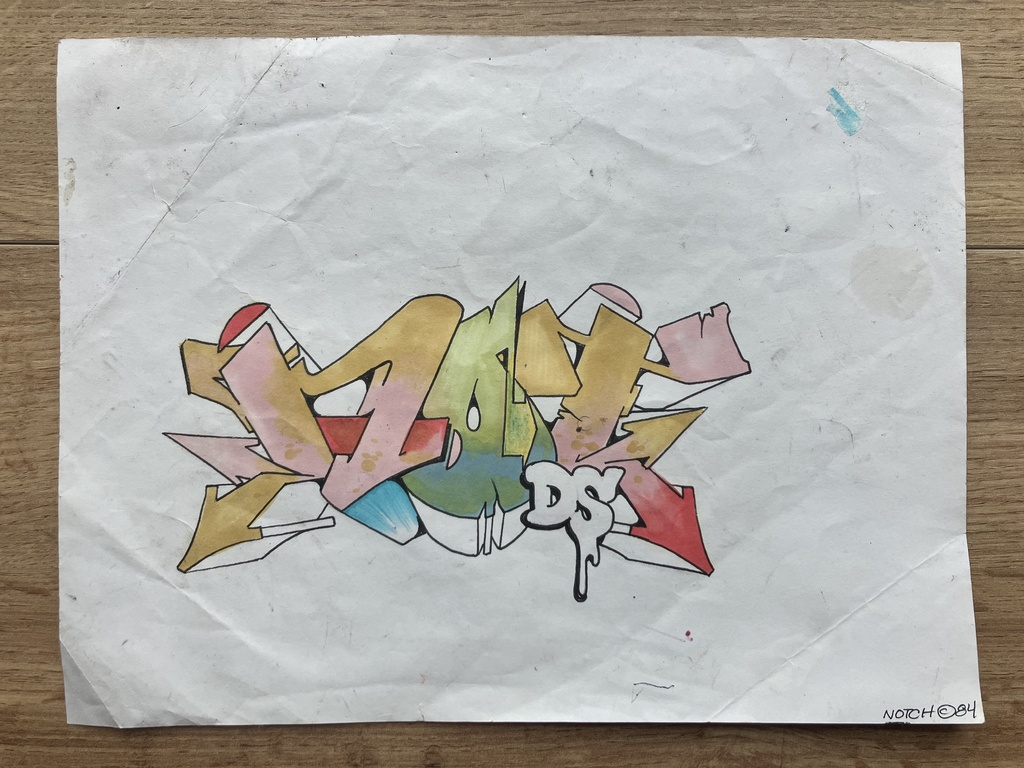
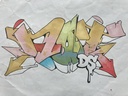
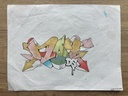
Notch 56 (Hector Perez)
Untitled
1984
Marker and ink on paper
21 × 28 cm
Unique
Localisation : Paris, France

Arianee token ID
47143136
Share by
Email
Documents
-
Invoice or proof of purchase
-
Certificate of authenticity
-
Other documents
À propos de l'œuvre
This composition features a stylized figure drawn in black ink on lined paper, characteristic of a sketch or "black book" entry from the 1980s graffiti scene. The central figure, depicted in profile, wears a bucket hat, glasses, and a hooded sweatshirt, holding a spray can in one hand and a boombox in the other. The posture, with the figure pointing forward, suggests an active or directive role within an urban environment. The boombox features speaker grilles and handwritten text, including “MAGIC DUST INK” and “NOTCH@85,” which serves as both a signature and a date.
The imagery in the work draws directly from the iconography of early hip-hop and street culture. The boombox was a central element of urban life in the 1970s and 1980s, enabling the portable amplification of music for block parties, park jams, and street performances, and becoming a symbol of self-expression and community. The spray can is an iconic tool and symbol of street art and graffiti, representing rebellion and artistic expression. The use of lined paper as a medium further reinforces the informal, spontaneous nature often associated with early graffiti sketches and “black books.”
The work encapsulates elements prevalent in the 1980s, a period considered the “Golden Era” of old-school graffiti, when the art form became deeply intertwined with hip-hop culture, breakdancing, and DJing. The figure’s attire and accessories—particularly the bucket hat and boombox—are visual cues that align with the fashion and cultural markers of that decade. The piece serves as a direct visual reference to the roots of street art, portraying a figure engaged in the cultural practices that defined the movement.
Avis de l'expert
This work belongs to the formative period of the street art movement—specifically the 1980s—when graffiti transitioned from an underground subculture to a recognized art form. Artists like Notch 56 played a key role in documenting and shaping the visual language of this era, often through sketchbooks and informal drawings that captured the energy of urban life and hip-hop culture. The inclusion of a boombox and a spray can directly references the tools and symbols that defined the movement’s aesthetic and its social context.
The market for early street art and graffiti-related works has seen growing interest, particularly in pieces that directly reflect the movement’s origins and are by artists who were active during its formative years. While Notch 56’s auction records are still developing—with reported sales primarily for sketches and drawings—his association with prominent crews and his prolific output of black books contribute to his historical significance. Works that embody the authentic spirit of 1980s street culture, such as this drawing, hold appeal for collectors interested in the genre’s history and its key figures.
À propos de l'artiste
NOTCH 56 est un artiste issu de la scène du graffiti et de l'art urbain, principalement connu pour ses contributions aux « blackbooks ». Ces carnets de croquis constituent un support essentiel permettant aux graffeurs de développer leurs styles, leurs personnages et leurs formes de lettres, et font souvent l'objet d'échanges au sein de leur communauté. L'artiste est associé à plusieurs collectifs, notamment TFA, DTK, THB, MAGIC DUST INK et TSK (The Stone Killer), ce qui témoigne de son implication de longue date dans des projets collaboratifs et individuels au sein de la scène de l'art urbain. Sa pratique consiste souvent à créer des personnages et des figures stylisées, qui constituent un élément courant du graffiti au-delà du lettrage. Ces personnages présentent fréquemment des motifs visuels et des expressions distinctifs, reflétant l’esthétique personnelle de l’artiste dans le contexte plus large de la culture du street art. Le travail de NOTCH 56 s’inscrit dans une tradition où le style personnel et les compétences techniques sont affinés et partagés entre pairs, contribuant ainsi à l’évolution du graffiti en tant que forme d’art.
Informations complémentaires
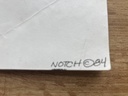
Signé
Daté
3x
D'AUTRES OEUVRES SUR ARTRANSFER
Your Dynamic Snippet will be displayed here...
This message is displayed because you did not provide both a filter and a template to use.