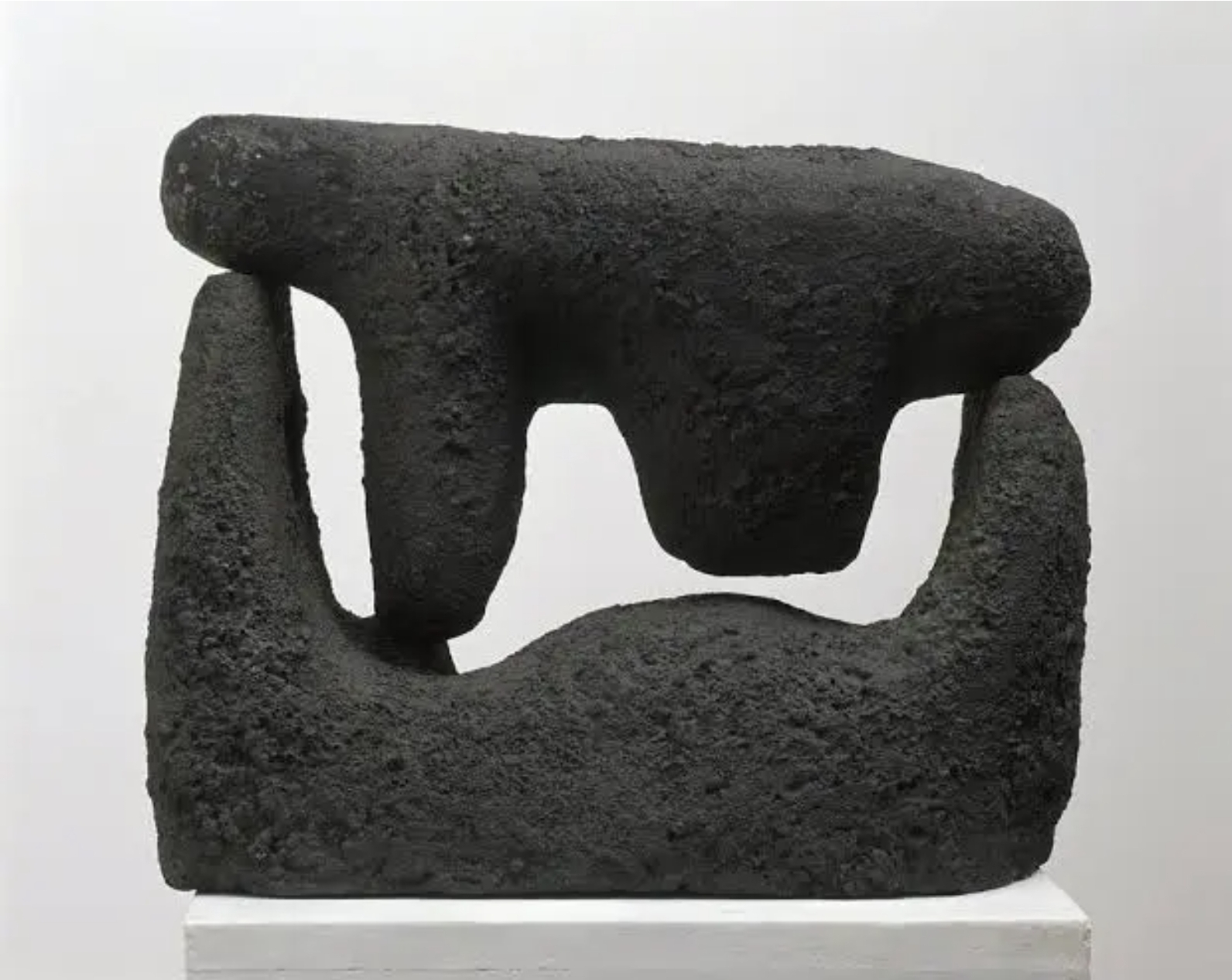
Peter Szekely
Pierre Székely was a Hungarian-born French sculptor whose work helped redefine the relationship between sculpture, architecture, and public space in post-war Europe. Born in Budapest in 1923, he experienced the hardships of the Second World War before settling permanently in France in 1946, where he developed a highly distinctive artistic language rooted in nature, geometry, and human experience. Working across sculpture, architecture, drawing, ceramics, printmaking, and environmental design, Székely believed that art should be an integral part of everyday life rather than confined to museums. His monumental sculptures, often carved from granite, concrete, or stone, merge organic forms with architectural structures, creating works that invite contemplation, interaction, and physical engagement. He became a pioneer of sculpture-architecture collaborations, producing numerous public commissions throughout France and abroad.
In the late 1960s, Székely developed an innovative flame-cutting technique for sculpting granite, allowing him to create powerful, tactile surfaces while preserving the material's natural character. His works balance abstraction with symbolism, drawing inspiration from prehistoric monuments, cosmology, and the universal forms found in nature. Rather than considering his sculptures abstract or figurative, he described them as "expressive" objects intended to establish a harmonious dialogue between humanity and the environment. Throughout his career, Székely received numerous prestigious public commissions and international awards. His sculptures can be found in parks, public squares, educational institutions, and museum collections across Europe and Asia, while dedicated open-air museums preserving his work were established in Hungary and Japan. He was appointed Chevalier of the Légion d'Honneur in 1998, recognizing his lasting contribution to modern sculpture. Today, Pierre Székely is regarded as one of the leading figures of twentieth-century monumental sculpture. His enduring legacy lies in his ability to unite art, architecture, and landscape into timeless works that continue to inspire architects, artists, and the public alike.