Invader x Shepard Fairey (OBEY)
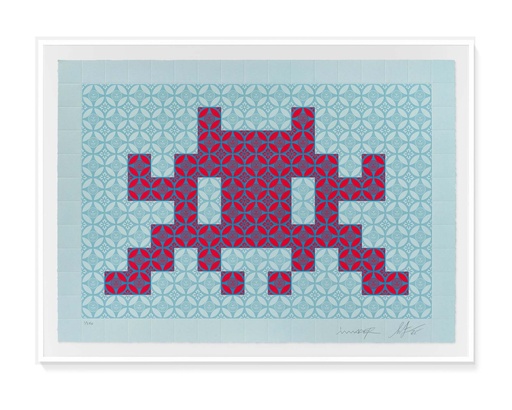
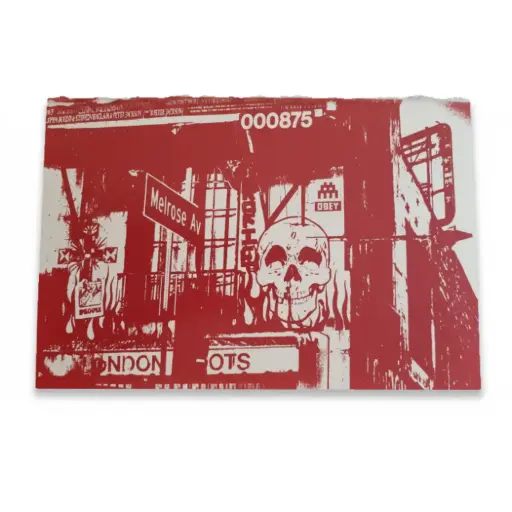
The collaboration between Invader and Shepard Fairey brings together two major figures in contemporary urban art, each having developed an immediately recognizable visual language that has had a profound influence on the evolution of street art since the 1990s. Invader, a French artist active since the late 1990s, is known for his urban interventions inspired by the pixelated graphics of the video game Space Invaders. His mosaics, installed in cities around the world, transform public space into an artistic playground, and constitute a vast project of global artistic "invasion". His work questions the relationship between digital culture, urban space and collective memory, while introducing a simple yet universally identifiable iconography into the city. Shepard Fairey, for his part, has established himself as one of the most important figures in contemporary street and graphic art. Revealed in the late 1980s with the OBEY Giant project, he developed an aesthetic influenced by political propaganda, militant graphic design and popular imagery. His work often blends political messages, social commitment and visual power, as exemplified by the Hope poster for Barack Obama's 2008 presidential campaign. The encounter between these two artists is particularly relevant, as their universes are based on complementary approaches to the image. Invader builds his language on pixels, modularity and the logic of video games, while Shepard Fairey develops a graphic aesthetic inspired by screen printing, design and the visual codes of political communication. In their collaborations, these two approaches merge to produce works in which the iconic Invader figure is embedded in the ornamental and graphic structures characteristic of the OBEY universe. This dialogue between pixel and decorative motif, between digital culture and militant graphic design, reflects the evolution of street art into a hybrid artistic practice, capable of integrating different visual traditions while retaining the energy and critical spirit of its urban origins. Their collaboration illustrates how artists from the street art scene continue to renew their languages by crossing their influences and visual universes, while affirming the place of this culture in the contemporary art landscape.