Henri Goetz
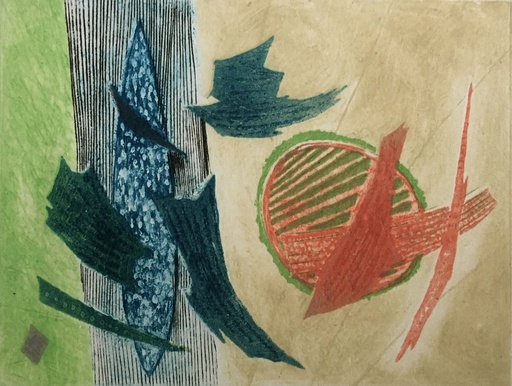
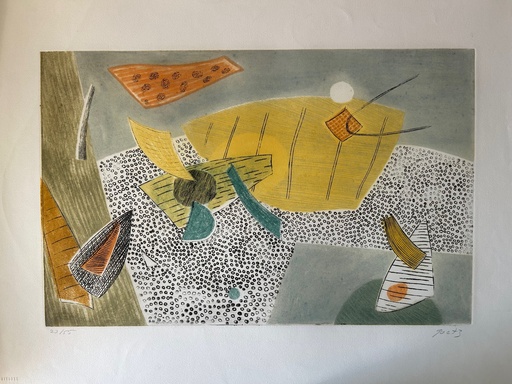
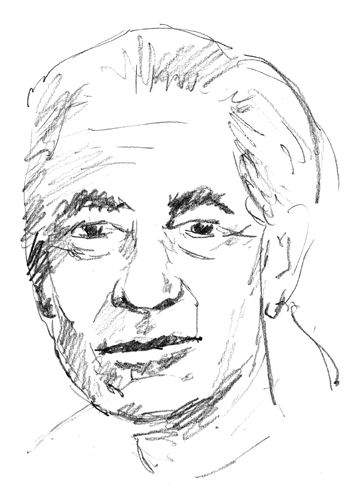
"One of the most important artists of the post-war period". The Alsatian-born American artist settled permanently in France in 1932, at the age of 23. In 1967, Henri Goetz invented carborundum engraving, which revolutionized printmaking in the 20th century. This new technique gave artists greater freedom of expression and enabled them to use a wider range of textures and colors, making him the most important printmaker of the twentieth century. His work can be found in museums around the world. In addition to the important presence in its collections of major artists who practiced both painting and engraving, such as Dürer and Schongauer, the Musée Unterlinden recently acquired twelve engravings by Goetz. This acquisition enriches the museum's collection of modern prints and drawings. Its collections also include works by Johnny Friedlaender, Jeanne Coppel, Max Beckmann and Otto Dix, among others. 1945 Goetz presents the first weekly program on modern and contemporary painting on Radio Diffusion Française. He frequents Picabia, Picasso, Braque, Hartung, Soulages, Schneider, Brancusi and Kandinsky. 1946 - "10 Years of Painting" exhibition at Galerie Breteau in Paris. 1947 Alain Resnais shoots "Portrait d'Henri Goetz" for the Musée d'Art Moderne de Paris, a 16 mm short film in which, for the first time, a painter executes a work in front of the camera. 1948 Goetz publishes an album of etchings with Éditions Les Nourritures Terrestres. He founds the "Graphies" group with Christine, Flocon and Ubac. In 1949, he illustrates several collections of poems. Goetz and his wife became naturalized French citizens. In 1950, he designed the sets for Roger Livet's film "Histoire d'Agnès". 1965 He founds his own Academy on the premises of the former André Lhote Academy, where he teaches on a voluntary basis until 1984. 1967 Henri Goetz is made a Chevalier de l'Ordre des Arts et des Lettres. 1968 La Gravure au carborundum (Carborundum Engraving), a treatise on the "Goetz process" developed after lengthy research into the engraving technique, is published by Galerie Maeght with a preface by Miro, followed by a second edition in the same gallery. 1983 Creation of the Musée Goetz-Boumeester in Villefranche-sur-Mer. 1989 Henri Goetz dies in Nice on August 12. His work can be found in over a hundred museums and institutions.