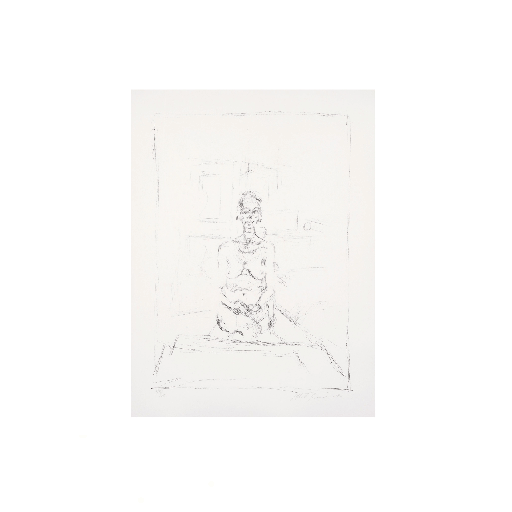
Alberto Giacometti
Alberto Giacometti helped revolutionize figurative sculpture with his withered, elongated human forms. The artist drew on the influences of Cubism, Surrealism and African sculpture, moving away from realistic constructions of the body towards mythical, totemic bronzes. A sense of alienation permeates Giacometti's work, evoking the existentialist thinking of his friend Jean-Paul Sartre and the social and political upheavals the artist experienced in early 20th-century Europe. Giacometti was born into a family of artists; his father was a post-impressionist painter. He studied painting at the École des Beaux-Arts in Geneva, and sculpture and drawing at the École des Arts et Métiers. His works are in the collections of the Art Institute of Chicago, the Kunstmuseum Basel, the Museum of Modern Art, the Guggenheim Museum, the Tate and the National Gallery of Art in Washington, D.C., among others, and his sculptures have sold for over $100 million on the secondary market.